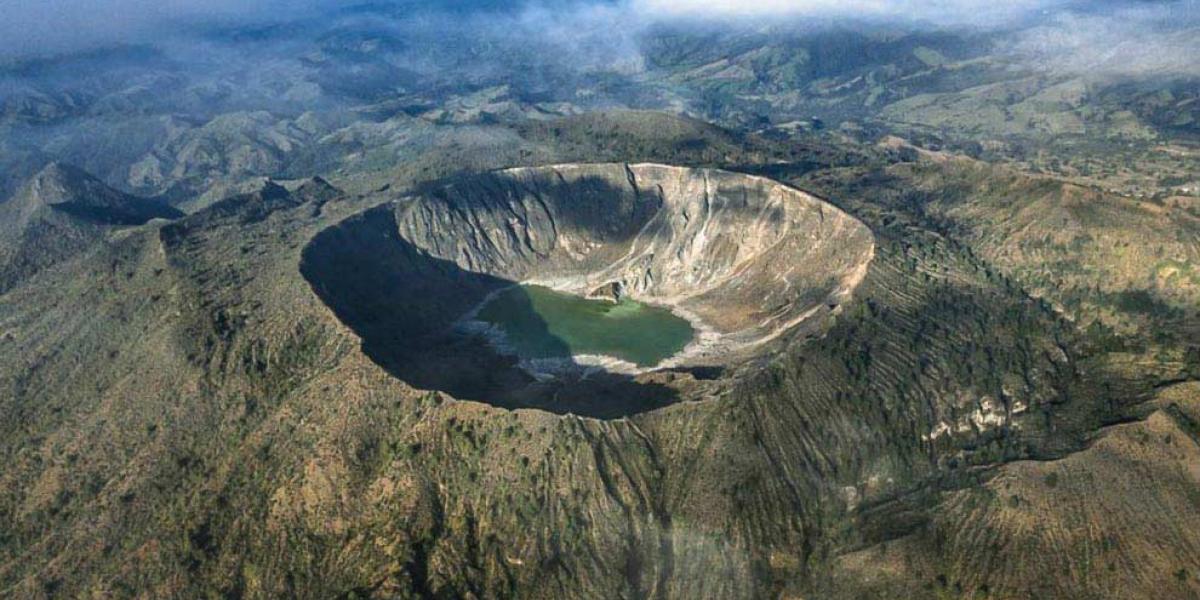
Specialists from the National Autonomous University of Mexico (UNAM) They warned about recent changes in the volcano’s activity Chichonallocated in northern Chiapas, which has led to strengthening its monitoring during the beginning of 2026. Although an immediate eruption is not expected, scientists emphasize the importance of constant surveillance due to the eruptive history and risk potential of the colossus.
According to researchers from Institute of Geophysics from UNAM (IGf), the crater lake of the Chichonal volcano has registered relevant physical-chemical variations in recent months.
Patricia Jácome Paz, researcher at the Department of Natural Resources of the IGf, explained that the body of water went from presenting a high concentration of algae to showing a greater presence of sulfates and silica, characteristic indicators of an active volcanic lake.
These changes suggest modifications in the internal processes of the volcano, which turns Chichonal into a dynamic system that requires permanent monitoring.
Gas emissions and health risks
The specialists also detected a significant emission of gases from the bottom of the lake to the surface. This phenomenon represents a potential risk to human health, especially in prolonged exposures, which is why UNAM has recommended avoiding access to the crater and restricting unregulated tourism in the area.
The warning becomes relevant because the volcano maintains tourist activity, despite being an area with active volcanic processes.
During the IGf Volcanology Seminar, scientists pointed out that Chichonal has been studied continuously for more than two decadeswith periodic sampling of the volcanic lake. Thanks to these historical records, it can be stated that the current variations in solute fluxes represent real changes throughout the volcanic system and not isolated fluctuations.
Is there a risk of rash?
Although experts do not anticipate an imminent eruption, they do warn that the current activity involves local risks. For this reason, they insisted on following Civil Protection recommendations, respecting access restrictions and staying informed through official channels during 2026.
The Chichonal volcano, also known as El Chichón, is located between the municipalities of Francisco León and Chapultenango, in Chiapas. According to him National Center for Disaster Prevention (CENAPRED)has recorded at least 12 explosive eruptions in the last 8,000 years.
Its most devastating event occurred in 1982when three Plinian eruptions caused columns of ash more than 20 kilometers high, left more than 2,000 people dead and marked a turning point in volcanic surveillance in Mexico.