The diplomat assured that his country will request the review of the EU Political Dialogue and Cooperation Agreement with Cuba.
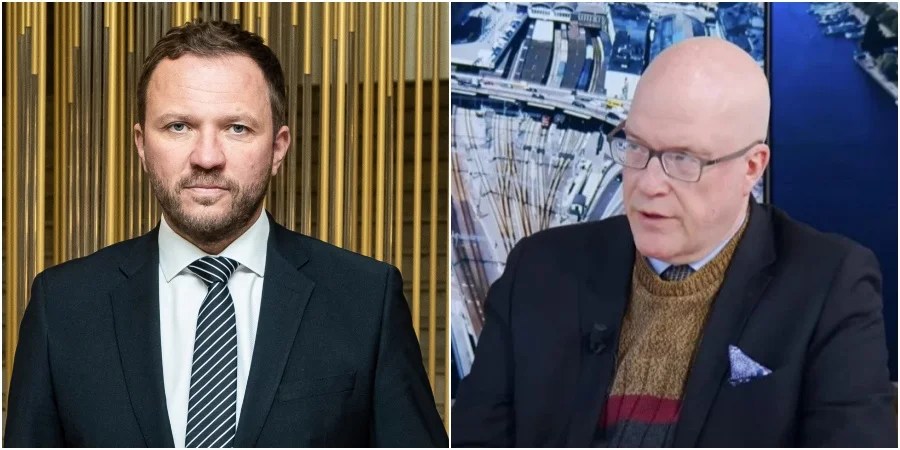
MIAMI, United States. – The Minister of Foreign Affairs of Estonia, Margus Tsahkna, and the secretary general of the Assembly of the Cuban Resistance (ARC), Orlando Gutiérrez-Boronatheld a telephone conversation in which the European stated that his country “has increased pressure” on the Cuban Government and that it will propose within the European Union a review of the community policy towards the Island in force since 2016.
Tsahkna maintained that, given Havana’s support for Russia’s war narrative against Ukraine and the deterioration of the human rights situation in Cuba, “stronger pressure is needed.” “Our approach to the regime must be reevaluated,” assured the diplomat in X.
While, a statement from the Ministry of Foreign Affairs He specifies that the chancellor argued that “the Cuban regime has not shown the slightest willingness to change,” so, in his opinion, it was “clear that the European Union’s policy towards Cuba, in force since 2016, needs to be reviewed.”
Just held a call with the leader of the Assembly of the Cuban Resistance, Dr. Orlando Gutiérrez-Boronat, on the situation in Cuba.
Estonia stands in solidarity with Cuban democratic actors and civil society and supports human rights and democratic governance.
Given the Cuban…
— Margus Tsahkna (@Tsahkna) January 28, 2026
Tsahkna assured that Estonia already modified its position at the United Nations at the end of 2025, when it changed its “voting behavior” and stopped supporting the resolution calling for the end of the trade embargo against the Cuban regime. On that occasion, other EU Member States also adopted a similar position for the first time.
Furthermore, the Estonian Foreign Minister maintained that, in its messages to Havana, Estonia has “consistently” raised the call not to support “Russia’s aggression against Ukraine.”
The diplomat linked this turn with what he described as a political and security alignment of Havana with Moscow. In his statement, he stated that “the Cuban regime directly and openly supports the war narrative of the aggressor state Russia” and that in recent years “it has increased cooperation” with Russia and Belarus, including through the conclusion of “defense cooperation agreements” with both countries.
On the human rights section, Tsahkna argued that Estonia, as a newly elected member of the UN Human Rights Council, and the EU “should not ignore” the “human rights violations” that he described as “ongoing, and worsening”, and gave as examples “the imprisonment of participants in the peaceful protests of 2021” and “restrictions” on freedom of expression and assembly.
Regarding next steps, Tsahkna indicated that she intends to raise the issue at a meeting of EU foreign ministers in Brussels at the end of January. “The current EU policy towards Cuba needs to be changed, and stronger pressure must be put on the Cuban regime. I intend to raise this issue at the meeting of EU foreign ministers in Brussels at the end of January,” he said.
The conversation reported by Tsahkna with Gutiérrez-Boronat is framed, according to his own words, in a line of support for “democratic actors” and Cuban civil society, as well as in a proposal for political hardening towards the Government of the Island for its international position regarding the war in Ukraine.
The Assembly of the Cuban Resistance (ARC) for years has maintained an active campaign against the Political Dialogue and Cooperation Agreement that exists between the European Union and the Cuban regime.