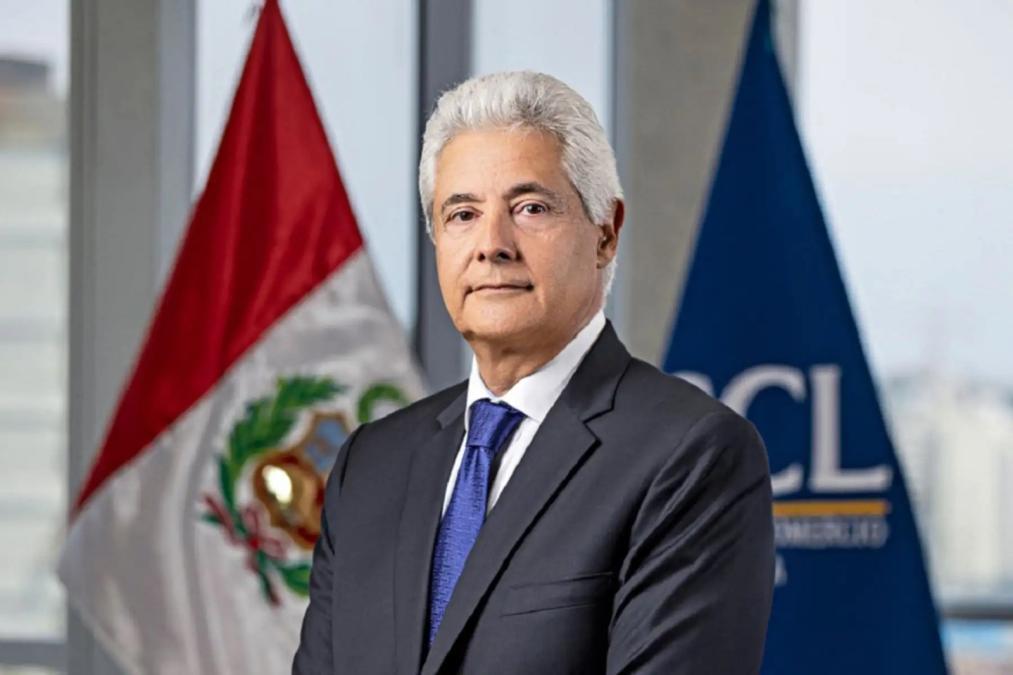
In the midst of the beginning of the electoral cycle, the president of the Lima Chamber of Commerce analyzes how political uncertainty, citizen insecurity and the decisions of the State are influencing the expectations of the business community.
What is expected from business expectations now that the elections begin?
It is foreseeable that, during electoral periods, companies will reduce their investments due to increased political uncertainty. Therefore, it is a priority to reduce this mistrust with a series of key rules or anchors that govern our economy, in particular, reaffirming the autonomy of the Central Reserve Bank, compliance with fiscal rules and the stability of the regulatory framework. This can be achieved through explicit public commitments that are assumed by the candidates, as well as with clear signals that there will be technical continuity in the leadership of the main entities of the State.
Do you think the current presidential candidates are willing to make the commitments you mention?
No. In recent electoral processes, candidates have emerged that ignore the basic principles of a market economy, the role of the State as guarantor of legal stability and corrective of failures, as well as the scope and limits of state intervention. This lack of knowledge weakens business confidence, even before effective changes in economic policy materialize.
What are the main problems that business owners hope the next government will find a solution to?
Without a doubt, citizen insecurity and the advance of illegal economies. Citizen insecurity has become one of the main enemies of economic reactivation, since it reduces the competitiveness and productivity of large, medium, small and even individual enterprises.
For their part, illegal economies are no longer a marginal or isolated phenomenon, but rather a latent danger that looms over the very existence of our society. These are transnational networks that operate with business logic, use advanced technology, manage enormous financial flows and, most seriously, have infiltrated the State, influencing its decisions to the detriment of millions of Peruvians.
How does the business community evaluate the recent decisions of the Executive regarding Petroperú?
The Executive’s decisions were necessary to confront the financial crisis that Petroperú has been dragging on for several decades and are in line with what we had been requesting: a structural reorganization of this state company that faces persistent liquidity and solvency problems in a context in which bailouts are no longer sustainable. Proinversión’s role in the implementation of the action plan will be key.
Is there fear that Congress’s populist agenda will intensify in the coming months?
Populist proposals cannot divert us from the course of progress. We must commit to responsible initiatives that ensure clear rules of the game and guarantee effective respect for institutions and the continuity of the macroeconomic pillars that have allowed economic growth to be sustained, even in a very complex global and regional context.
What are the issues on the Legislative agenda that concern you most?
To mention only the case of bureaucratic barriers, it is questionable that the intention is to give greater control power to municipalities so that they can close commercial premises and apply fines without further motivation.
The creation of funds from fines applied to companies is also being considered to finance consumer associations that are dedicated to persecuting businesses, which generates a vicious circle.
In terms of security, how would you rate the work of the Executive?
The insecurity crisis is currently the most pressing challenge in the country, and entrepreneurs in the transportation and commerce sectors are the most affected. Microentrepreneurs not only face the risk of their business, but they risk their lives.
Despite the concern shown by the Government, no significant progress is perceived in terms of citizen security. It is necessary to move faster and more constantly in the fight against crime, extortion and illegal economies, which especially affect micro and small businesses and become a serious obstacle to investment.
From the unions, what can be done to help combat this scourge?
From the Lima Chamber of Commerce, in October 2025, the formation of the Coalition for Citizen Security was promoted, made up of unions that represent more than half a million micro and small entrepreneurs from different productive sectors, together with social organizations, to express our indignation at the inaction of the authorities in the face of the wave of violence that is plaguing our country.
We hope that the National Citizen Security Plan that President José Jerí will present marks a clear course, with concrete actions, and that the approval of the law against extortion and contract killings will allow us to obtain effective results for the benefit of all Peruvians.
Receive your Perú21 by email or WhatsApp. Subscribe to our enriched digital newspaper. Take advantage of the discounts here.
RECOMMENDED VIDEO