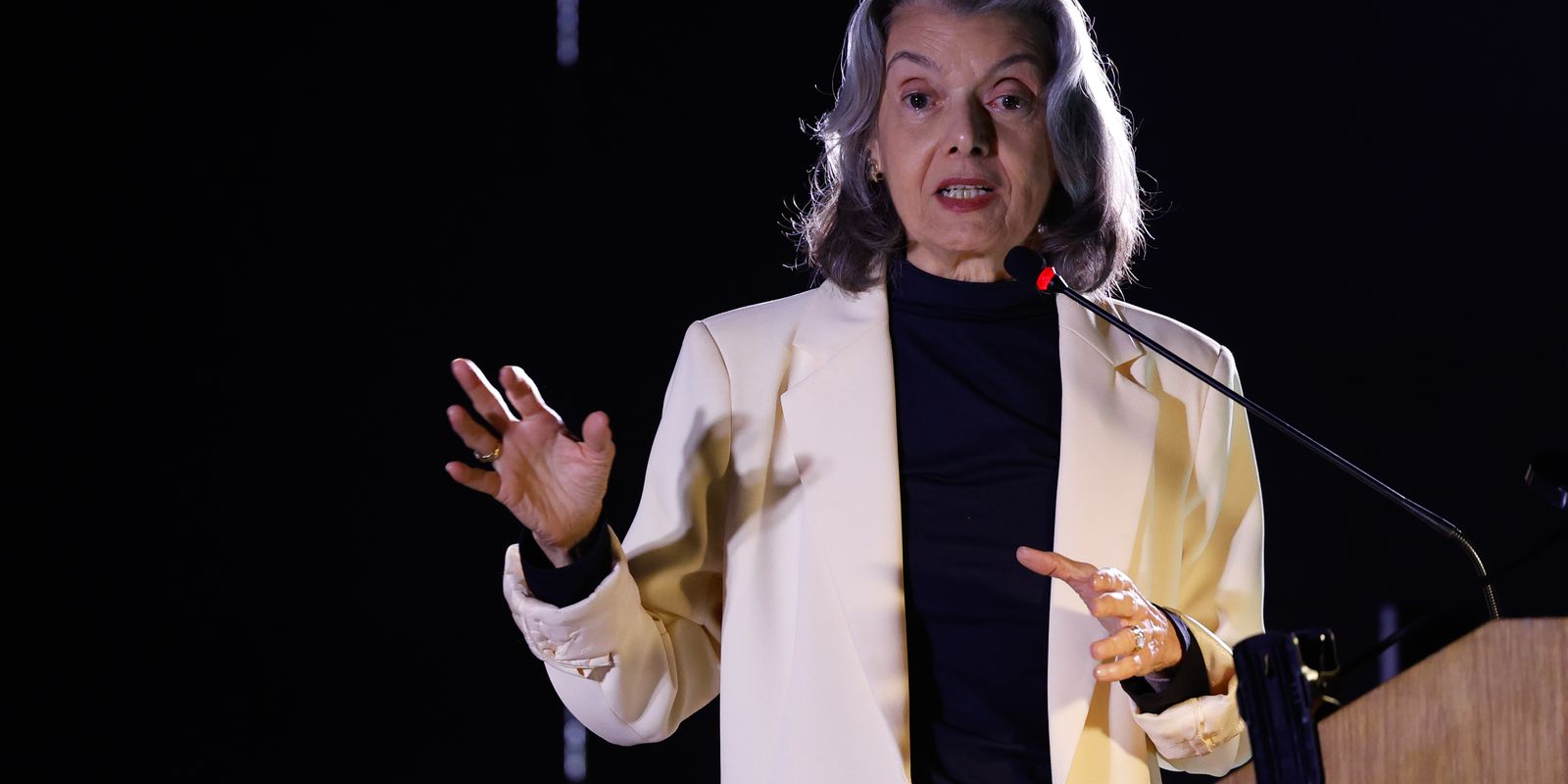
Minister Carmén Lúcia, of the Federal Supreme Court (STF), highlighted this Saturday (29), at a literary event in Rio de Janeiro, that society needs to fight daily to defend democracy against authoritarian initiatives. She compared dictatorships to weeds, which need to be cut and monitored so that they do not threaten the country again.
The speech takes place days after the STF determined the beginning of the fulfillment of sentences imposed on those convicted of the so-called Nucleus 1 of the attempted coup d’état. The group is made up of former president Jair Bolsonaro, military personnel and former members of the government’s top echelon. The minister compared exceptional regimes to plants that are born at unwanted times and bring negative impacts to a given ecosystem.
“The weed of the dictatorship, when it is not taken care of and removed, takes over the environment. It appears out of nowhere. For us to make a democracy flourish in our lives, in our space, we need to build and work every day for it”, he defended.
“That’s why I say that democracy is a life experience that is chosen, that is built, that is elaborated. And life with democracy is done every day. We fight for it, we make it prevail”, he added.
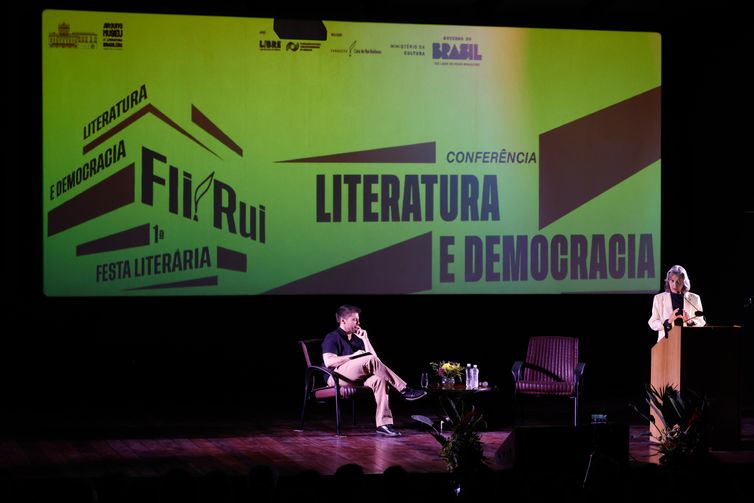
Carmen Lúcia talks about literature and democracy at the Casa de Rui Barbosa Literary Festival. – Fernando Frazão/Agência Brasil
Carmém Lúcia recalled the coup documents that spoke of plans to assassinate Executive and Judiciary leaders.
“The first victim of any dictatorship is the Constitution. The other day someone asked me why judge an attempted coup, if it was just an attempt. My son, if they had carried out a coup, I would be in prison, I wouldn’t even be able to be here judging”, he highlighted.
“In these trials that we are carrying out this year, the attempt to ‘neutralize’ some Supreme Court ministers was documented in words. And as I said in one of the votes, neutralizing was not harmonizing the face, to prevent wrinkles from appearing. Neutralizing is not even being able to have wrinkles, because it kills the person before they are still young.”
The minister participated in the Literature and Democracy conference, an event that is part of the 1st Literary Festival of the Casa de Rui Barbosa Foundation (FliRui), in Rio de Janeiro. The program ends this Sunday, with the participation of prominent indigenous names in national literature, such as Daniel Munduruku and Márcia Kambeba.
Carmém Lúcia highlighted during the event the importance of bringing debates about democracy closer to broader and more welcoming cultural spaces, such as the Casa de Rui Barbosa Foundation. According to the minister, literary environments offer more plural ways to involve the public in discussions that are often restricted to the legal universe.
“This is not a space dedicated exclusively to debates in the formal, official political sphere of the State. Here is a space that allows society to come together, debate, reflect. And from here proposals can come out so that we think that democracy is a model of life for all of us”, he said.
The minister highlighted that the Casa de Rui Barbosa has in its history a commitment to the democratic struggle, reflected in the trajectory of Rui Barbosa, a jurist and politician who faced persecution and was even exiled for defending fundamental rights.
“Nothing is more coherent with the purposes of a house like this than maintaining this social, institutional commitment to Brazilian democracy. Opening a house like this to the public is to comply with generosity, with largesse and with the commitment that makes us all grateful for this gesture”, said Carmém Lúcia.
Coup d’état
Former president Jair Bolsonaro and six other allies began serving their sentences on Tuesday (25) after the Federal Supreme Court (STF) ordered the end of the process for the defendants in Core 1 of the plot that intended to prevent the inauguration of President Luiz Inácio Lula da Silva in 2023.
The sentencing took place on the day September 11th. By 4 votes to 1, the First Panel of the STF convicted the seven defendants for the crimes of:
. Armed criminal organization, Attempt to violently abolish the Democratic Rule of Law,
. Coup d’état,
. Damage qualified by violence and serious threat and
. Deterioration of listed heritage.
The First Panel of the STF also decided to sentence the defendants to the penalty of ineligibility for a period of eight years.