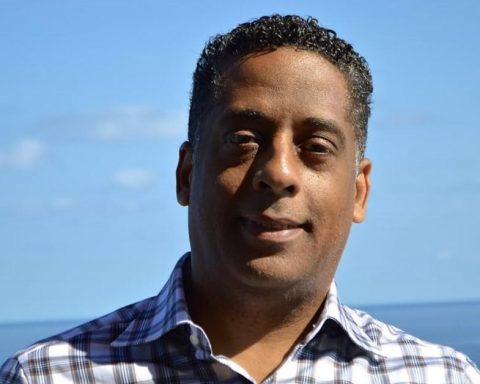
Madrid, Spain. -For more than four decades, Carlos Varela has been The voice of a generation marked by disenchantment, But also for hope. Today, on its 62nd birthday, the Havana troubadour continues to occupy an uncomfortable place for the regime and necessary in Cuban music, with letters that go through time and that, in recent years, have become increasingly direct in their criticism of power and in their defense of freedom.
Varela was born on April 11, 1963 in Havana and from a young age he joined the New trova, although he quickly delineated his own path. With an intimate lyric, narrative and, many times, melancholic, he was moving away from the official discourse that characterized his contemporaries. In the 90s, albums like Air coins (1991) or Like fish (1995) reflected the social exhaustion left by the Special period. Songs like “Family photo” or “Walls and doors” – including the album Clouds (2000) – They already drawn a subtle but firm criticism of the lack of freedom.
The song “A word” (2000) reached international projection and consolidated it as an artist of cult inside and outside the island. Despite the recognition, Varela has been constantly marginalized of official spaces in Cuba and his concerts have been subject to censorship or silencing.
In recent years, however, his message has evolved towards an even more direct tone. In June 2023, in an interview with Cuba Diario, Varela said: “Each artist has to pay for the songs he does,” showing the consequences of maintaining a critical position in a country where art is guarded.
2024 marked another turning point in the life of the singer -songwriter and his music. First with the premiere of the song “Elephants”, a song that anticipated with the phrase “This is no longer the one who endures it”, interpreted by many as a reaction to the aggravation of the Cuban crisis. Then, in March of that year, he published “I’m going to be free,” A composition that does not hide his disenchantment with the official discourse: “I don’t give him more turns, your time has passed, like your old story.”
The launch of this song coincided with spontaneous protests in cities such as Santiago de Cuba, which increased its impact. A few hours after, the theme exceeded six thousand reactions in social networks, confirming that his music continues to connect with popular feeling.
In addition to his musical work, Varela has publicly expressed his support for the families of the political prisoners. In March, during a concert in Madrid, he dedicated his song “Grafiti de Amor” to the mothers of those imprisoned by the protests of July 11, 2021. And shortly thereafter, In an interview With eldiario.es, he denounced how “there are people who have made hatred among Cubans into a political business,” appealing to reconciliation as an urgent way to heal the country.
Today, when Carlos Varela turns 62, his voice is still essential. In a country crossed by uncertainty and exile, their songs are still that place to which many Cubans return again and again – to understand, to remember … in times where many artists opt for silence because silence is easier, Varela has chosen to continue composing, denouncing and singing to that Cuba that, as he proclaims, “one day will be free.”