
Santo Domingo.- In the corruption file of the National Health Insurance (Senasa) rhighlights the placement of presumably unnecessary stents to patients, including cases in which, according to the Public Ministry’s accusation, they would have been implanted up to five devices to one person.
The interventional cardiologist Carlos H. García Lithgowhead of the Hemodynamics Unit of the Diagnostic Centers and Advanced Medicine and Medical Conferences and Telemedicine (CEDIMAT), explained that this is one of the aspects that greater fear has generated in the populationby raising the question of whether thousands of patients were subjected to invasive procedures without a real medical indication.
“There are many people on the streets who are afraid. Young people with stents, families wondering if it was really necessary,” said the specialist, who acknowledged that, given the current context, “that fear is reasonable”.
Cardiovascular deaths and the real magnitude of the problem
According to data from the Ministry of Public Health, in the Dominican Republic there were around 22,000 deaths from cardiovascular causes last yeara figure that, according to García Lithgow, serves as a reference to estimate how many cardiac procedures should be performed annually in the country.
Read also: What will happen to SeNaSa members after the million-dollar fraud?
“If we take that number as a base, a country with a medium economy like ours should be doing between 30,000 and 70,000 catheterizations per year”, he points out.
Of that volume, he explains, between 20% and 25% of patients would require the placement of one or more stents, which is equivalent to between 12,000 and 15,000 stents annually.
“That figure, in general terms, is not out of reality. The problem is not how many are made, but to whom they are made and under what criteria”, he noted in the El Día Program.
What is a stent and why it cannot be placed lightly
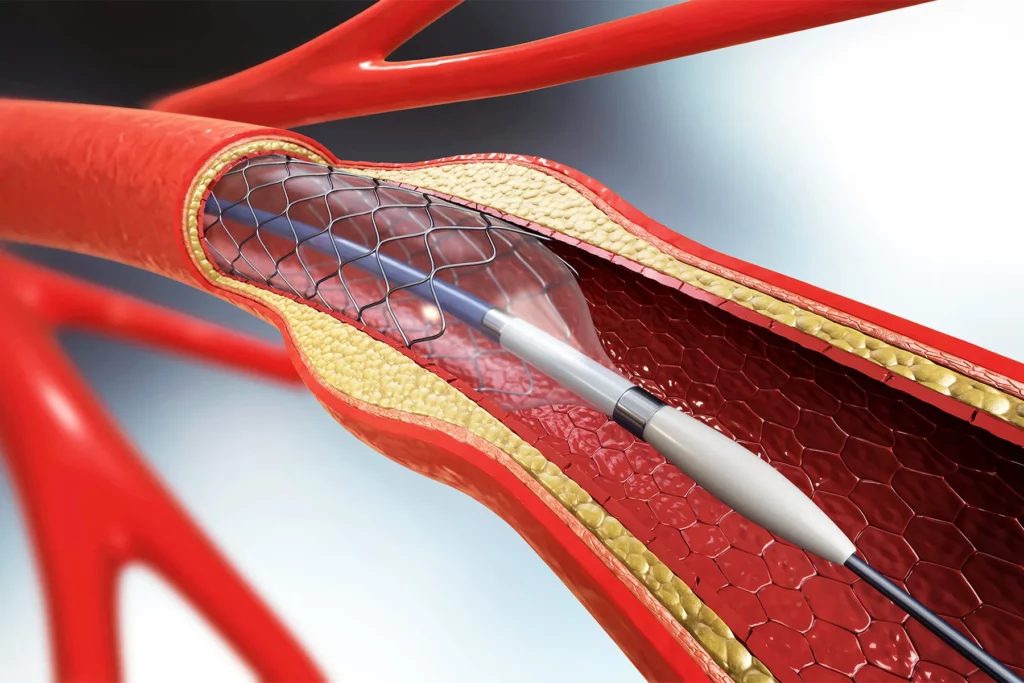
Dr. García Lithgow explains that a coronary stent It is a small metal mesh that is implanted inside a blocked artery to restore blood flow to the heart.
“It is like a steel spring, a kind of mesh that opens the artery and allows the heart muscle to re-oxygenate,” he explained. However, he warns that It is not a reversible procedure.
“If a person has a stent placed without needing it, their life will change forever. You have to take medication for life, take risks, and that can’t be undone.r. That, if done deliberately, It is a crime from an ethical point of view,” he says.
Five stents in a single patient?
One of the cases that has drawn the most public attention is that of a patient who, according to what was stated by the Public Ministry, had been placed five stents without medical justification.
“Putting in five stents is something exceptionalis not common, but it can occur in very specific and serious cases. “I have done it myself in extreme situations to save a life.”clarifies the specialist.
“What is not acceptable is for it to become a routine practice.”
Also read: Luis Abinader orders Senasa to file a lawsuit; guarantees fraud will not go unpunished

System limitations
García Lithgow introduces a key element in the debate, which is the limitations imposed by insurers to authorize modern diagnostic tools.
“Many ARS authorize the stentbut they do not authorize procedures such as FFR, IVUS or OCTwhich are what allow us to see inside the artery and determine precisely if there really is a severe obstruction,” he denounces.
“It’s like authorizing only part of the procedure. and let you work practically blind, based on long-standing visual techniques. 70 or 80 years.”
Senasa: from social lifesaver to questioned institution
The cardiologist remembers that for years he was a defender of National Health Insurance.
“I recommended many people who joined Senasa. At six in the morning I see the reality of the poor Dominican, and “Senasa was a lifesaver,” he states.
According to him, in the past the insurance authorized and paid for complex procedures in both private and public centers. However, in recent years, the dynamic has changed.
“Today it is not that they do not authorize, it is that it’s a lot more workthere are more obstacles, more bureaucracy. And that can delay life-saving procedures.”
Conflicts of interest?
Regarding the possibility that doctors and health centers have formed networks to benefit financially, García Lithgow is cautious.
“Everything is possible and everything is demonstrable. If bribes or commissions were paid for stents, “That is very serious,” he points out.
Also warns about conflicts of interestas doctors who would be, at the same time, importers of medical devices.
“A doctor should not be a supplier of supplies that he himself implements. That is a huge ethical conflict.”
Who should do the medical examination
For the specialist, one of the most serious errors in the analysis of the case has been who evaluates the relevance of the procedures.
“The expert opinion of a case of coronary intervention must be done by a interventional cardiologistor a panel of them, not cardiovascular surgeons, because they are different specialties,” he emphasizes.
Proposes the creation of independent expert panelsincluding international ones, that evaluate the cases blindwithout knowing the doctor or the center involved, to avoid bias.
The human impact and collective fear
Beyond the figures and the technique, García Lithgow insists that the greatest damage of the scandal is the distrust.
“There are people wondering if their father died because they didn’t authorize something, or if they did too much to him. That’s devastating.”
That is why he recommends patients look for second opinionsinvestigate the resume of your doctors and do not get carried away only by informal recommendations.
Prevention and ethics
For the cardiologist, the solution goes beyond the caso Senasa.
“This is an opportunity to review the entire healthcare system. Strengthen primary care, establish clear protocols, strengthen health care committees ethics and putting prevention at the center.”
“If it is proven that someone put stents without need, The full weight of the law must fall on him. “Medicine cannot become a business at the expense of human life.”