On the side of Mexico, the balance also does not look balanced: Canada represents only 2% of its imports and 3% of its exports, compared to the overwhelming dependence of the United States, which absorbs 41.1% of purchases and 83% of national sales.
Cameron Mackay, Canadian ambassador to Mexico, emphasizes that the last year transformed the bilateral relationship into a context marked by global changes and US protectionism. The new Washington tariffs interrupted supply chains, raised costs and introduced uncertainty, which makes the alliance with Mexico as a strategic corridor of North America more valuable.
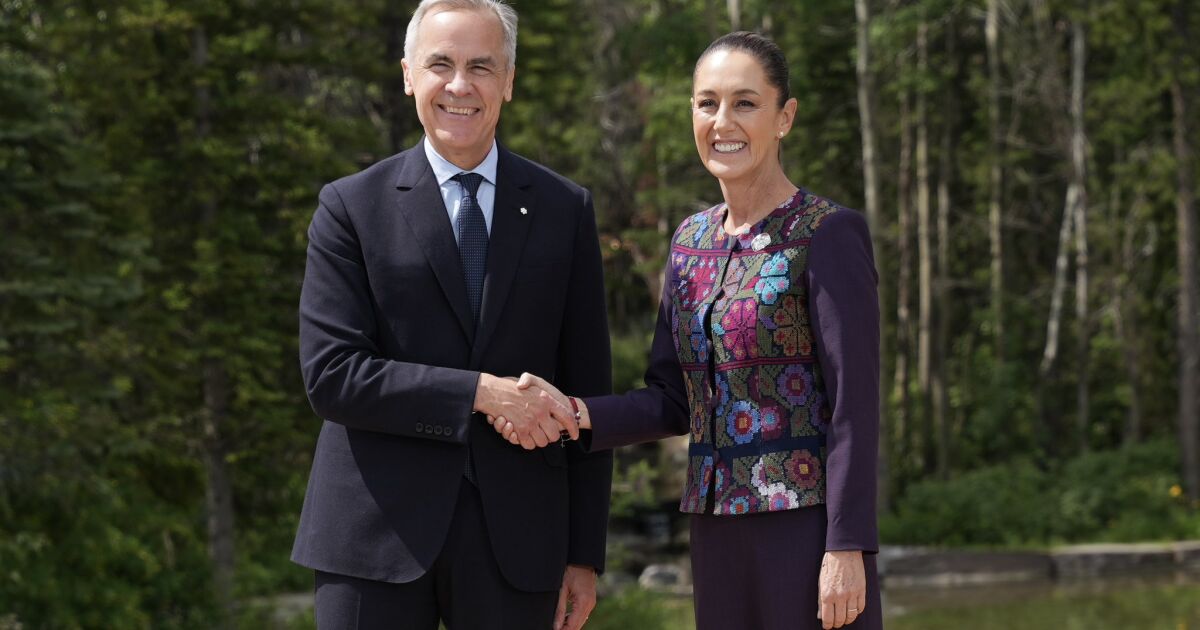
The diplomat recalled that the relationship was reinforced in June, with the meeting of the Canadian Prime Minister and President Claudia Sheinbaum at the G7 summit, focused on trade, energy, agriculture and security, as well as in the preparation for the revision of the T-MEC in 2026.
The provincial offensive is mixed with the federal agenda. Ontario provides most of the GDP of Canada (39.1%) and concentrates industries that mark the pattern of American integration. Toronto, a financial center that emulates New York, holds an automotive industry integrated to the Mexican. In their plants, vehicles are assembled whose pieces cross the border up to 11 times before reaching the final buyer.
The province knows that the relationship with Mexico is not rivalry, but complement, a gear that strengthens the productive chains of both economies, says José Abad-Puelles, head of the Ontario Trade and Investment Office in Mexico.
Alberta takes a different path and its bet is in the field and energy. It also exports beef and pork, cereals and oilseed seeds that find a market in Mexico. At the same time, it places its innovations in carbon, hydrogen and geothermia capture as a presentation letter to a country that seeks to accelerate the energy transition.
Alberta represents 15% of Canadian GDP, is three times the size of the economy of Nuevo León, and does not hide its interest in attracting Mexican investment, today reduced to two cases: Bimbo and Industrial Grupo Vida.
Quebec, on the other hand, displays plane wings. Its aerospace sector represents half of the Canadian national industry and exports 80% of its production. The relationship with Mexico was born two decades ago, when Bombardier chose Querétaro to make aircraft fuselage.
Since then, companies in that province develop light pieces and decarbonization technologies that travel to the Bajío and return to complete assemblies in Mirabel, a suburb of the Quebec city. The model reflects a virtuous circle: Mexico brings advanced manufacturing, the province puts innovation at Punta and that is where they want to leave more mark, says Stéphanie Allard-Gomez, the general delegate of Quebec in Mexico.
Saskatchewan writes its history from wheat fields and potassa mines. The province promotes regenerative agriculture and methods such as the zero tillage, which takes advantage of snow to hydrate the soils without plowing. Capture, in addition, 92% of agricultural emissions and boasts 24 of the 30 critical minerals identified by Canada.
Mexico observes carefully, aware that these environmental technologies can reinforce its own agri -food sector. The bet goes beyond grains and fertilizers, as it seeks to create sustainable chains that reduce emissions and guarantee quality, says Alejandra Téllez, head of the Saskatchewan trade and investment office in Mexico.
British Columbia, on the other hand, opens offices in Mexico and diversifies its portfolio. Its trade is based on forest products, but its plans point to six sectors: agri -food, clean energy, mining, digital technologies, aerospace and water, says Mauricio Dávila, general director of the office of that province in Mexico.
With the United States entangled in commercial barriers, British Columbia finds in Mexico a partner willing to replace supplies and open alternative routes. Its companies explore the Mexican market with frequent visits and hope to make it a priority partner.
Interest is not limited to governments. Luis Noriega, president of the Canham Mexico, stressed that this year a dozen Canadian companies joined the Chamber with plans to invest in the country. With them, the agency already adds 270 companies.
The possible visit of the Prime Minister to Mexico will also mark a new level in the association. For Mackay, the bilateral future opens with opportunities in clean energy, digital transformation, advanced manufacturing and commercial corridors. His call to the private sector was direct: it is the companies who turn the policies into progress. “In times of uncertainty, our strength lies in collaboration.”