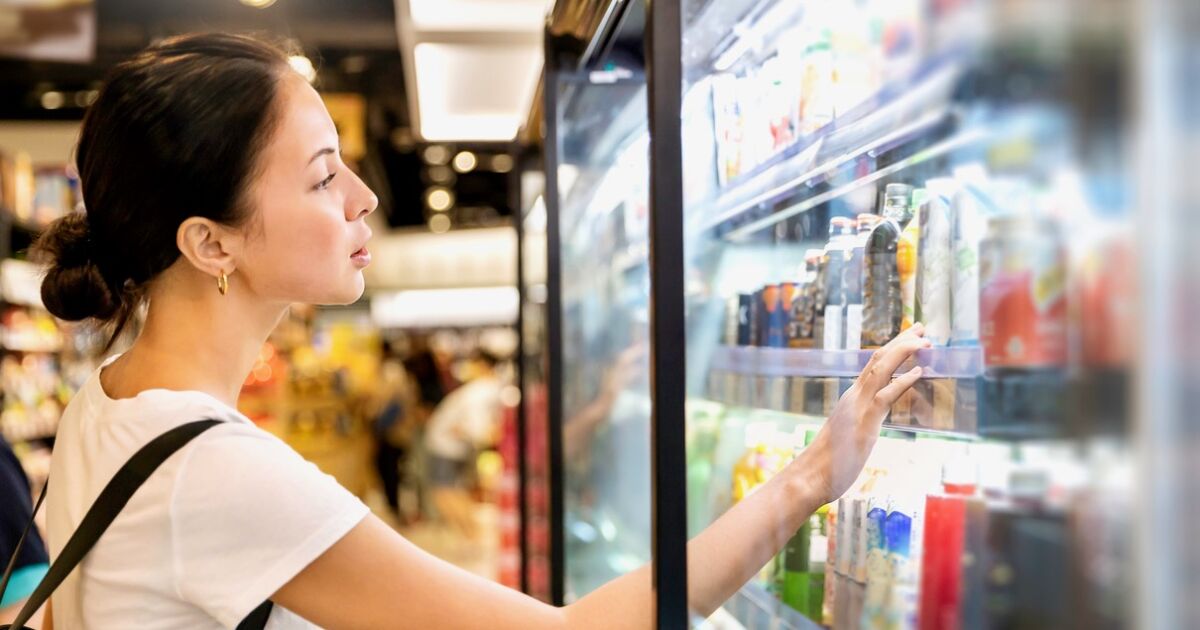
With the objective of discouraging its consumption and taking care of the health of the population, the Ministry of Finance and Public Credit (SHCP) proposes for the following year to increase the quota of the Special Tax on Production and Services (IEPS) on flavored drinks such as soft drinks, juices and even those with added sweeteners, from 1.64 pesos per liter that currently applies, to 3.08 pesos per liter.
The proposal is part of the 2026 Economic Package, which has until October 31 to be discussed and voted on by Congress.
The IEPS law taxes the sale or import of flavored beverages, concentrates, powders, syrups, essences or extracts that contain any type of added sugars. The reform proposal consists of changing article 2 to include flavored beverages with added sweeteners in the tax base.
“What this represents is that for caloric (drinks) there will be an increase of 1.43 pesos, why? Because they are increasing from the current quota to the goal established in the provision itself, while, for non-caloric ones the increase is complete, it is from zero to 3.08 pesos,” explained Patricio Caso, from the Confederation of Industrial Chambers (Concamin).
The main justification for this Executive proposal is concern for public health. The consumption of sweeteners has been associated with several health risks, including a 76% increase in the risk of obesity and a 23% increase in the risk of suffering from type 2 diabetes in adults. Furthermore, in the child population, the consumption of sweeteners is associated with greater habituation to sweet taste, increased body mass index and decreased insulin sensitivity, the Treasury says in the reform proposal.
“This measure, as proposed, will not help combat the stated objective. The industry has invested significant resources to develop alternatives with fewer or zero calories. (…) So much so that the options for low or no-calorie beverages in Mexico are aligned with health recommendations that seek to reduce sugar consumption,” commented Raúl Domínguez of the National Chamber of the Processing Industry (Canacintra).
In this sense, Canacintra proposes a differentiated tax only for drinks with added sugars.
Domínguez highlighted that the measure will have a socioeconomic impact and will generate the risk of piracy, in addition to becoming a higher cost for the consumer, being a tax that will affect the pockets of lower-income families more.
“A tax increase will not substantially reduce consumption, but could generate an incentive for informal commerce and a health risk. Today there are and we have examples of soft drink piracy. The solution is education and the promotion of physical activity,” explained the Canacintra representative.
They ask for a difference for powders
The powder industry for preparing fresh water also expressed its support for creating differentiated taxes for these products.
“As it is currently drafted, the initiative means a severe crisis for this industry and there is a real possibility of closing production lines. And that is what we want to do today, raise awareness and ask for proportionality for this category in particular,” commented José Luis Urrutia, representative of the powder industry to prepare fresh water.
He explained that, for other categories, the proposed changes to the IEPS represent a 20% increase in the prices of their products, but for the powder category it would mean an increase of 190%. “Something that clearly takes these products off the market,” added Urrutia.
This would represent the loss of 5,000 direct jobs and a blow to a sector that generates 4,000 million pesos in sales.
“And if these production lines close, we would be talking about the loss of more than 700 million pesos in VAT, ISR and the Payroll Tax (ISN),” said the representative of this industry.
The proposal to reform the IEPS law states that the applicable fee will be 3.08 pesos per liter, and establishes that for concentrates, powders, syrups, essences or flavor extracts, the tax will be calculated taking into account the number of liters of flavored beverages with added sugars or sweeteners that, in accordance with the manufacturer’s specifications, can be obtained, from the total of products sold.