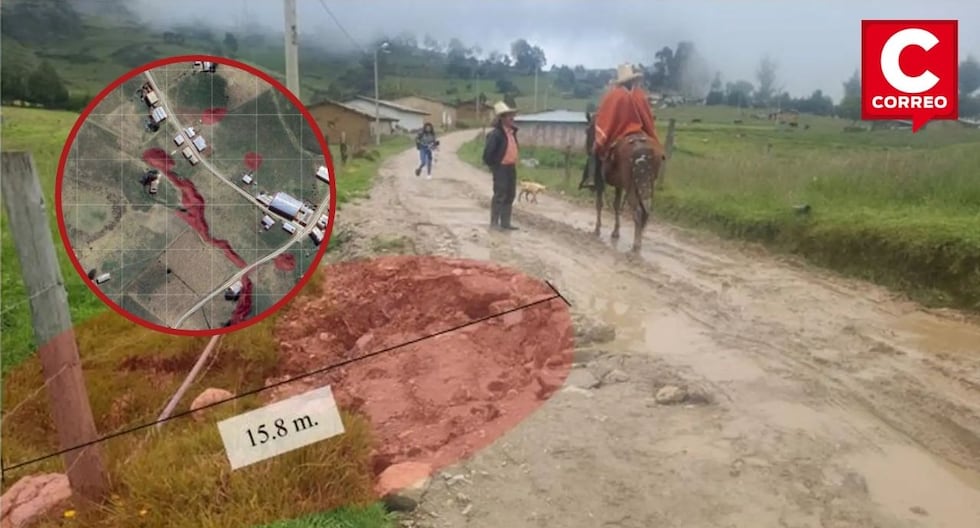
The Geological, Mining and Metallurgical Institute (INGEMMET) identified five areas with progressive sinks in the hamlet of San Juan de Piobamba, District of Oxamarca, province of Celendín, in Cajamarca.
As reported by the entity, these depressions in the soil represent a direct risk for the population, homes and local infrastructure.
The specialists explained that these subsidence occur progressively on the surface, so they recommended avoiding new buildings in high -risk areas and opting for the implementation of waterproof drainage systems.
They also raised the need to signal the affected areas and to carry out more detailed geological studies that allow determining the extension and morphology of underground cavities.
The report states that the lands in the area are mainly made up of limestones, a type of rock that dissolves with water in a process known as karstification. This phenomenon intensifies in rainy seasons, such as those registered between January and March, when 40 millimeters were exceeded in one day. Precipitation favor the infiltration of water in the subsoil, increasing instability.
To the natural conditions are added human factors that aggravate the situation, including the lack of adequate drains, the excavations for constructions and the accumulation of humidity caused by dense vegetation. In addition, the soft slope of the land, which varies between 1 and 15 degrees, facilitates water filtration.
The most extensive sinking registered exceeds 200 meters in length. However, the study warns that artisanal fillings made by the settlers to mitigate the problem do not guarantee soil stability or represent a definitive solution.
The document was prepared in coordination with local authorities in order to provide technical information that serves as the basis for decision making and disaster prevention in the area.