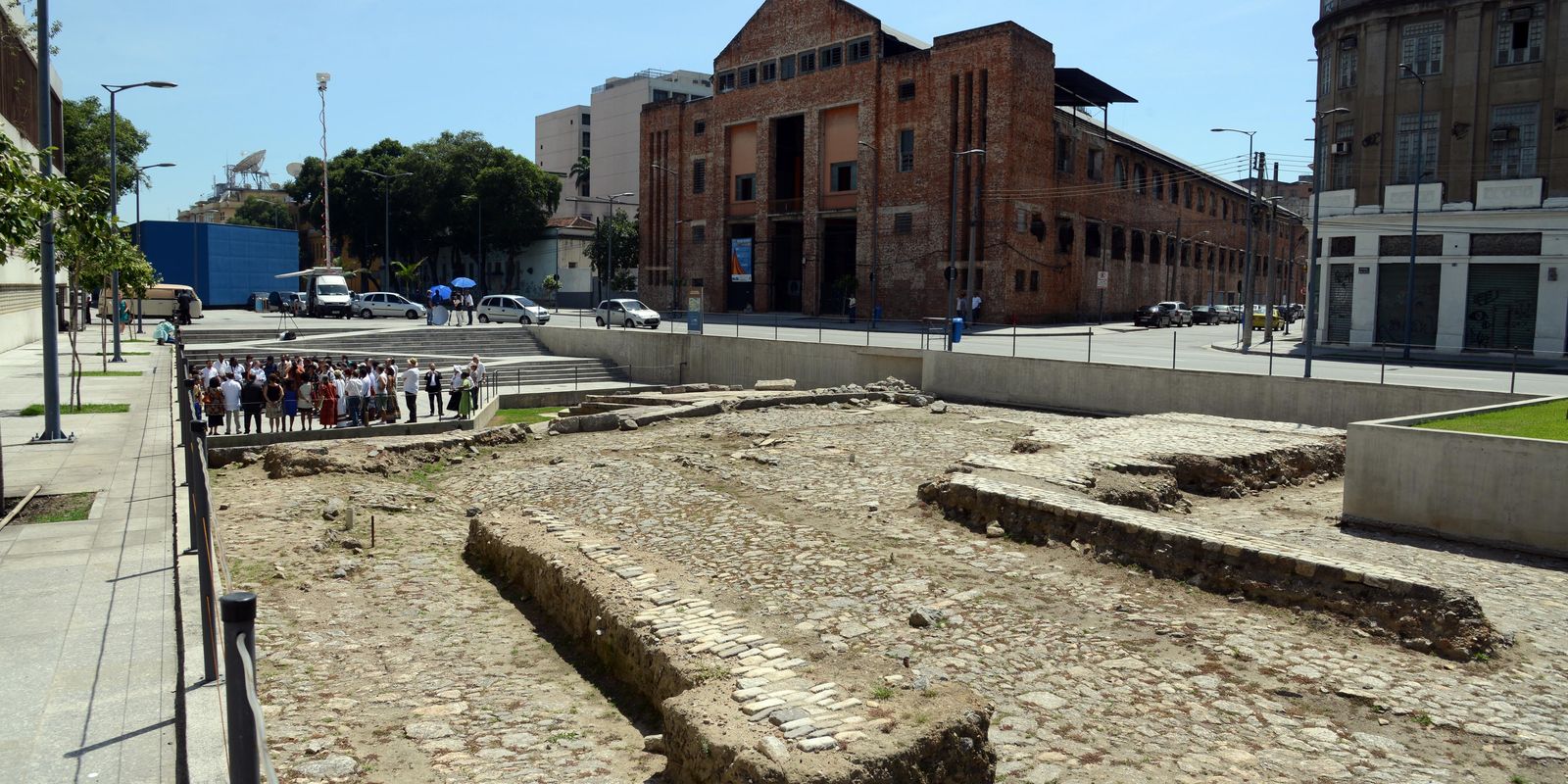
THE Cais do Valongo Archaeological Site, in the port region of Rio de Janeiro, was recognized as an Afro-Brazilian Historical-Cultural Heritage essential to the formation of national identity. The text also establishes guidelines for the protection of the World Heritage Title of Humanity granted by the United Nations for Education, Science and Culture (UNESCO) to the place.
THE Law No. 15.203/2025 was sanctioned by President Luiz Inacio Lula da Silva and published in the Official Gazette of the Union this Friday (12).
According to the Planalto Palace, the objective is to ensure the preservation of the site as a symbol of the memory of the African diaspora and the process of enslavement in Brazil, in line with the guidelines of the Federal Constitution and UNESCO.
“To this end, it establishes guidelines that deal with public consultations with entities linked to the defense of black population rights, technical guidance by historical heritage specialists, respect for Afro-Brazilian cultural manifestations and the protection of sacred goods of African matrix religions,” says the presidency of the Republic.
Still according to Planalto, the Law deals with the integration of the site into cultural circuits, the dissemination of relevance nationwide and international and the coordination of actions with the city of Rio de Janeiro to ensure conservation. The text disciplines sources of resources for the maintenance and cost of equity, including budget appropriations, national and international donations, voluntary agreements and transfers.
>> Follow the channel of Brazil agency on WhatsApp
Over the pier
THE Cais do Valongo was the main port of entry of enslaved Africans in Brazil and the Americas. It has received about 1 million people in four decades, making it the world’s largest enslaved port and one of the largest transatlantic traffic points of enslaved people on the African continent.
Listed by the Institute of National Historical and Artistic Heritage (IPHAN) in 2013, and recognized as a World Heritage Site by UNESCO four years later, the Site symbolizes the memory of the violence of slavery, but also of the resistance, freedom and contribution of Africans and their descendants to the cultural, social and economic formation of the American continent.
Discovered in 2011 during the works of Porto Maravilha, the Cais, built in 1811, was transformed into a monument preserved and open to visitation in 2012, integrating the historical and archaeological circuit of the celebration of African heritage. According to Planalto, the circuit brings together important milestones of Afro-Brazilian culture in the port region and reinforces the historical and symbolic value of the place.