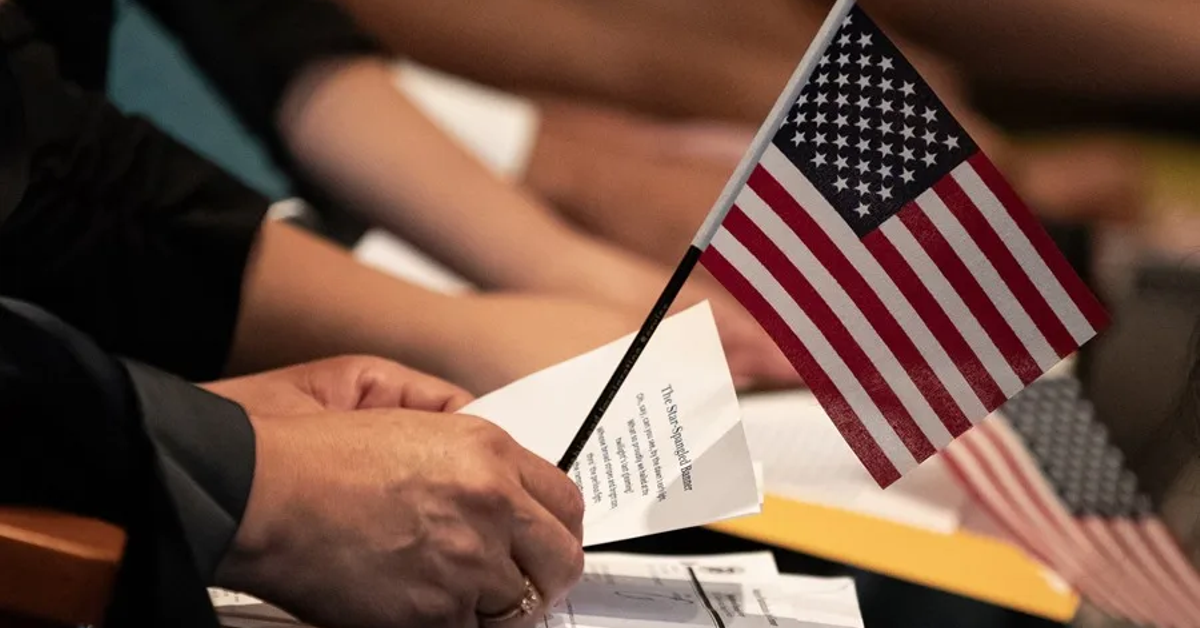
Miami/The young Cuban Anyi Cabrales was about to reach the finish line of the american dreambut just three hours before becoming a U.S. citizen, she received a life-changing notification. His swearing-in ceremony was canceled without reason and without a new date. “It is tremendous to live like this, with fear,” he later said in interview to Telemundo News.
The road here had been long. After passing the citizenship test and submitting his documents, he had followed every step. Until she found herself trapped in the Trump Administration’s new measure against immigrants published last Tuesday: the suspension of all immigration applications submitted by citizens of 19 countries included in the list of total or partial travel bans, including Cuba, which included stopping the residency (‘green card’) and US citizenship procedures.
The United States Citizenship and Immigration Services (USCIS) issued subsequently a new guide to investigate foreigners from those 19 countries considered high risk.
It is tremendous to live like this, with fear
The middle ABC News review that, according to their sources, people from the 19 nations on the list have had their naturalization ceremonies suspended throughout the country. In this act, applicants who have been successful in the tests and the previous interview, take the Oath of Allegiance to the United States, renounce foreign loyalties and receive their Certificate of Naturalization.
Tens of thousands of Cuban immigrants and other nationalities They currently live in uncertainty. The sudden suspension of immigration processes, the tightening of controls and arbitrary detentions and deportations have left families on the verge of emotional and economic collapse.
One of the most dramatic cases, reported by the Univisión journalist Javier Diazis that of Lázara Yelene Campo Cabrera, 29, from Holguín, who was detained in Houston during a routine appointment with ICE (Immigration and Customs Enforcement Service), despite being the mother of a baby with a rare and life-threatening genetic disease. Without a criminal record and even showing the medical papers of her hospitalized daughter, the agency decided to arrest Lázara.
Tens of thousands of Cuban immigrants and other nationalities currently live in uncertainty
Little Antonella, born in the United States a little over a year ago, depends on a respirator to live and requires 24-hour professional care. In these conditions, separation from her mother can affect her even more.
Lázara arrived in the United States in 2021 and was covered by an I-220A document (supervised release permit). Now she is treated as a threat and faces the possibility of deportation, and in that case, the dilemma of leaving her daughter in the United States to continue her treatment or taking her with her to Cuba, with a high risk to her life, since the health services do not have the appropriate means.