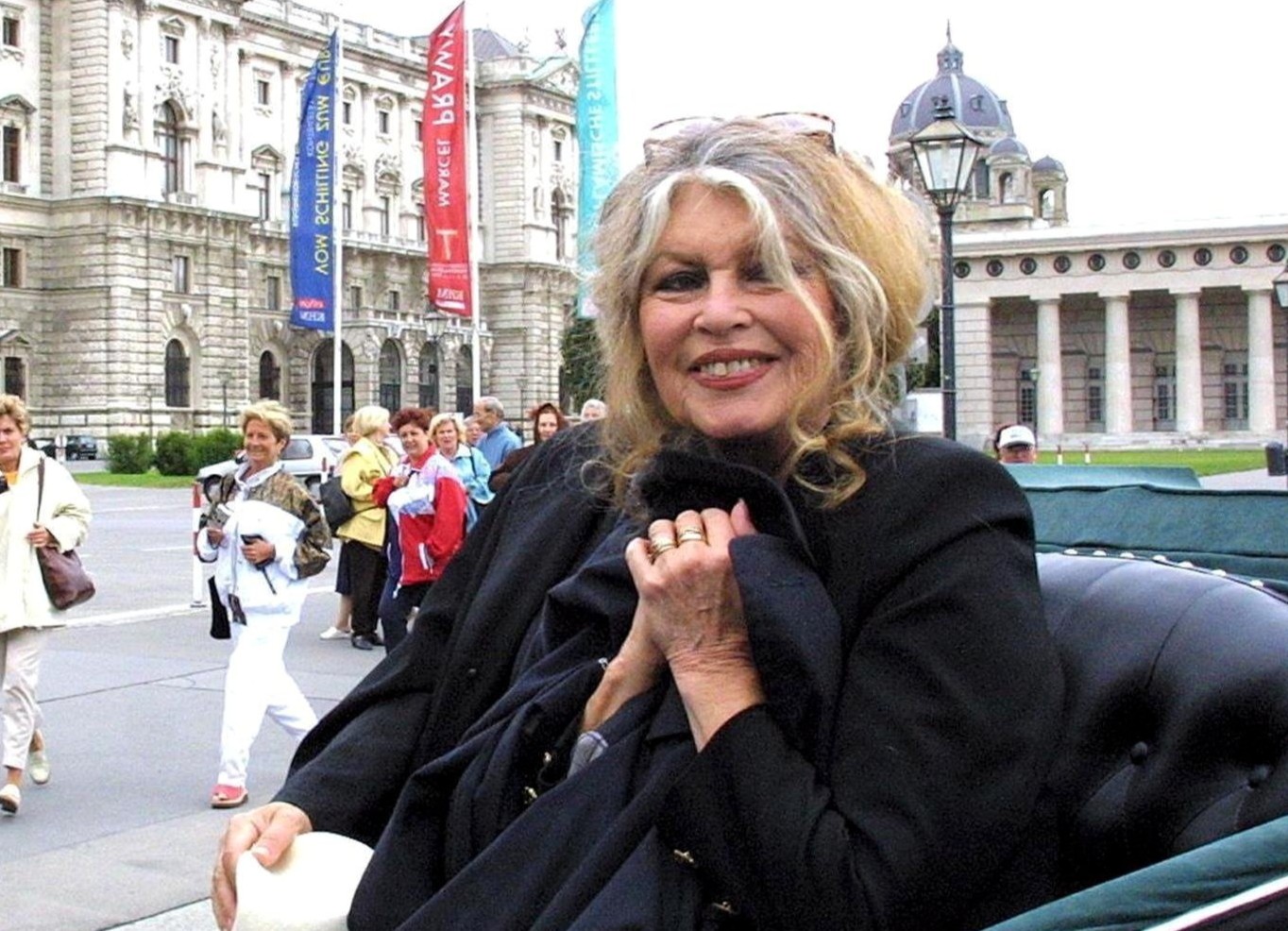
The Brigitte Bardot Foundation announced this Sunday with “immense sadness” the death of its founder and president, the French actress and singer who decided to abandon her prestigious career to dedicate her life to the defense of animals. The statement He did not specify the exact time or place of death.
Brigitte Anne-Marie Bardot was born on September 28, 1934 in Paris. His emergence on the international scene occurred in 1956 with the film And God created womandirected by Roger Vadim, then her husband. The film not only catapulted her to global stardom, but also marked a before and after in the representation of female sexuality in Western cinema.
From the big screen to animal activism
Over nearly two decades, Bardot starred in more than 45 films and recorded more than 70 songs. He worked with some of France’s most prominent filmmakers. His filmography includes emblematic titles such as The truth (1960), a role that earned him the David di Donatello, and The contempt (1963), under the direction of Jean-Luc Godard.
However, in 1973, when she was at the peak of her popularity and only 39 years old, Bardot made the decision to retire from film after struggling with what she described as a “golden prison.” From then on, he channeled all his energy into defending animals.
A legacy of animal commitment
In 1986 she founded the Brigitte Bardot Foundation, which has since worked on animal rescue and campaigns against abuse, hunting and abandonment. His activism had a global impact. One of the most representative images was his appearance in 1977 hugging a baby seal in Newfoundland, Canada, a photograph that traveled the world and contributed to several governments adopting restrictions on the hunting of these animals.
The Brigitte Bardot Foundation “has rescued more than 12,000 animals in its ‘BB Ark’, operates in 70 countries, manages four shelters, employs 300 people and has hundreds of volunteers and 40,000 donors,” according to its website.
Your house in La Madrague, in Saint-Tropezbecame a sanctuary where he lived with dozens of rescued animals. Until the end of her life, Bardot maintained two main struggles: to ban the consumption of horse meat in France and to prevent the slaughter of animals without sedation in slaughterhouses.
Personal life and controversies
Bardot’s personal life was as intense as it was controversial. He married four times and had romantic relationships that attracted the attention of the international press. She was the muse of artists like Serge Gainsbourgwho composed the song for her Je t’aime… moi non plusrecorded in 1967.
The intellectual Simone de Beauvoir he dedicated the essay to Bardot Brigitte Bardot and Lolita syndrome (1959). His personal style revolutionized international fashion and its influence endures to this day.
In public life, Bardot was always a controversial figure. Supported far-right politics Marine Le Pen and was charged with inciting hatred due to statements about immigration and Islam in France.
His last years
Bardot had been in and out of Toulon’s Saint-Jean hospital repeatedly since October, when she underwent surgery for what was described as “a serious illness.” In this context, she herself had to deny rumors about her death through social networks.
In May 2025 he appeared on television for the first time in 11 years, confessing his loneliness after the death of friends like Alain Delon and his dog ET. In that interview with BFMTVsaid that she lived like “a peasant”, far from La Madrague, in another rural property called La Garrigue.
The president of France, Emmanuel Macronpaid tribute to the legendary actress on social media: “Her films, her voice, her dazzling glory, her initials, her sorrows, her generous passion for animals, her face that became Marianne, Brigitte Bardot embodied a life of freedom.”
The death of Brigitte Bardot marks the end of an era for French cinema and animal activism. His figure will continue to be the object of admiration and controversy, recognized both for his artistic legacy and for his fierce defense of animals and his forceful positions in public life.