Financing through bridge credit In Mexico it is showing a strong rebound, supported by a favorable macroeconomic context: stable exchange rate, controlled inflation and falling interest rates.
This especially benefits real estate developers, at a time when the need for housing is combined with a “demographic bonus” that drives demand.
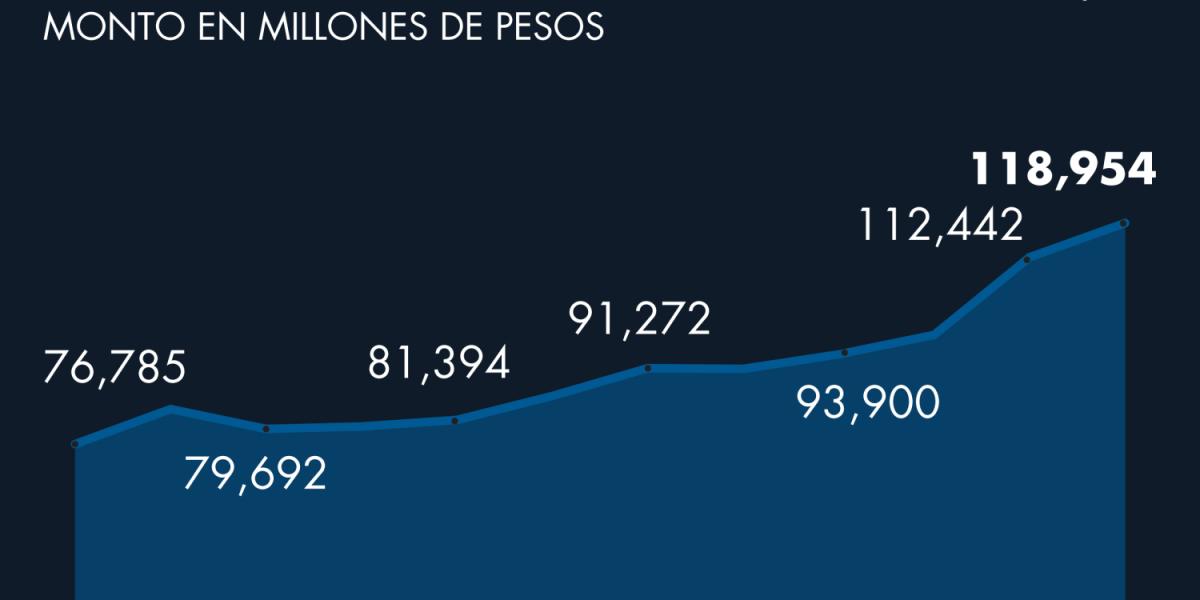
According to data from the Bank of Mexico (Banxico), the commercial banking bridge loan portfolio reached 112,442 million pesos in December 2024, which represents an increase of 46.4% compared to 2020.
By May 2025, that amount had already grown to 118,954 million pesos, confirming a sustained recovery in financing for residential developments after the slowdown caused by the COVID-19 pandemic.
Institutions in the sector, such as Banco Inmobiliario Mexicano (BIM) and Multiva, point out that, despite external risk factors such as tariffs or international economic uncertainty, housing in Mexico is oriented toward domestic consumption. For this reason, they believe that the housing deficit (estimated at around 8 million houses) opens up ample room for growth for residential projects.
However, there are challenges. The approval of new developments depends on paperwork, permits and construction licenses, which sometimes creates bottlenecks.
Even so, with the inertia of the government’s social housing program and the interest of private banks, the bridge loan seems to be consolidated as a key tool to confront the housing deficit and reactivate the real estate market.