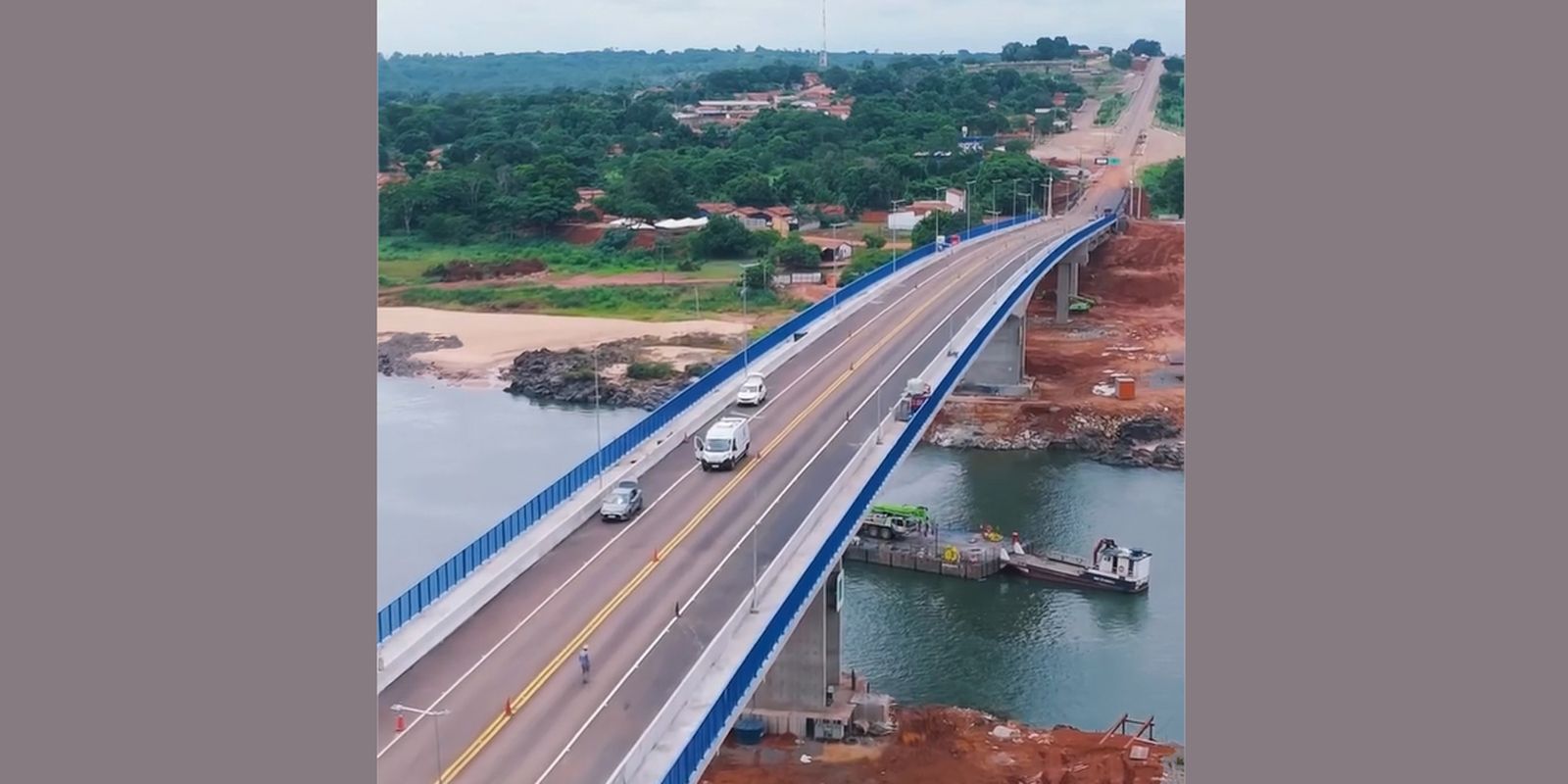
The new Juscelino Kubitschek de Oliveira bridge, which connects the municipalities of Aguiarnópolis, in Tocantins, and Estreito, in Maranhão, was inaugurated this Monday (22), with the release of traffic shortly after 12:30 pm. The inauguration of the structure takes place one year after the tragedy of the collapse, which left 18 victimswith 14 dead, one person injured and three still missing.
The inauguration ceremony was attended by the Minister of Transport, Renan Filho, and the governors of Maranhão, Carlos Brandão, and Tocantins, Wanderlei Barbosa.
The new bridge is 630 meters long, 19 meters wide and has a free span of 154 meters. There are two lanes of 3.6 meters each, two shoulders of three meters each, protective barriers, as well as pedestrian crossings.
For construction, the federal government invested around R$172 million.
Tests
Last weekend, around 20 hours of structural tests were carried out to ensure traffic safety. Eight loaded concrete mixer trucks were used, weighing an average of 30 tons each.
The vehicles passed the bridge in sequence at different speeds. Sensors were used to measure the vibration and response of the structure.
Collapse
Built in the 1960s, the old bridge underwent repairs in 2021, but continued to have problems, until it collapsed in December last year. During the collapse, three motorcycles, a car, two pickup trucks and four trucks fell into the Tocantins River, two of which were carrying 76 tons of sulfuric acid and 22 thousand liters of pesticides.
The National Department of Transport Infrastructure (Dnit) opened an investigation to determine the causes and responsibilities for the collapse, but the investigation has not yet been completed.
The Federal police are also investigating the case. A report presented last July points out, among other causes for the collapse, the overloading of the bridge, deformation of the concrete, loss of resistance capacity and accumulation of vehicles on the site, in addition to poorly executed maintenance and renovations.
The document highlights that it was Dnit’s decision to maintain “traffic higher than that projected for the bridge, over the last decades of its existence”. The investigation remains ongoing.
In a note, DNIT informed that it actively collaborates with all investigative bodies that are working on the incident and that a Preliminary Summary Investigation was opened in the Internal Affairs Department to determine the causes of the collapse of the JK bridge, which will determine the resulting losses and quantify the damage.
The Department also highlighted that it hired the Technological Research Institute of the State of São Paulo to produce an external report that will identify the causes of the bridge’s collapse.