By Manuel Pujadas Cordero, Energy, environmental and technological research center (CIEMAT)
After World War II it was not too difficult to agree internationally than the maintenance of peace and security between nations, the promotion of economic and social development and the promotion of cooperation should be priority and permanent objectives. The wording and signing by representatives of 50 countries of the United Nations Charter, in force since October 24, 1945, meant the founding basis of the United Nations Organization (UN), whose general assembly agreed and adopted, three years later, the famous Universal Declaration of Human Rights (Doubh).
Analyze the thirty articles that constitute that imposing list of rights (political, social, economic and cultural), capitals for all human beings, perhaps allow us to identify some others that, given the circumstances, were not considered priority, although they are undoubtedly.
I refer, for example, to the right to breathe healthy air or the right to drink really drinkable water. It could be said that, by their nature, both would be implicitly collected in the right to life, which logically leads the List of Doubh. But the truth is that, almost 80 years after that firm, For many millions of people around the world, these are aspalic as unattainable aspirations.
At this point and put to defend these primary rights with decision, it is previously essential to define and limit them technically. And for this you have to answer the following issue: under what conditions does air or water cease to be suitable for consumption? In a first reaction we could think that it is a rhetorical question because your answer is already known; However, nothing is further from reality.
What is air?
Focusing on the first part of that issue, managing to establish the minimum physical-chemical limits that breathable air must meet is a first-order scientific challenge.
Environmental air is a complex mixture of constituents, gaseous and non -gaseous, which has evolved throughout the history of our planet and continues in full transformation.
Intuition led Hippocrates (fourth century BC.
First the majority gaseous components (Nitrogen, oxygen and argon) and already in the twentieth century it was discovered that these are maintained in rather stable proportions in the troposphere for at least 100 million years. The role of oxygen as a support of aerobic life And, little by little, many other minority constituents and their different roles and effects (on human health, biodiversity, climate, etc.) were discovered.
Establishing this type of causal relationships is a very complex task and in continuous evolution that has been developed since the mid -twentieth century, at which time the concept of “was born”Air quality”
International Clean Air Day
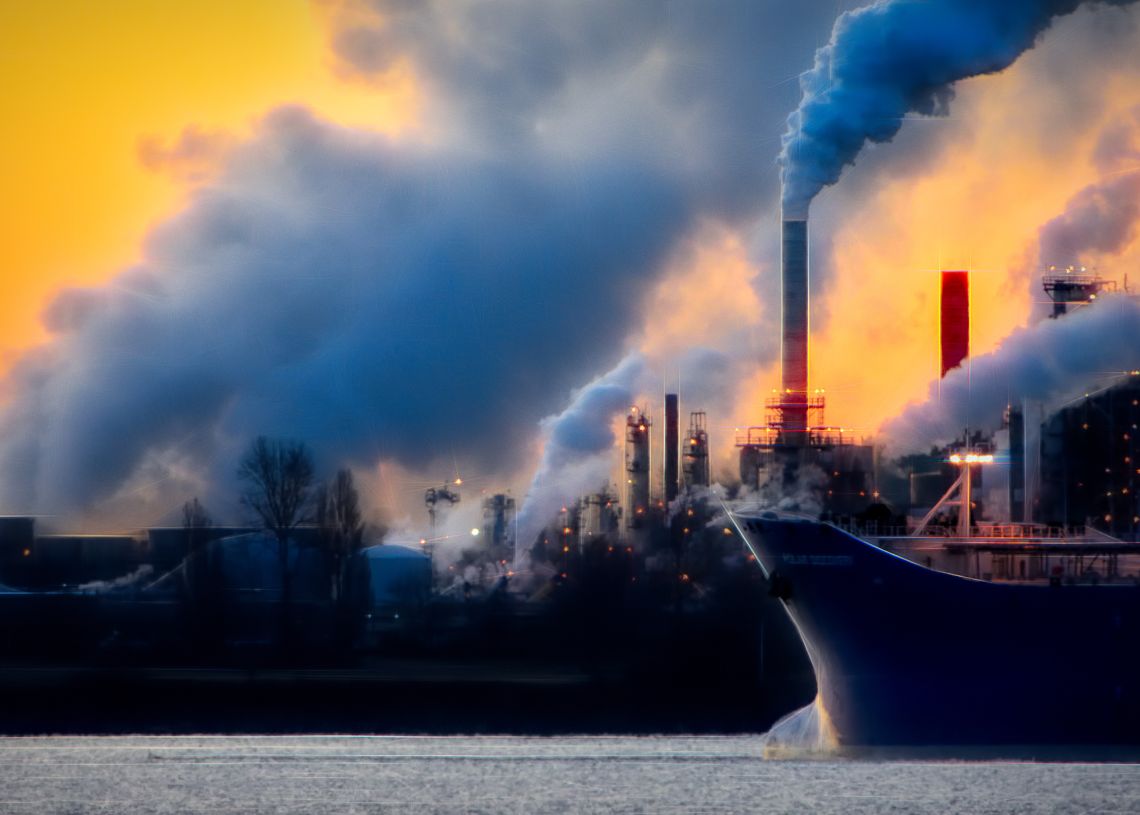
Thanks to the work of atmospheric physicists and chemicals, biologists, doctors, environmentalists, etc., much progress has been made in the knowledge of the atmosphere, in general, and the ambient air and its interactions with the biosphere in particular. This has allowed us to limit the limits that must be established for the environmental concentrations of those constituents that, due to their negative effects on health and the environment, identify as more dangerous air pollutantssuch as particles, carbon monoxide and nitrogen dioxide.
After the immense coup of the COVID-19 in 2020, the UN declared on September 7 as the International Clean Air Day (“For a blue sky,” according to the slogan). Surely, re -verify the terrible consequences of breathing contaminated air throughout the world (in this case biologically), contributed to that decision that, from my point of view, comes to implicitly recognize, finally, the universality of the right to breathe clean and healthy air.
Subsequently, in 2022, the United Nations General Assembly He made a historical decision to recognize that all humans have the right to access a healthy environment. This time the recognition was explicit and broad, but it was “only the beginning”, as The UN Secretary António Guterres warnedsince it requires that all countries apply measures to “make a reality for everyone, everywhere.”
Differences between countries
Decades before this recognition of the UN, the recommendations of the World Health Organization (WHO) and many environmental agencies from different countries showed the imperative need to control the presence in the ambient air of certain pollutants (currently: PM10 and PM2.5, ozone, nitrogen dioxide, sulfur dioxide, carbon monoxide, etc.).
All this was mainly implemented in highly developed areas of the world, such as the US, Europe, Canada, Japan, etc., through the adoption of strict regulatory frameworks and strong control mechanisms, both for contaminating atmospheric emissions of anthropic origin and to monitor air quality, in a progressive and permanent effort. It is enough to remember, for example, that The last European air quality directive is October 2024.
As a result of these initiatives, air quality in these areas has improved significantly with respect to that existing four or five decades ago, and with it the lives of many people. However, at this point in the 21st century, the daily experience of other people of peopleusually in disadvantaged and almost forgotten countries, it is radically different.
In these environments, air quality simply is not a priority and the population cannot exercise their basic right to breathe safely. Consequently, its Morbidity figures and premature mortality due to air pollution are scandalous and periodically denounced by WHO in demolving official reports.
Given this scenario, we cannot resign ourselves to the fact that a large part of the world population remains unable to exercise the basic right to breathe a “reasonably” clean air. It is unacceptable that since birth many people see continuously and inexorable increase the risk of contracting very serious diseases or dying very prematurely for systematically breathing contaminated air.
Therefore, scientists and engineers have to continue working tirelessly to improve the knowledge base in all aspects related to this problem and to find urgent solutions. As a society of the 21st century, globalized for so many things, we should not ignore or allow this tremendous global drama.
Manuel Pujadas CorderoHead of the ATMOSPHERIC POLLUTION CHARACTERIZATION AND CONTROL UNIT, Energy, environmental and technological research center (CIEMAT)
This article was originally published in The conversation. Read the original.