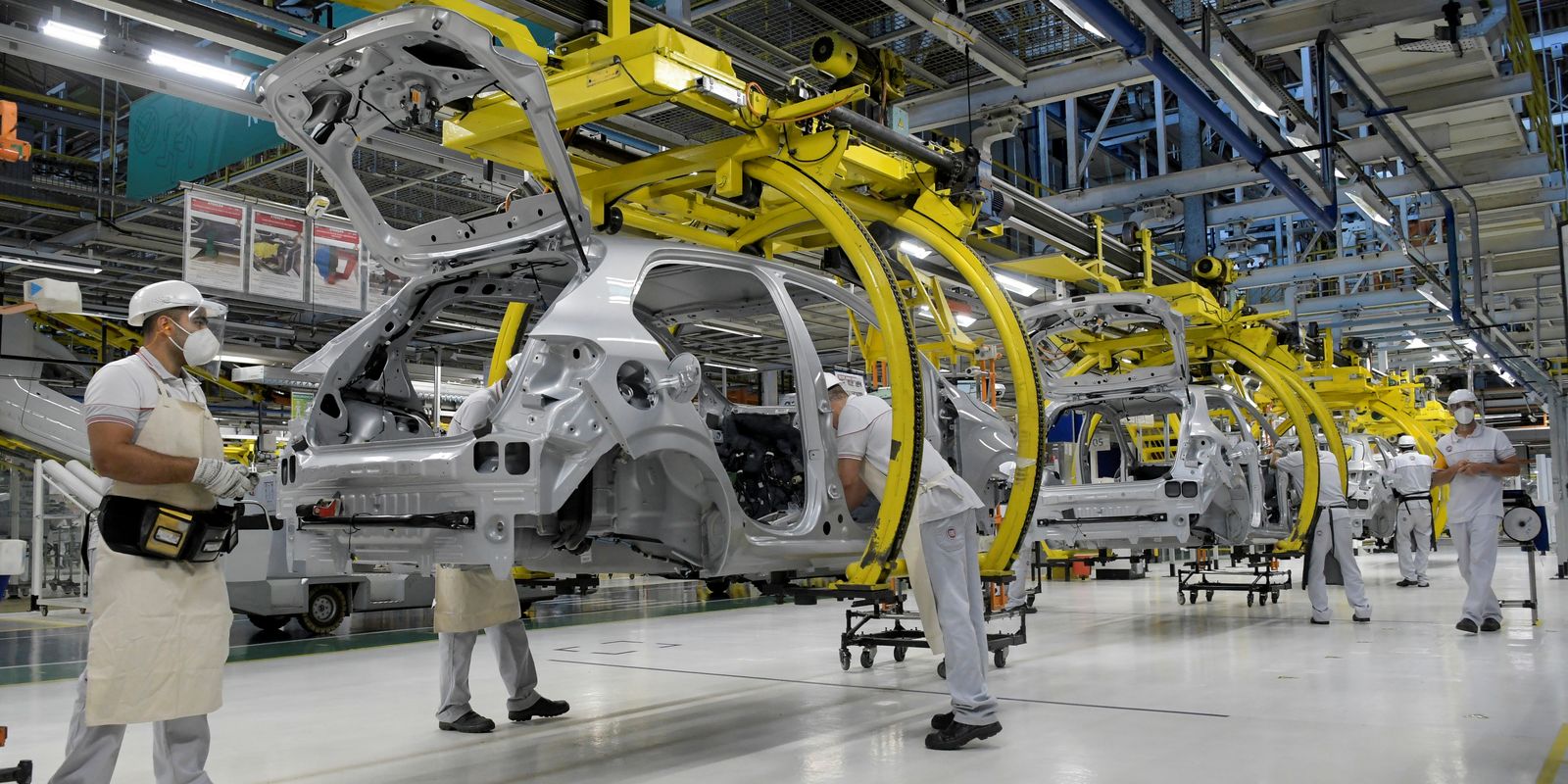
Brazilian economic activity showed growth in August this year, according to information released this Thursday (16) by the Central Bank (BC). The Central Bank’s Economic Activity Index (IBC-Br) rose 0.4% in August compared to the previous month, considering seasonally adjusted data (adjusted for the period).
In comparison with August 2024, there was a positive change of 0.1%, without adjustment for the period, as the comparison is between equal months. In the year to date, the indicator was positive at 2.6% and, in 12 months, it registered an increase of 3.2%.
The IBC-Br is a way of evaluating the evolution of the country’s economic activity and helps the BC’s Monetary Policy Committee (Copom) to make decisions on the basic interest rate, the Selic, currently set at 15% per year. The index incorporates information on the level of activity in sectors of the economy – industry, commerce and services and agriculture –, in addition to the volume of taxes.
Selic is the BC’s main instrument for achieving the inflation target. When Copom increases the basic interest rate, the purpose is to contain heated demand and this has an impact on prices because higher interest rates make credit more expensive and encourage savings. Therefore, higher rates help to reduce inflation, but they can also hinder the expansion of the economy.
When the Copom reduces the Selic, the tendency is for credit to become cheaper, encouraging production and consumption, reducing control over inflation and stimulating economic activity.
>> Follow the channel Brazil Agency on WhatsApp
Inflation
After a drop in August, in September the official inflation rose 0.48%, influenced by the rise in electricity bills. In 12 months, the Broad National Consumer Price Index (IPCA) accumulated 5.17%, above the target ceiling of 4.5%.
The uncertainties of the external economic scenario and these indicators, such as the IBC-Br, which show moderation in internal growth, are among the factors that led the Copom to maintain basic interest rates at 15% per year, at the last meeting, in September.
The intention of the collegiate is, in accordance with the minutes releasedmaintain the current Selic rate “for a very long period” to ensure that the inflation target is achieved.
Gross Domestic Product
Released monthly, the IBC-Br employs a different methodology from that used to measure the Gross Domestic Product (GDP), which is the official indicator of the Brazilian economy released by the Brazilian Institute of Geography and Statistics (IBGE). According to the BC, the index “contributes to the development of the country’s monetary policy strategy”, but “is not exactly a preview of GDP.”
GDP is the sum of all final goods and services produced by a country. Driven by the expansion of services and industry, in the second quarter of this year, Brazilian economy grew 0.4%.
In 2024, GDP closed with an increase of 3.4%. The result represents the fourth consecutive year of growth, being the biggest expansion since 2021, when GDP reached 4.8%.