Brazil published this month the first scientific article on safety tests involving a fully national Covid-19 vaccine. The results demonstrate that the vaccine, called SpiN-TEC, is safe. The dose is now moving into the final phase of clinical studies and should be available to the population by the beginning of 2027.
Developed by the Vaccine Technology Center of the Federal University of Minas Gerais (UFMG), the vaccine has resources from the National Fund for Scientific and Technological Development. In total, the Ministry of Science, Technology and Innovation (MCTI) invested R$140 million, through RedeVírus, supporting everything from pre-clinical trials to clinical phases 1, 2 and 3.
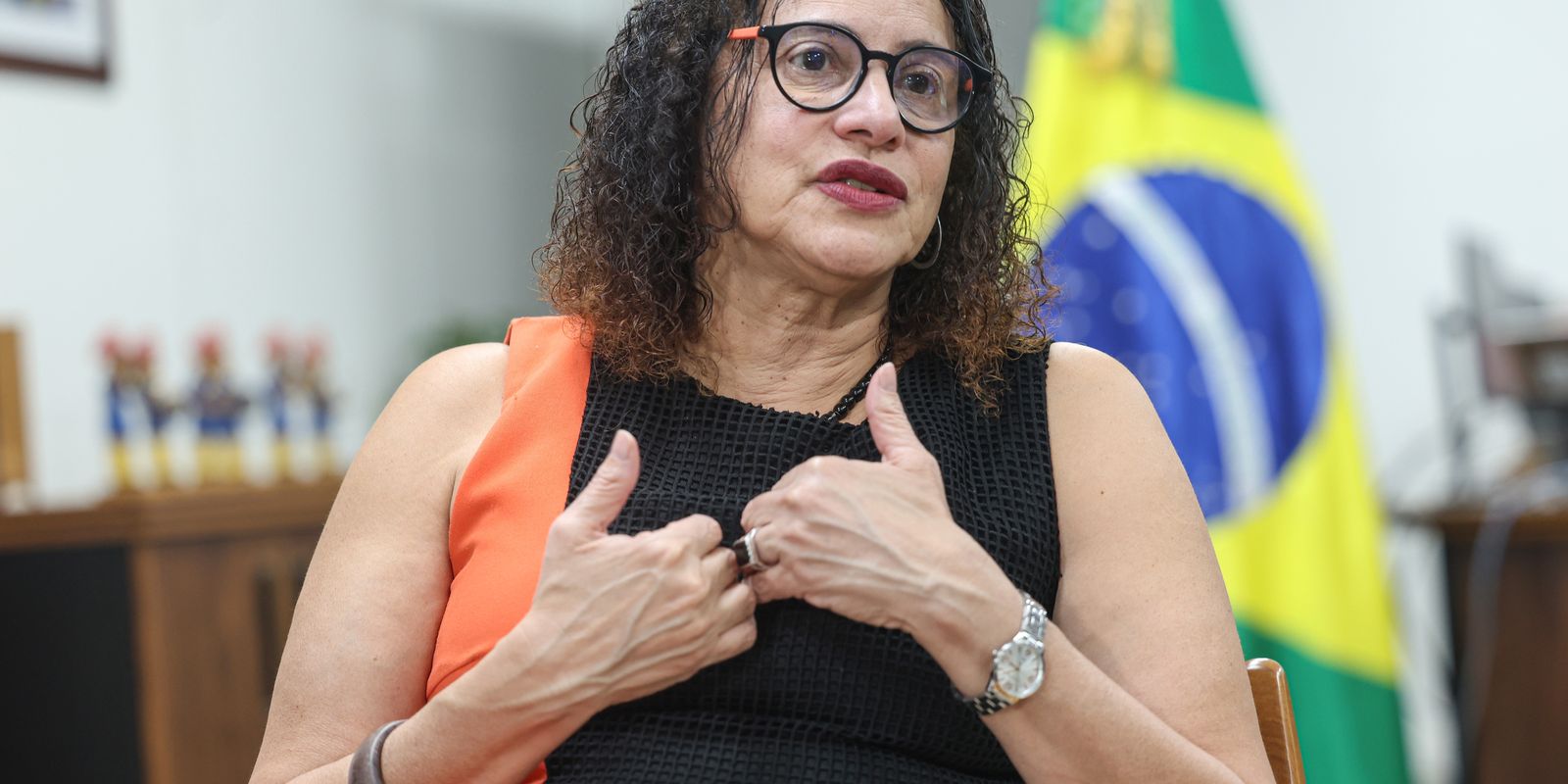
In an interview with Brazil Agency and to TV Brasilthe head of MCTI, Luciana Santos, classified the development of the immunizer as something covered in symbolism amid the fight against denialism. She was optimistic regarding future approval of the dose by the National Health Surveillance Agency (Anvisa) and cited other initiatives to promote new technologies underway in the country.
Check out the main excerpts from the interview:
TV Brasil: Minister, what does the development of this vaccine represent for Brazilian science?
Luciana Santos: A major milestone in the fight against scientific evidence and denialism occurred at the height of Covid-19, a pandemic that impacted the entire world. In Brazil, we had a head of state who denied science. And we all know the impacts of this: we were the second population on the planet with the most deaths from Covid.
I think the development of this vaccine has a lot of symbolism. First, the capacity of Brazilian intelligence. We have a history, through long-standing institutions, such as the Oswaldo Cruz Foundation (Fiocruz) and the Butantan Institute, which, at that time of pandemic, helped through technology transfer, which saved the Brazilian people.
The challenges for pandemics will become increasingly urgent. In the specific case, SpiN-TEC, from the UFMG Vaccine Technology Center, which we supported with investments totaling R$140 million, shows that Brazil is capable of producing Brazilian solutions, using Brazilian intelligence.
I think it is a moment to affirm the need to turn the page on denialism in the country and to say that Brazilian intelligence resolves issues, solves problems. I am immensely happy, proud and certain that we have the capacity to face various challenges.
SpiN-TEC is a testament to Brazilian intelligence, 100% produced in Brazil.
TV Brasil: The promotion of MCTI was fundamental for the development of the vaccine. What other initiatives to promote new technologies are underway to improve the quality of public health in Brazil?
Luciana: As it is a vaccine technology center that even works in a network, with the Belo Horizonte Technological Park, this ecosystem is what makes the solutions worthwhile. There are many people involved in the process, many hands to arrive at complex solutions. There, we will treat malaria, Chagas disease, diseases specific to our climate, our tropical forest. In addition to the therapies that already exist today, we will guarantee a vaccine. All of this is in progress. It’s something very important and encouraging.
This way, we will be able to emphasize the challenges of the health industrial complex, which are guaranteeing equipment, inputs, medicines and vaccines that can face things that are unique to Brazil, against which only we ourselves can present solutions.
TV Brasil: Brazil has been gaining more and more recognition in the world in various fields of science. One example was the mapping of the coronavirus genome, carried out by scientist Jaqueline Goes de Jesus. How can development policies contribute to this process?
Luciana: The health industrial complex encompasses challenges in the area of health, equipment, supplies and medicines. In fact, this is Brazil’s second trade balance deficit, close to US$20 billion. And they are part of Nova Indústria Brasil [política industrial lançada pelo governo federal em janeiro de 2024, com o objetivo de impulsionar o desenvolvimento da indústria nacional até 2033].
It’s a challenge. One of the choices that Brazil made was to become independent, to reduce our dependence on this set of issues that concern the Brazilian people. And, with that, reduce costs, provide more access, make things easier. Just to give an example, the national production of recombinant factor 8, which is an IFA [insumo farmacêutico ativo] of blood products, will mean US$ 1.2 billion less in the Brazilian trade balance.
This entire agenda that President Lula leads is in the direction of overcoming dependence, even more so in the context we are living in, where there is a lot of attack on our sovereignty. Sovereignty is about being able to guarantee that some solutions for the Brazilian people we do not need to import. Our research infrastructure, our intelligence, researchers, these thousands of Brazilians who are in laboratories, in science and technology studies, in universities, producing solutions, increasingly need to have visibility for us to give value.
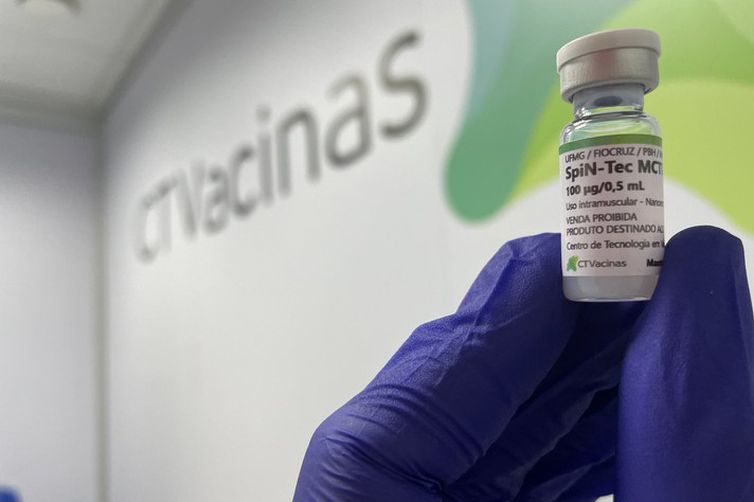
SpiN-TEC vaccine developed at UFMG, which protects against more variants of the covid-19 virus. Photo: Virgínia Muniz/CTVaccines
Brazil Agency: You cited a certain optimism to take the vaccine to Anvisa. Does the government work with some type of deadline for this approval with the regulatory agency? Would it be something to expect this year or mid-next year?
Luciana: This is a debate that the entire medicine ecosystem has reiterated. The need for us to speed up, have bodies, enough people. And the expectation is that the vaccine will arrive so that it can be evaluated with Anvisa. I’m optimistic, I think we’ll be able to do this in a way that ensures it goes into production next year.
Brazil Agency: We already have some vaccines produced in Brazil. What is the difference, exactly, in the case of SpiN-TEC?
Luciana: The difference is that we will not need to import inputs or active ingredients, which they call active pharmaceutical ingredients. In Brazil, we were able to produce, within Fiocruz, through technology transfer, both CoronaVac and AstraZeneca, each coming from a different country. Now, we will not depend on any technological transfer or input. That’s why it’s 100% national. The inputs used to produce this vaccine are ours. And the intelligence and technology acquired to make the vaccine effective are also Brazilian. In other words, there is no need for any dependence on technology.
By this I do not mean that we are averse to networked research or transfer. On the contrary, the world needs technology transfer. So much so that we are always willing to share our knowledge of technology. That’s what moves us. But having something 100% national is a reason for the effort of generations, of many hands who managed to guarantee this.
It is an emotion for all the researchers who participated in this process. It’s a great achievement, right? Of self-esteem, of self-determination. And we can say that, just like Covid, in other circumstances, we will be able to anticipate pandemics.
Brazil Agency: Once all clinical study phases have been completed, with Anvisa’s approval, would the vaccine still have to go through the National Commission for the Incorporation of Technologies into the Unified Health System (Conitec) to be incorporated into the Unified Health System (SUS) and become part of the national vaccination calendar?
Luciana: Oh, certainly. After all, SUS ends up being the main buyer of medicines. Because he is unique. There is only one system in Brazil that is supposed to be universal, free, and provide access to everyone. In the case of the Minas technology center, it is clear that it will not be a university that will produce the doses. He provided the solution and will transfer technology to a national company to produce the vaccine.