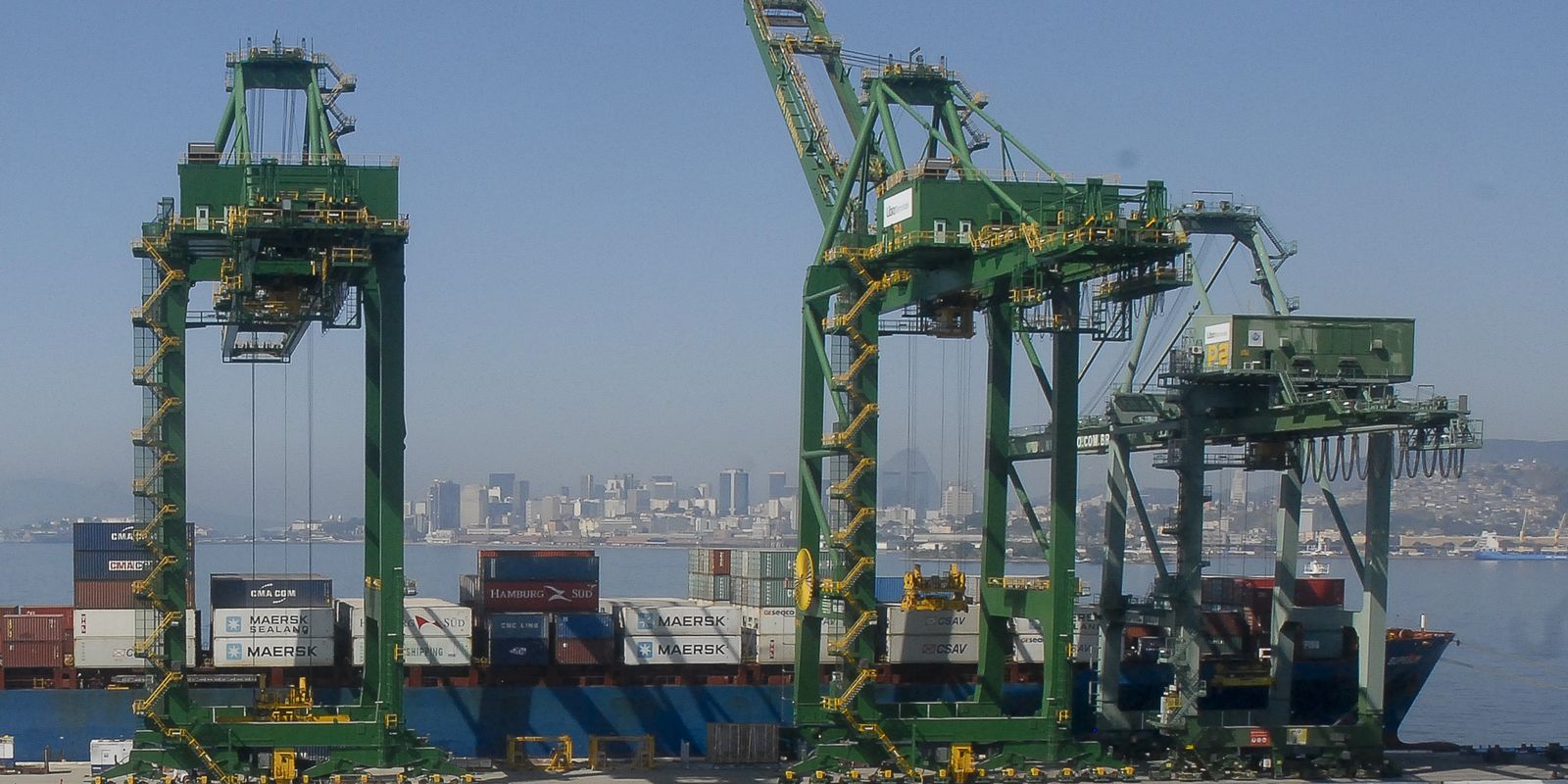
Brazilian business entities celebrated the approval, after 25 years of negotiations, of the Mercosur free trade agreement with the European Union. The proposal obtained, this Friday (9), the approval of the European bloc, where the approval of 15 of the 27 Member States was necessary, which, in addition, needed to represent at least 65% of the bloc’s total population. 
The National Confederation of Industry (CNI) classified the agreement as a significant step towards advancing Brazil’s international insertion and strengthening the national industry. According to the CNI, in 2024, when the European bloc was the destination for 14.3% of the country’s exports, for every R$1 billion exported from Brazil to the EU, 21,800 jobs were created and R$441.7 million in wages and R$3.2 billion in production were generated.
“The approval of the agreement is a decisive step and creates the necessary political conditions for us to move towards signature. We hope that this process is completed as soon as possible, so that we can transform this institutional advance into concrete opportunities for trade, investment and increasing the country’s competitiveness”, assesses the president of the CNI, Ricardo Alban.
The CNI also sees potential for intensifying commercial and productive relations with Eastern European countries, such as the Czech Republic, Poland and Romania, “which have modest trade flows with Brazil, which can be expanded consistently, with emphasis on industry, technology and domestic consumption”.
The Brazilian Chemical Industry Association (Abiquim) highlights that the agreement is a strategic milestone for the Brazilian chemical industry, by expanding access to one of the largest consumer markets in the world, stimulating investments, strengthening innovation and driving a sustainability agenda aligned with ESG principles.
“The agreement represents a concrete opportunity to reposition the Brazilian chemical industry in global chains with greater added value”, says the executive president of Abiquim André Passos Cordeiro.
Cordeiro adds that the agreement creates a more predictable and modern environment for investments, especially in areas such as bioeconomy, renewable chemistry and clean energy.
For the Brazilian Association of the Electrical and Electronic Industry (Abinee), the signing represents an essential milestone for international trade, in times marked by geopolitical turmoil and numerous crises, creating the largest free trade zone in the world.
The treaty, in the association’s projection, could lead to an increase in exports from the electronics sector to the European Union by between 25 and 30% in the medium termas well as allowing a diversification of input suppliers for industrial production.
The expectation of the Confederation of Commercial and Business Associations of Brazil (CACB) is that the agreement will open several windows of opportunities for the Brazilian economy. For the president of CACB, Alfredo Cotait Neto, the agreement is a combination in which all countries win and become stronger to face the challenges of increasingly competitive international trade.
“The agreement is a victory for diplomacy and the productive sector. The next steps towards implementation will require dialogue between countries for the benefit of society as a whole”, he highlights.
The CACB foresees attracting investments from European countries in Brazil, Argentina, Paraguay and Uruguay, with benefits for the entire continent. “The scenario favors not only the bloc, but all of South America.”
Fiesp, Firjan and Fiemg
The Federation of Industries of the State of São Paulo (Fiesp) demonstrated enthusiasm with the agreement, even considering that the text is not perfect.
“It was the possible agreement to reconcile the interests of 31 countries, in a scenario of transformation of international trade. Fiesp actively participated in the negotiations in recent decades, with the main objective that the understanding would bring real value to people and Brazilian industry.”
For Fiesp, the agreement is comprehensive and will substantially change the way in which Mercosur and EU companies do business, import, export and invest with each other.
The entity’s president, Paulo Skaf, said that the real work begins now, because it will be necessary for everyone to innovate, improve productivity and incessantly seek excellence from the door to the factories, which are already capable of competing with Europeans.
“And we will work to ensure competitive equality that allows national entrepreneurs to prosper and make the most of the opportunities that the agreement offers,” he stated.
The Federation of Industries of the State of Rio de Janeiro (Firjan) also celebrated that the rapprochement between Mercosur and the EU will promote a significant increase in trade, new investments and growth in Brazilian industrial GDP, diversifying and expanding partnerships in a geopolitical scenario marked by tensions.
The Federation of Industries of the State of Minas Gerais (Fiemg), although it evaluates the agreement positively, emphasizes that the agreement must be analyzed with caution and attention to its impacts on the industry.
“Minas Gerais maintains a solid and surplus trade relationship with the European bloc, which reinforces the strategic importance of the agreement for the state. Between 2021 and 2025, exports from Minas Gerais to the European Union totaled around US$31.0 billion, while imports reached US$13.38 billion, resulting in a positive balance of US$17.62 billion”.
The federation believes that the benefits will be mainly for sectors such as coffee, mining, steel, cellulose and integrated industrial chains, such as automotive and auto parts. “At the same time, FIEMG highlights the need for attention to the implementation of the agreement, especially for segments more sensitive to external competition, in addition to activities that depend on compliance with specific sanitary and regulatory requirements.”
For the president of the Federation of Agriculture and Livestock of the State of São Paulo (Faesp), Tirso Meirelles, the approval of the bilateral agreement is an important step forward, after more than two decades of discussions and adjustments.
Meirelles highlighted that the tariffs imposed by the American government reinforced the importance of bilateral agreements that allow for greater capillarity in Brazilian international trade.
The president of Faesp also assessed that the safeguards imposed by countries such as Italy and France are not wrong, as they aim to protect local production chains. In the view of the president of Faesp, the Brazilian government should also have this concern for the producer.
“In the case of powdered milk, we have been denouncing unrestrained imports for over a year, compromising the milk chain, without any position having been taken so far. The Brazilian government needs to be a partner with the production sector”, he stated.
*Reporter Flávia Albuquerque collaborated