THE Sovereign Brazil Planset of measures announced on Wednesday (13) in support of Brazilian companies impaired by the US tariff, had repercussions between the entities representing the affected sectors, with compliments and suggestions for improvements. The entities have expressed interest in collaborating for the next steps, in the challenge of helping the Brazilian government trying to reverse the rates of up to 50% announced by US President Donald Trump.

The National Confederation of Industry (CNI) evaluated as positive the measures announced by the Brazilian governmentin particular the creation of a special credit line with more affordable interest rates, which can reach R $ 30 billion; the postponement for two months of the payment of federal taxes; and the reactivation of the Reintegra.
Related News:
- Find out what are the measures of the Brazil Sovereign Plan.
- Export of beef beefing record in the month prior to the tariff.
- “Sovereignty is untouchable,” says Lula by announcing help to exporters.
“We received positively because it contemplates many of the demands made by industries, federations and sectoral associations, and also because it has encompassed two basic concepts: continuing to negotiate as a priority and, the second, if new measures are necessary to be taken,” said the entity’s president, Ricardo Alban.
>> FIESP expresses support for government relief to exporters
According to him, the measures will give “a breath” to the national industry. “We don’t just want to breathe, but walk and, at this first moment, the Sovereign Brasil Plan represents market opening and reflects the continuous effort to maintain dialogue and seek solutions,” he said
Alban proposes to the Government to act to seek new markets, especially with the European Union, and bilateral agreements.
“CNI will continue to work close to the government to negotiate and mitigate the impacts of tariffs, preserving the competitiveness of national industry,” said the entity by evaluating that the measures presented “will bring financial relief at a critical time for the cash flow of affected companies, allowing them to support this moment.”
Ricardo Alban also spoke during the announcement of the measures by President Luiz Inacio Lula da Silva. At the time, he reported that CNI has hired law firms to help defend interests in US territory. In addition, the president of CNI said he was convinced that the National Congress will deal with “with proper priority and promptness” the provisional measure during its processing in the house.
Chemical industry
In the evaluation of the Brazilian Association of Chemical Industry (Abiquim), the government has given “an important step” with the Sovereign Brasil Plan. The sector exports directly to the US about $ 2.5 billion per year.
“Abiquim considers the positive package in preserving competitiveness and employment and reinforces the urgency of negotiations with the US for more sectoral tariff exclusions,” the association said in a statement.
According to the association, the announced plan represents an important step in mitigating the impacts of the US tariff. The entity, however, expressed concern about indirect impacts on demanding sectors of chemistry – such as plastics, shoes, food and clothing.
In the assessment of Abiquim, the plan “Dialoga with historical demands” of the sector and its main customers. In this case, industries that transform chemicals into higher value-added products for the US market, such as plastics, shoes, food, clothing, cosmetics and personal hygiene.
The association stressed that the economic relationship between Brazil and the US is “historically complementary”, with integrated productive chains, and that there are over 20 US chemical companies operating in Brazil.
For that reason, The Association’s president, André Passos Cordeiro, considers it fundamental that bilateral negotiations advance “based on technical and economic criteria, far from geopolitical motivations, preserving productive integration and resilience of supply chains”.
“Abiquim will continue to actively contribute to the resources and instruments provided for in the Brazil Sovereign Plan to achieve, agile and effectively, the most impacted companies,” he added.
Textile and confection
Another entity that expressed public support to government measures was the Brazilian Association of Textile and Confectionery Industry (ABIT).
“The actions presented represent relevant steps to preserve the competitiveness of companies, protect jobs and strengthen the productive sector,” said ABIT, referring to accessible interest lines; the extension of deadlines for the regime of Drawback [suspensão de tributos incidentes sobre insumos importados para utilização em produto exportado]; the postponement of federal taxes; to reinforce the guaranteeing funds; government purchases, the modernization of the export system; and adjustments in the Reintegra [Regime Especial de Reintegração de Valores Tributários].
ABIT added that it will continue to contribute to new propositions and improvements that expand the effectiveness of the measures, through the dialogue channels it has with the public authorities.
The Association calls for speed in the processing of proposals in the National Congress and asks that the implementation of measures by the Executive is agile and effectiveensuring that benefits quickly reach companies and workers directly impacted.

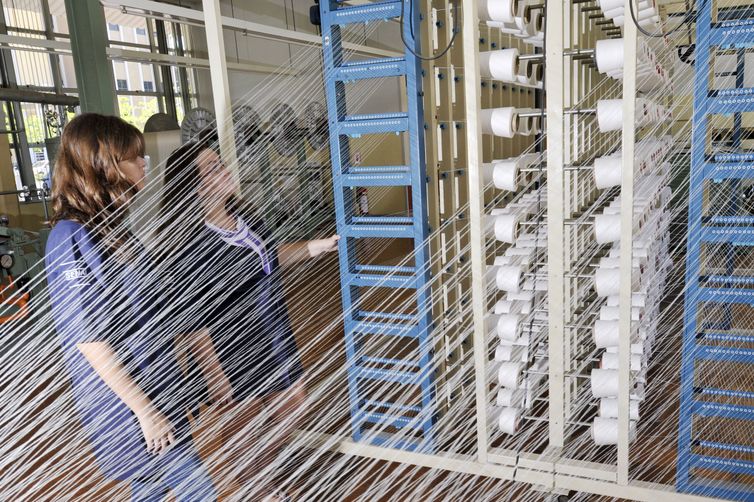
Chemical and Textile Industry Technology Center (SENAI/CETIQT). CNI/José Paulo Lacerda
Conju
Also in a complimentary tone, the National Confederation of Young Entrepreneurs (CONAJE) recognized the importance of the package in terms of priority lines for small and medium exporters, government purchases and the expansion of Reintegra.
“These are relevant instruments to preserve jobs, give the productive sector breath and maintain international competitiveness,” he said.
However, CONAJE emphasizes that the effectiveness of actions depends on agility in implementation and real conditions so that micro, small and medium companies have access to the resources and benefits announced.
“The measures announced are important, but it is essential to ensure clarity in the criteria, agility in implementation and conditions that really meet micro and small companies. There are still doubts about access parameters, definition of priority sectors and credit conditions, such as interest and deadlines,” he told the Brazil agency the president of CONAJE, Fabio Saraiva.
He also expressed concern with eventual delay between the announcement and the effective release of resources. “This can be decisive for many entrepreneurs. The focus now must be in giving predictability, security and capillarity to the execution of the package,” he added.
FIEP CRITICAL
The Federation of Industries of Paraná (Fiep) adopted a more critical tone to the way the federal government has been conducting the situation.
In the opinion of Fiep’s president, Edson Vasconcelos, the federal government has raised ideological and political issues above the interests of the Brazilian economy and the productive sector.
Regarding emergency measures, FIEP classifies them as “palliative”, and charges “effective negotiation” with the US.
“Despite emergency measures announced in relief to exporting companies, the Brazilian federal government needs to fulfill its role as the main negotiator for the search for a definitive solution regarding the tax imposed by the US,” he said by note to Fiep.
* Collaborated Eduardo Luiz Correia, from Agência Brasil in São Paulo