The joint ordinance that creates the monitoring of compliance, in Brazil, the goals and indicators of the 18th Sustainable Development Objective (SDGs) of the United Nations (UN) was signed, this Friday (19), by the Ministries of Racial Equality (MIR) and the Indigenous Peoples (MPI), during the final plenary session of the 5th National Conference on Promotion of Racial Equality (Coniri).
The new Brazilian goal focuses on ethnic-racial equality in the country. The 18th Brazilian SDG is inserted on the UN Agenda 2030, which officially has 17 sustainable development objectives.
At the opening of the event, the chief minister of the Secretary-General of the Presidency of the Republic, Márcio Macêdo, explained that the national voluntary goal was proposed for exactly two years by President Luiz Inacio Lula da Silva, in 78th UN General Assemblyin 2023, “to ratify political security and update public commitments to ethnic-racial equality in the country,” the minister recalled.

Rio de Janeiro (RJ) 14/11/2024-The Minister of the General Secretariat of the Presidency of the Republic, Márcio Macedo, handed the representatives of Conaq the Brazilian government’s response notebook to the request for information and responses by the entity. Photo -Archive: Fernando Frazão/Agência Brasil – Fernando Frazão/Agência Brasil
Answers to Quilombolas
The General Secretariat of the Presidency of the Republic also handed over to the representatives of the National Coordination of Black Rural Quilombola (Conaq) the Brazilian Government Responsible Responses to the request for information and responses by the entity that defends quilombola interests.
“It is important for Conaq to follow us to execute this, cover us and help us monitor the ministries to comply with the determination of President Lula to have public policies for the entire population,” said Márcio Macedo.
The delivered document describes actions that are being implemented by 20 agencies of the federal government and others intended for this segment of the population, which will still be held.
CONIQ coordinator Arilson Ventura, told the Brazil agency which considers the important notebook and that the entity will charge the government’s definitive actions to reach, effectively, to quilombola communities.
For the kilombola cause activist, the main public policy is the land regularization of its territories to ensure the right to physical, social, economic and cultural reproduction of quilombolas.
“Without the title of quilombola territories, we cannot advance in the process of improving health, education, agriculture, culture,” he said.
The entity’s primary proposal is to establish a period of five years for the completion of the process of recognition, demarcation and, finally, the ownership of these lands.
“There is a community that has begun the title process for over 20 years and this is dragging on, for several situations along the way and cannot advance. Our proposal is to have a period of five to complete the title. A reasonable time.”
In an interview with BRAZIL AGENCYl, during the 5th Conapir, the Minister of Racial Equality, Anielle Franco, explained that the title of a territory goes through nine stages, for a quilombo to be titled by Incra, and that the government has advanced.
“Imagine you move from generation to generation in a territory, 10, 20, 50 years. And if your family has to leave the territory or if anyone dies, you would not be titled. This is very bad,” said the minister.

Brasília (DF), 09/16/2025 – Minister of Racial Equality, Anielle Franco (C), said he explained that the title of a territory goes through nine stages. Photo: CONAPIR/DISCLOSURE – CONAPI/DISCLOSURE
The Minister of Equality understands that it is not simple holder, but has to have political will of all, at the national, state and municipal level.“[A titulação de terras quilombolas] It requires that political will is collective and people work for it. ”
“We are talking about life dignified, housing, life, quality. We knocked from door to door [de outros ministérios] To make people understand that a quilombo starting is also to give people a decent life, “explained Anielle Franco.
Research
The Ministry of Promotion of Racial Equality (MIR), also announced the investment of R $ 1 million in research focused on strengthening the National Equality Promotion System (Sinapir). The Public Call (Notice No. 18), coordinated by the National Council for Scientific and Technological Development (CNPq), will have registration of researchers until October 29.
Motion
At the end of the Conference, members of the National Council for the Promotion of Racial Equality (CNPIR) submitted to the validation of the official delegates the 51 motions of repudiation, complaints and honors, who had about 7,000 signatures by the Conapir participants.
Among them, the motion of appeal for measures in the case of Sônia Maria de Jesus, a black and deaf woman submitted for more than 40 years to conditions analogous to slavery.
Another motion calls for the recognition of the saint’s parents as a profession to have social security rights.
A motion of repudiation was addressed to the House of Representatives by Armor PEC approvalthis week.
Other motions were also presented: the one that suggests the creation of the Mais Médicos Quilombola program and the one that requests the Union’s support from solo mothers, black mothers and peripheral mothers who have lost their children in situations of violence against black young people. In addition to the one that asks for leap women to be seen not only as beauty professionals; but as guardians of traditional ancestral knowledge that dates back to the culture of African peoples.
Diversity
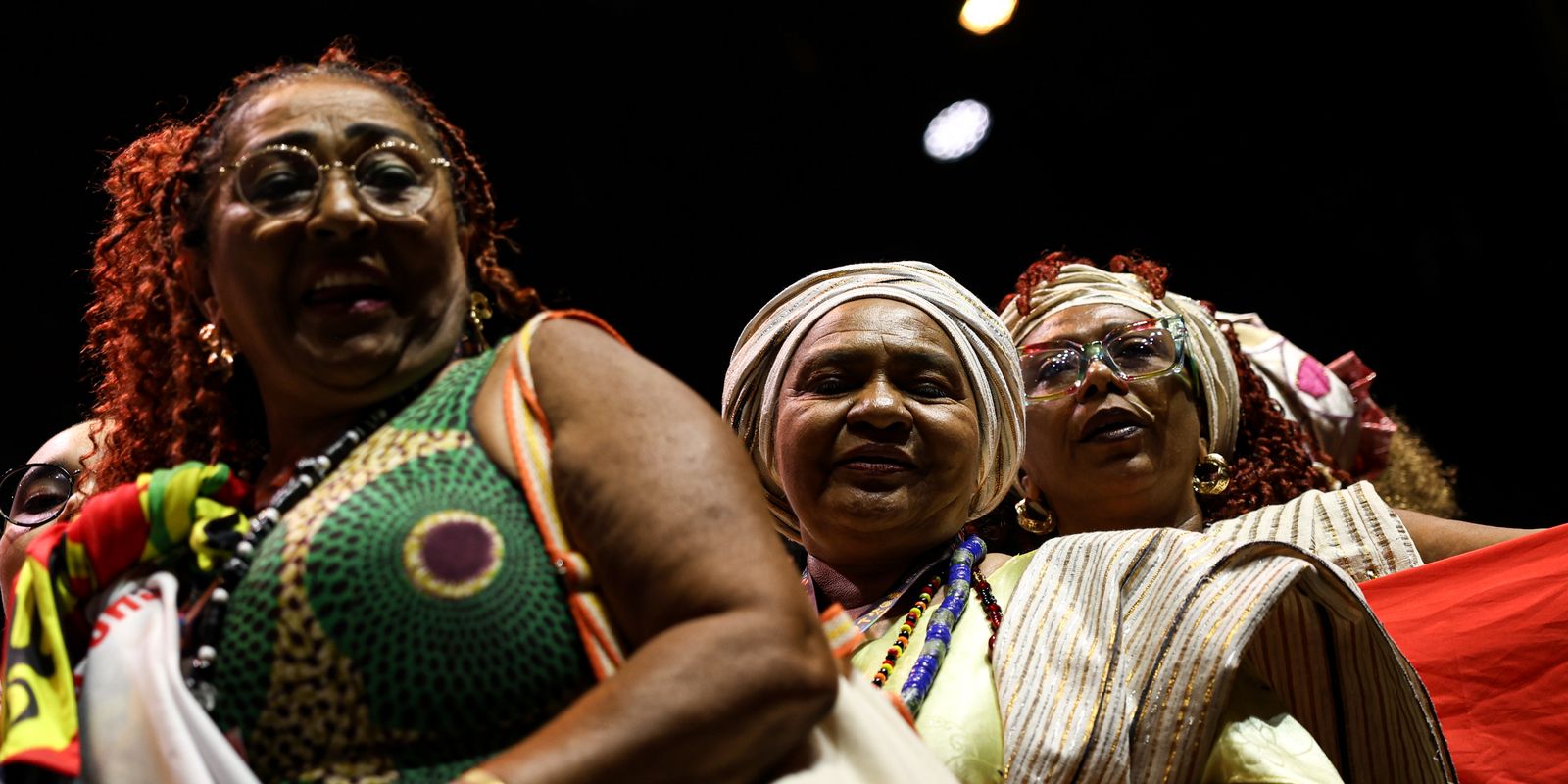
The 5th National Conference on Promotion of Racial Equality (Conapir) was closed today after seven years. The five days of the event, in 2025, account for more than 2,000 participants, including black people, indigenous peoples, terreiro, quilombolas, gypsies, youths, as well as elderly people, LGBTQia+, peripheral and disabled.
As a result of the 5th Conapir, a final document was prepared, with proposals for public policy guidelines aimed at ethnic-racial equality, which will be delivered to the federal government.