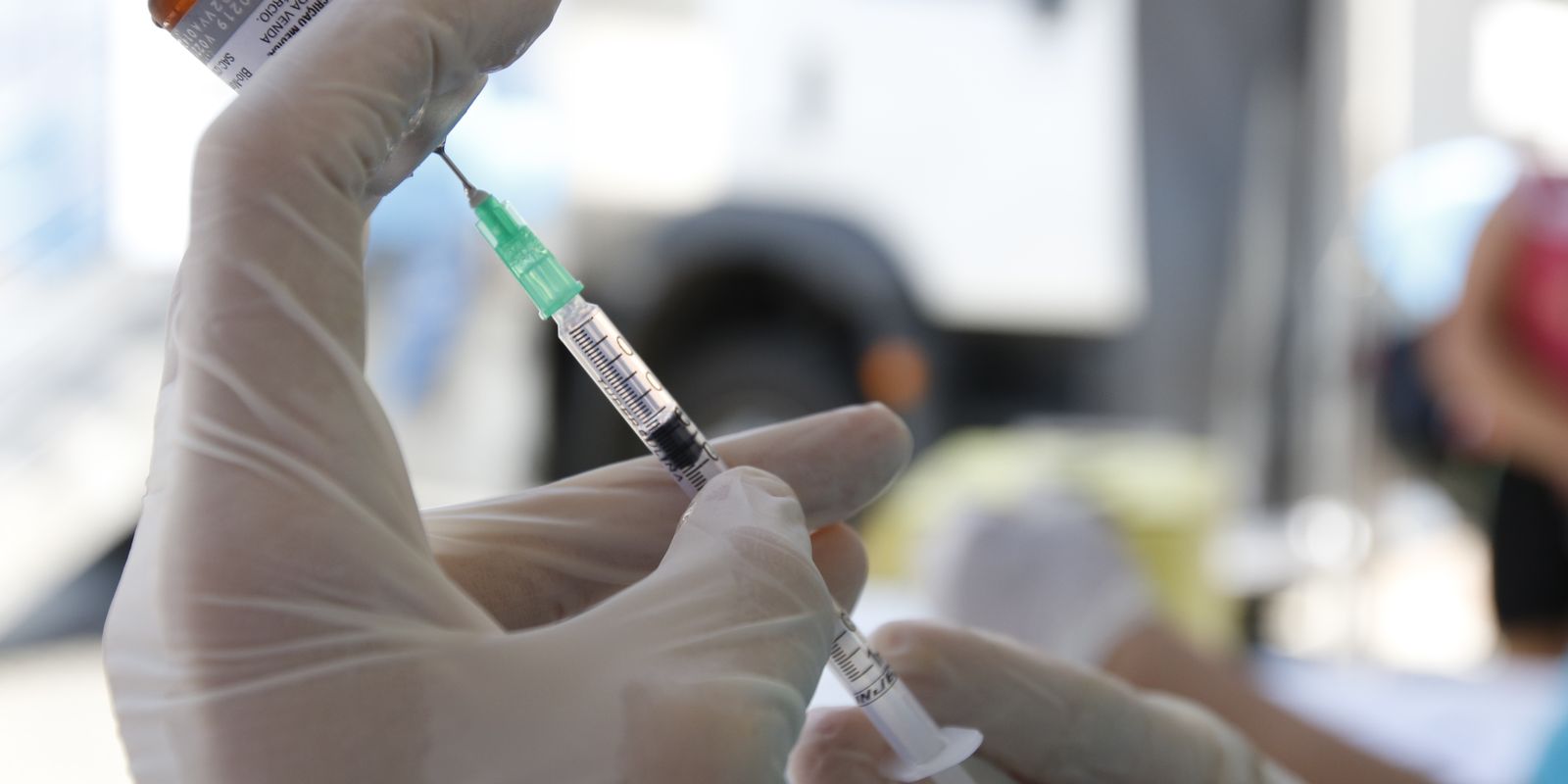
The Ministry of Health published an alert for states and municipalities to reinforce surveillance and actions for individuals who show signs and symptoms of measles. According to the folder, 34 cases were confirmed this year until Epidemiological Week 38, which runs from September 29th to October 5th. The ministry’s concern is to prevent the reintroduction of the virus into the country.
Of the confirmed cases, nine were brought by people returning from abroad, 22 had contact with infected individuals abroad and three are genetically compatible with viruses circulating in other countries. To date, states in the Tocantins, Maranhão and Mato Grosso are classified as having a measles outbreak.
The director of the Brazilian Society of Immunizations (SBIm), Isabella Ballalai, points out that the lack of vaccination coverage among the population has enabled the return of measles to the country.
“Imported cases occurred, both a foreigner coming here and a Brazilian who traveled and returned with measles, however, the situation was resolved because our surveillance was good. Measles previously came in and found everyone vaccinated and did not cause an outbreak. Now it arrives and finds several susceptible people,” points out the specialist.
Outbreaks
In Tocantins, the outbreak began in the municipality of Campos Lindos, in the northeast region of the state, in July. The case is associated with the return of four Brazilians who were in Bolivia for a month. The community that the infected people live in has a low level of vaccination adherence, which allowed rapid transmission among residents.
In Maranhão, there is only one confirmed case, that of a 46-year-old, unvaccinated woman, resident of the municipality of Carolina, who had contact with members of the community in Campos Lindos. The two municipalities are on the border between the states of Maranhão and Tocantins.
The cases in Mato Grosso are not linked to the Campos Lindos community, but were also initiated by Brazilians who were in Bolivia. The outbreak began in the municipality of Primavera do Leste and affected three people who are part of the same family, all unvaccinated.
Vaccination coverage
According to information from the National Health Data Network (RNDS), in 2024, Brazil had a triple viral vaccination coverage (measles, mumps and rubella) of 95.7%, in the first dose, and 74.6% in the second.
In 2025, there was a drop, which placed the index below the 95% target. The data points to vaccination coverage of doses 1 and 2, respectively, of 91.2% and 74.6%.
According to the Ministry of Health, the percentages below the average highlight the vulnerability to the occurrence of the measles virus, reinforcing the importance of vaccination intensification.
Brazil’s enormous geographic space makes it difficult to achieve hegemonic vaccination in each municipality, as Isabella explains. “Coverage is at the limit, at the target. But what happens here in Brazil, due to our size, is that there is no homogeneity in vaccination coverage in the municipalities. If you look at vaccination coverage within the state, they are very different realities. In Rio de Janeiro, for example, the city’s coverage is good, but, when we look at the state’s coverage, it has already become the second lowest in Brazil.”
The director of SBIm points out that one factor that makes vaccination difficult is the lack of risk perception on the part of the population. “Behavioral science shows that, if you don’t see the risk, it can be on the front page of the newspaper that ‘I don’t care’. Now, if I see the risk and I see everyone running to the clinic, ‘I’m going too’. It happened with yellow fever, where vaccination coverage in Brazil was 40%. Suddenly, an outbreak of yellow fever, deaths from yellow fever, newspapers, television… there were queues.”
Measles cases around the world
Data from the World Health Organization (WHO) indicate that, From the beginning of the year until September 9, 360,321 suspected cases of measles were reported, of which 164,582 were confirmed, in 173 countries.
The regions of the world that represented the highest number of cases are the Eastern Mediterranean, with 34% of occurrences; Africa, with 23%; and Europe, with 18%.
In the Americas, 11,691 cases of measles were confirmed, with 25 deaths in ten countries. The most numerous cases occurred in Canada (5,006), Mexico (4,703) and the United States (1,514). In South America, there are active outbreaks in Bolivia (320 cases), Paraguay (50) and Peru (four). Argentina also had an outbreak, with 35 confirmed cases.
*Intern under the supervision of Odair Braz Junior