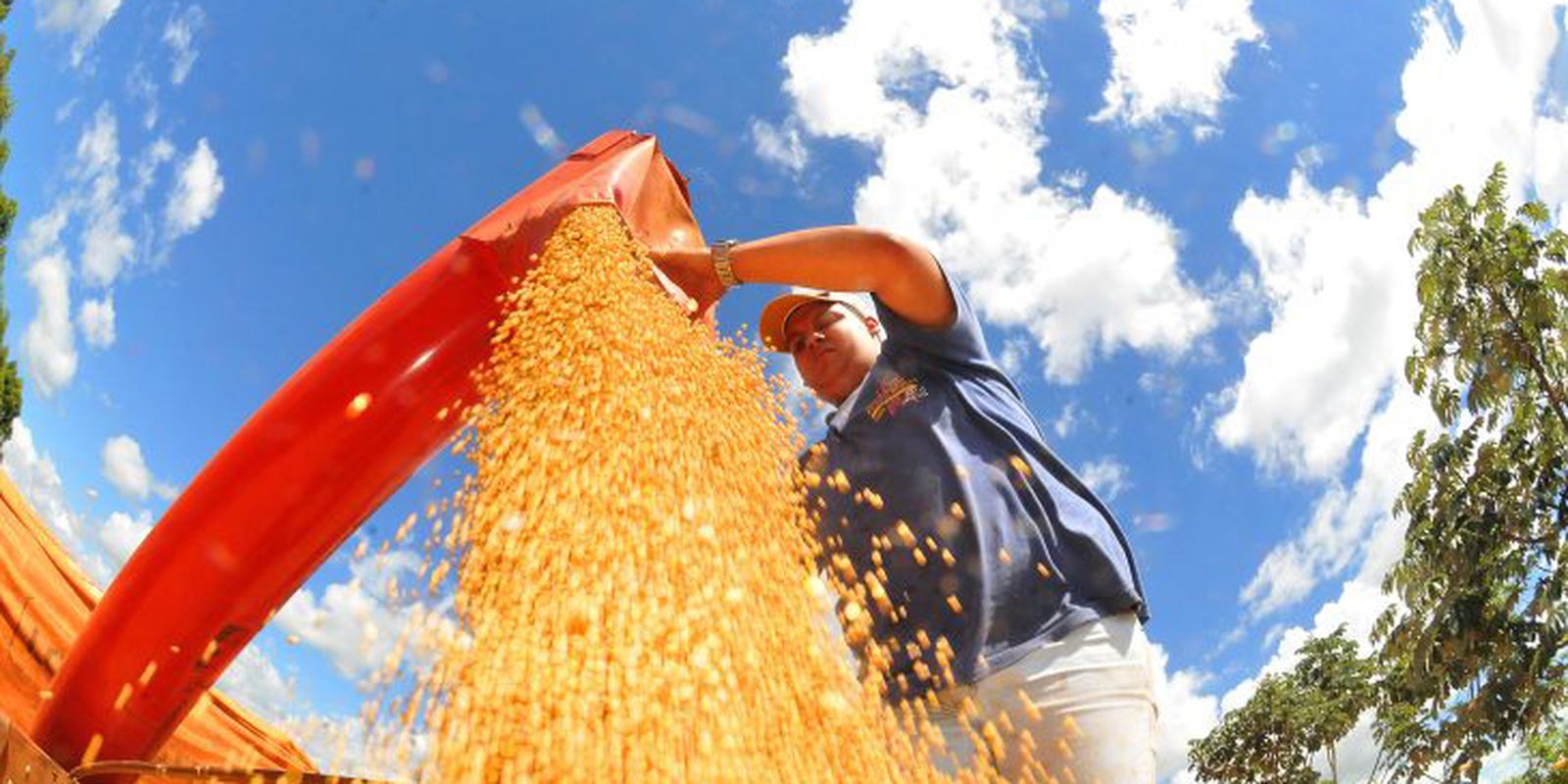
The historical record of grain production, obtained in 2024/2025 should be exceeded in the next crop. This indicates the 13th edition of the research “Perspectives for Agriculture 2025/2026”, released on Thursday (18) by the National Supply Company (Conab).
According to the publication, being confirmed expectations, the total volume to be harvested in the 2025/2026 crop will be 353.8 million tons. The result is 1% higher than the 350.2 million tons harvested in the 2024/25 season – record volume for the sector, until then.
“Last week, we presented the data from the latest survey of the 24/25 agricultural crop, when we announce, with immense pride, the largest crop of our history. It was an extraordinary and expressive increase. Today, we will present the prospect to the new agricultural crop. Conab will present the first of the 12 surveys for the next crop, with the possibility of a new record,” said Conab President Edega, Pretto.
>> Follow the channel of Brazil agency on WhatsApp
Conservative numbers
According to the prospects released today, the result will be influenced by the increase in the cultivated area, which should come from 81.74 million hectares in the last crop to 84.24 million hectares in the 2025/26 agricultural cycle.
“The national average crop productivity is projected at 4,199 pounds per hectare in season 2025/26, 2% reduction compared to 2024/25”, details the survey.
According to Pretto, Conab estimates are initially presented with “conservative numbers, due to the responsibility we need to have,” but within a real possibility. “Our numbers are increasingly assertive,” he said.
Soy and cotton
Regarding the main product cultivated in Brazil, CONAB projects, for the soy, an increase of 3.6% in production, therefore, therefore 177.67 million tons in the next crop. In the last harvest, 171.47 million from oilseed were harvested.
The result, if confirmed, will result, again, in a record production, influenced by increased global demand for the product.
The good profitability and the possibility of early sale of the production of cotton have favored this culture. The expectation for the 2025/2026 crop is a growth of 3.5% in the sown area. Production is expected to grow 0.7%, reaching the record of 4.09 million tons.
Corn
In the case of corn, there is an expectation of 1% reduction of the harvest, compared to crop 2024/25, even if there is an increase in area cultivated in the first and second crop.
According to Conab, this movement is due to the expectation of increased domestic consumption, “driven mainly by increased grain demand for ethanol production, as well as the perspective of greater external demand, in the face of a possible redirection of US corn asian purchases for South American corn, in response to increased tariffs imposed by important importing countries in Asia.”
Despite the largest area sown, the estimated production of corn, adding the three crops, is 138.3 million tons. “The drop in productivity stems from the exceptional level registered in crop 2024/25, benefited by widely favorable weather conditions,” the company justifies.
Rice and beans
The rice crop projected for the next period indicates a trend of retraction of the cultivated area in the main producing states, from 1.76 million hectares by 2024/25 to 1.66 million hectares in cycle 2025/26.
The result stems from the expansion of national and international production recorded in 2024/25, which eventually generated surplus of supply and devaluation of the grain. A 4.8% reduction in national average productivity is also expected, also reflex of the exceptional level recorded in the last crop of 2024/25
In the case of beans, a production close to 3.1 million tons in crop 2025/26 is estimated, which, according to Conab, ensures the consumption provided for in the country.
Adverse scenarios
The numbers were celebrated by the Substitute Minister of the Ministry of Agrarian Development and Family Farming (MDA), Fernanda Machiaveli.
“The prospects are excellent. Brazil will have another record crop, in a context of climate change, geopolitical crises, commercial war. In a very adverse context, our agriculture will continue to win, producing food to supply families in Brazil and ensuring food supply to the world,” said the minister.
In Fernanda Machiaveli’s assessment, the positive scenario will be even more favored by the strategy of Brazilian authorities to try to keep market markets while looking for “other international possibilities” to drain a production. ”In increasingly sustainable, strengthening biodiverse production systems of family farming,” he said.