It was like a musical duet, that hurried walk alongside her grandmother, in the rural area of Santo Antônio do Descoberto (GO), to sell dishcloths at the market. At the age of 10, Ravi Shankar Domingues knew that he had to walk and run from one place to another to attend classes at public school, sing in the city’s choir and also in a forró band. A very humble but intense life.
Today, the 42-year-old musician with an international career understands that his life cannot be understood as a solo composition, but a composition in many hands. The inspiration for the turnaround in his destiny was like a breath, literally, of an oboe, a wooden instrument that enchanted him ever since those sounds penetrated his ears at the Brasília Music School, more than 40 kilometers from his home.
Oboe
Brasília (DF), 01/17/2026 – Oboe musician, Ravi Domingues discovered the instrument as a teenager. Photo: Joédson Alves/Agência Brasil – Joédson Alves/Agência Brasil
He discovered the instrument as a teenager after a family friend, impressed by the poor boy’s disposition, took him to school in the federal capital, the largest public education unit of its kind in Brazil. Ravi faced the fact of distance, and counted on the help of an aunt and presentations in his city to obtain transportation money. I left the house every day at 4:30 am to take care of everything.
When I heard the sounds coming from the oboe, that wooden instrument, I wanted to know more. However, people who tried to help him remembered that the instrument was expensive and could offer fewer opportunities in the job market. The prediction was wrong. Ravi currently has an established career and is a professor at the Federal University of Paraíba (UFPB).
In the school hallway
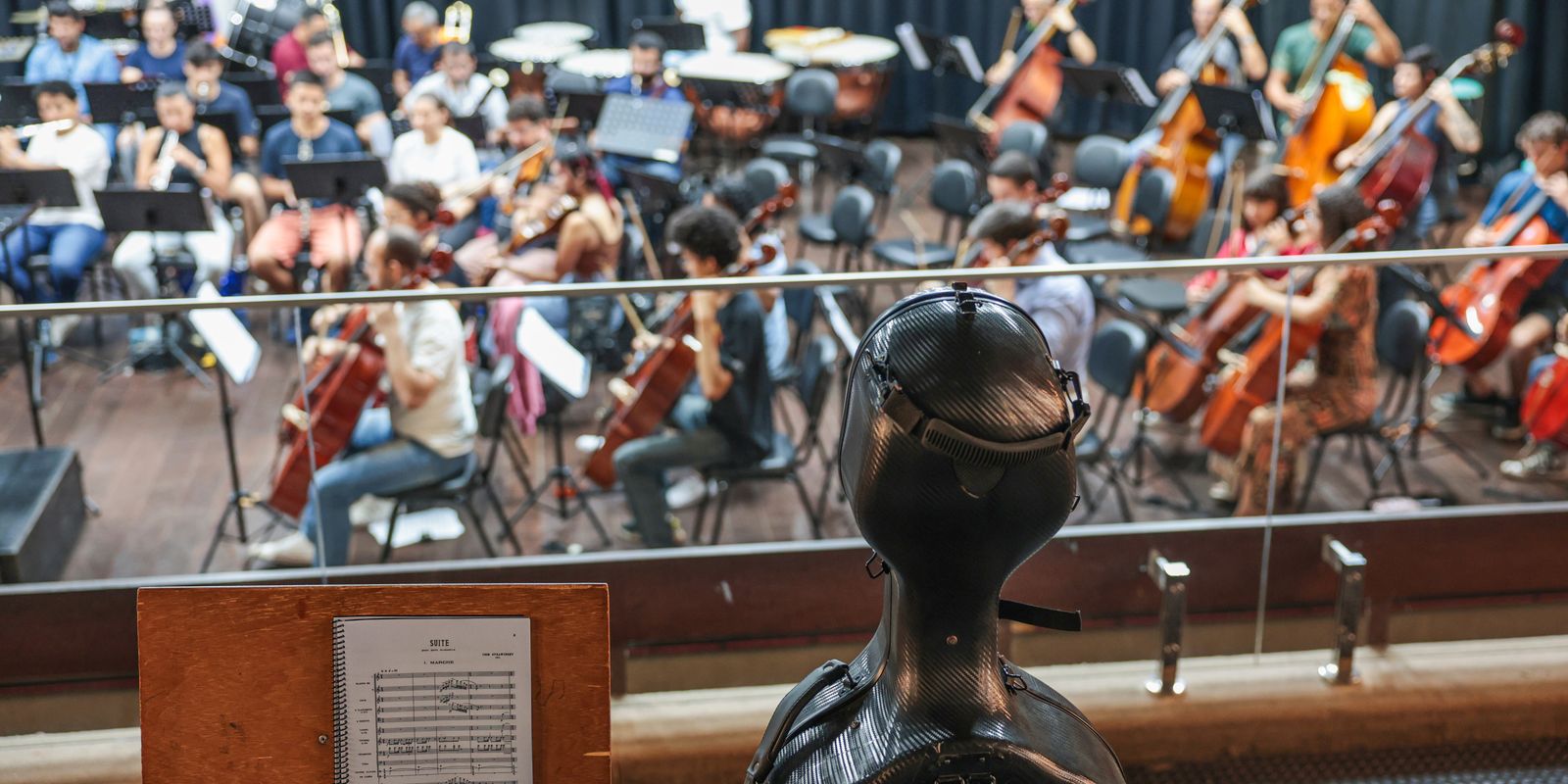
Last week and until the 24th, oboe students at the music school have the chance to take classes, in the international summer course, with now idol Ravi, who went to the same school as a teenager.
“I walk through this school hallway and everything is still alive in my head. I see stories like mine in the current students,” says Ravi.
The director of the music school, Davson de Souza, explained that, in this edition of the course, the highlight of the program was bringing musicians like Ravi, “homegrown artists” who shine throughout Brazil and the world to provide music lessons, but also life lessons.
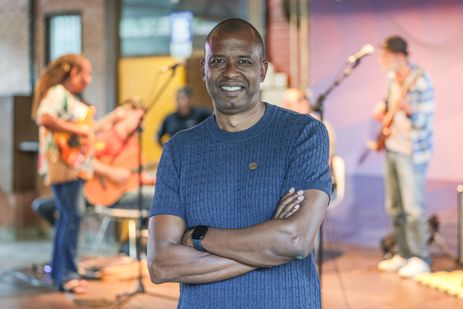
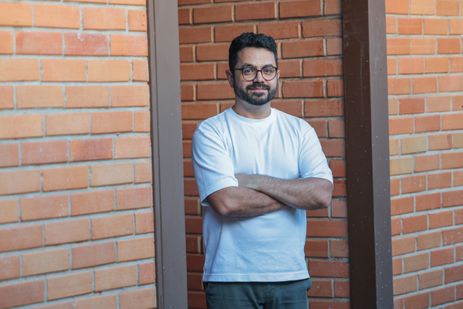
Brasília (DF), 01/17/2026 – Director of the Brasília music school, Davson de Souza. Photo: Joédson Alves/Agência Brasil – Joédson Alves/Agência Brasil
“The main function of the course is training. Bringing former students, now internationally recognized, is the best way to show participants the value of knowledge”, said the director.
In Ravi’s case, he lost his father and mother when he was still a child and went to live with his grandmother and grandfather (a bricklayer). He remembers well that, after he was introduced to the school, he applied through a lottery and managed to get in.
It is still alive in his memory that he sometimes ate a sandwich and only managed to get home after 11pm because of his high school classes.
“The music school taught me more than just the instrument. It gave me a warm welcome and I was even able to take orchestra practice classes.”
In addition to taking classes at school, he was approved for the music degree course at the University of Brasília (UnB). After finishing college, he went to São Paulo and joined three orchestras by selection.
“I played in three orchestras to pay the bills and I was in this rush”. But, even though he became a father early at age 16, he had a dream of studying abroad. A professor recommended him to study in Rostock, Germany.
After two years, he managed to be selected for the Minas Gerais Philharmonic Orchestra, where he stayed for six years. Until he was approved as a professor at the Federal University of Paraíba (UFPB).
There, he created the Brazilian Oboe and Bassoon Association and the Brazilian Artist’s Health Network. “The objective of this network is to discuss working conditions so that people understand that our profession is work.”
Carnival and trombone
Another teacher this week at the music school’s summer course is Lucas Borges, 44, who is a trombonist and teaches at the University of Ohio, in the United States. He played in the school’s marching band in another city in the Federal District, Guará, 20 kilometers from the music school.
“At school, I started to understand how beautiful the instrument was.” One moment that moved him was hearing the Bachianas number 5by Heitor Villa Lobos. But he managed to buy his first instrument playing in a carnival group.
“With the first R$500 I earned at the block. The trombone is an instrument that is very close to the human voice, and that drove me crazy”, said Lucas.
Music helped him to be disciplined with everything in life. It wasn’t even the same boy who ended up failing sixth grade. “I understood early on that I needed to take it more seriously and I started playing professionally in Brasília very early on.” He even organized his own Brazilian pop rock band, Zero Meia Um.
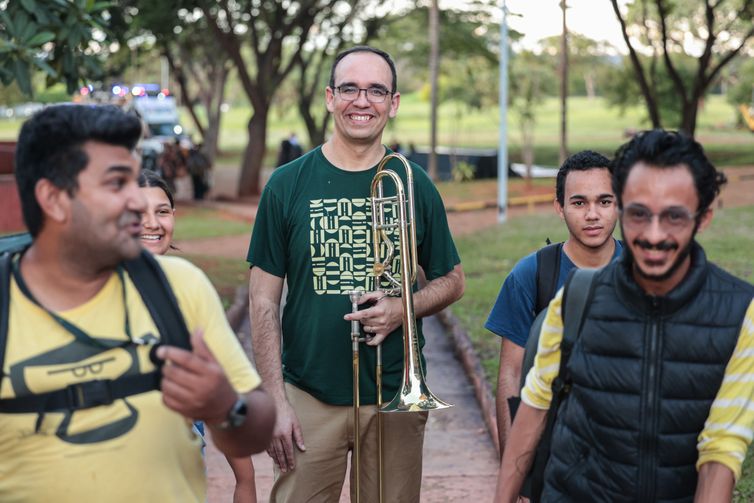
Brasília (DF), 01/17/2026 – Musician Lucas Borges with his trombone. Summer course at the music school in Brasília. He even organized his own Brazilian pop rock band, Zero Meia Um. Photo: Joédson Alves/Agência Brasil – Joédson Alves/Agência Brasil
Lucas wanted to research and pursue academia. He received his master’s and doctorate from Indiana University. He has been teaching in Ohio for 11 years.
Another trombonist who misses the Brasilia school environment is the award-winning José Milton Vieira, who also left the Guará band. His biggest dream as a teenager was to join the Firefighters band. Today he performs much further away from home, at the Melbourne Philharmonic Orchestra, in Australia. “It’s great to be back where it all started.”
Brazilian sounds around the world
Two young musicians who left the Brasilia school and made a career outside the country also had this feeling. Guitarist Ian Coury, 24, studied at the Berklee music school in Boston (USA). “Now, I’m really a musician. I travel, do workshops and shows all over the world.
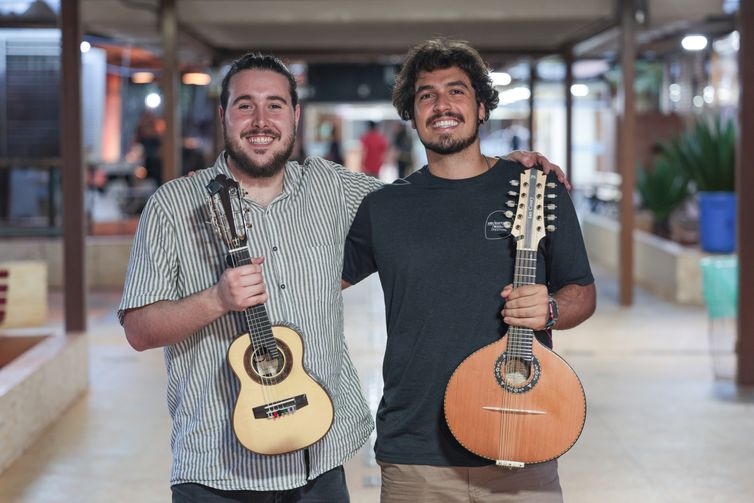
Brasília (DF), 01/17/2026 – Matheus Donato holding his 6-string cavaquinho (e) and Ian Coury with the 10-string mandolin (d). Photo: Joédson Alves/Agência Brasil – Joédson Alves/Agência Brasil
His classmate, from his time in Brazil, Matheus Donato, 26, who plays the cavaquinho, remembers that he arrived at school when he was 10 years old. Today he is a professional musician in Paris.
“In Europe, there are sometimes people without any knowledge about the cavaquinho, which leaves the ground even more open and more fertile for musical experimentation, which is my biggest flag today with this instrument”, he stated.