Brasília is already underway. Next Tuesday (25), black women from across the country will march in the country’s capital for Reparation and Good Living. A day gestated, at least ten years ago, when the First National March of Black Women took place.
“It was a historic milestone, considering it was the first march”, says journalist and black movement activist, Jacira Silva.
That year, around 50 thousand women marched on the Esplanada dos Ministérios under the theme Black Women’s March Against Racism, Violence and for Good Living. Women who came from various parts of Brazil and who are expected, once again, to occupy the streets of the federal capital.
And why are black women still marching? According to the event organizers, it is still necessary to mobilize against racism and sexism that marginalize black women.
Data from the Ministry of Racial Equality reveal that they are the largest population group in Brazil. There are around 11.3 million black women and 49.3 million brown women, totaling 28% of the total population.
Being the most populous group in a nation does not mean protection from structural violence in our country. Historically, black women have the worst social indices.
In 2022, for example, seven years after the first national march, the illiteracy rate among black women was 6.9%, double the rate for white women (3.4%).
They also march for the rights of traditional peoples, for the preservation of natural resources and all Brazilian biodiversity; for historical reparation for the pain generated by slavery; for a State that guarantees the rights of all people; and for a sustainable economic model and Good Living.
Hostesses
In Brasília, black women’s spaces have been preparing for months both to welcome participants from other states and to mobilize women who, on a daily basis, are in contact with the work carried out.
One example is Casa Akotirene Quilombo Urbano, in Ceilândia Norte, which is around 30 kilometers from the center of Brasília and serves around 250 women, as well as children and teenagers who participate in the courses and cultural activities offered by the space, which has existed for seven years.
Joice Marques presides over the House and remembers that the space did not yet exist at the time of the first march. She highlights the importance and joy of being able to march together with the women of the House and the others who will come to Brasília.
“We have been carrying out some activities at the house, in partnership with the organizers of the March here in DF, especially the people in the mental health area”, he says.
“For us, it is an immense joy to march with the women of Casa Akotirene, with women from so many places in Brazil and outside of Brazil as well. For us, it is a historic moment, which says that, in a way, we are speaking the same language.”
For her, who is part of the black movement and is part of the debate, being with the women of the House is a special pleasure. This is because these women may not be within the academy, thinking about the black women’s movement in formal instances, but they are within their territory. “They are also making policies to combat violence, to combat racism, with their community, with their family.”
The house and the street
At Casa Akotirene, women take computer courses, sewing, music, body exercises, braiding and, in this way, discover that they are black.
“I always say that, when we are inside our house, we are just one person, we are just one woman. When we go out into the street, we are already a black woman, so there is already an extra subjectivity for us”, points out Joice.
“And then we experience all this in economic racism, in geographic racism, in racism within the job market. In the racism that tries to delegitimize us every day, saying that we are not capable, that we are not intellectual enough. And I think this makes us understand how much racism, the structure, is perverse”, says the popular educator and cultural producer who was born in Piauí and grew up on the outskirts of the Federal District.
The manager of Casa Akotirene presents herself as a continuity, a dream of her ancestors, with this project with the women of the community as her great passion. And he knows the importance of collectively occupying the streets.
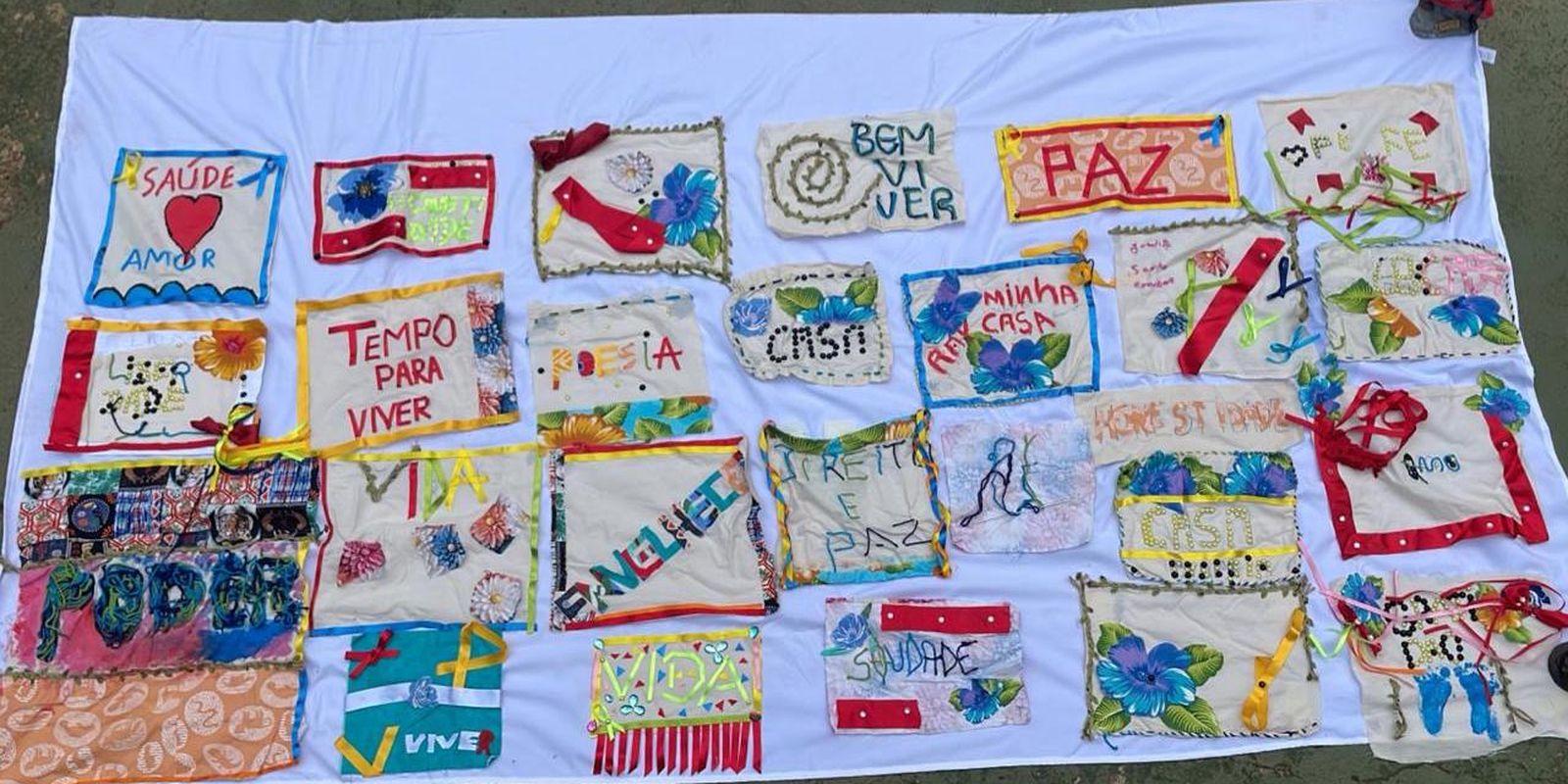
In their hands, they will carry a banner, made collectively, and which carries the desires and dreams of these and so many other black women who will be marching for reparation and a good life.