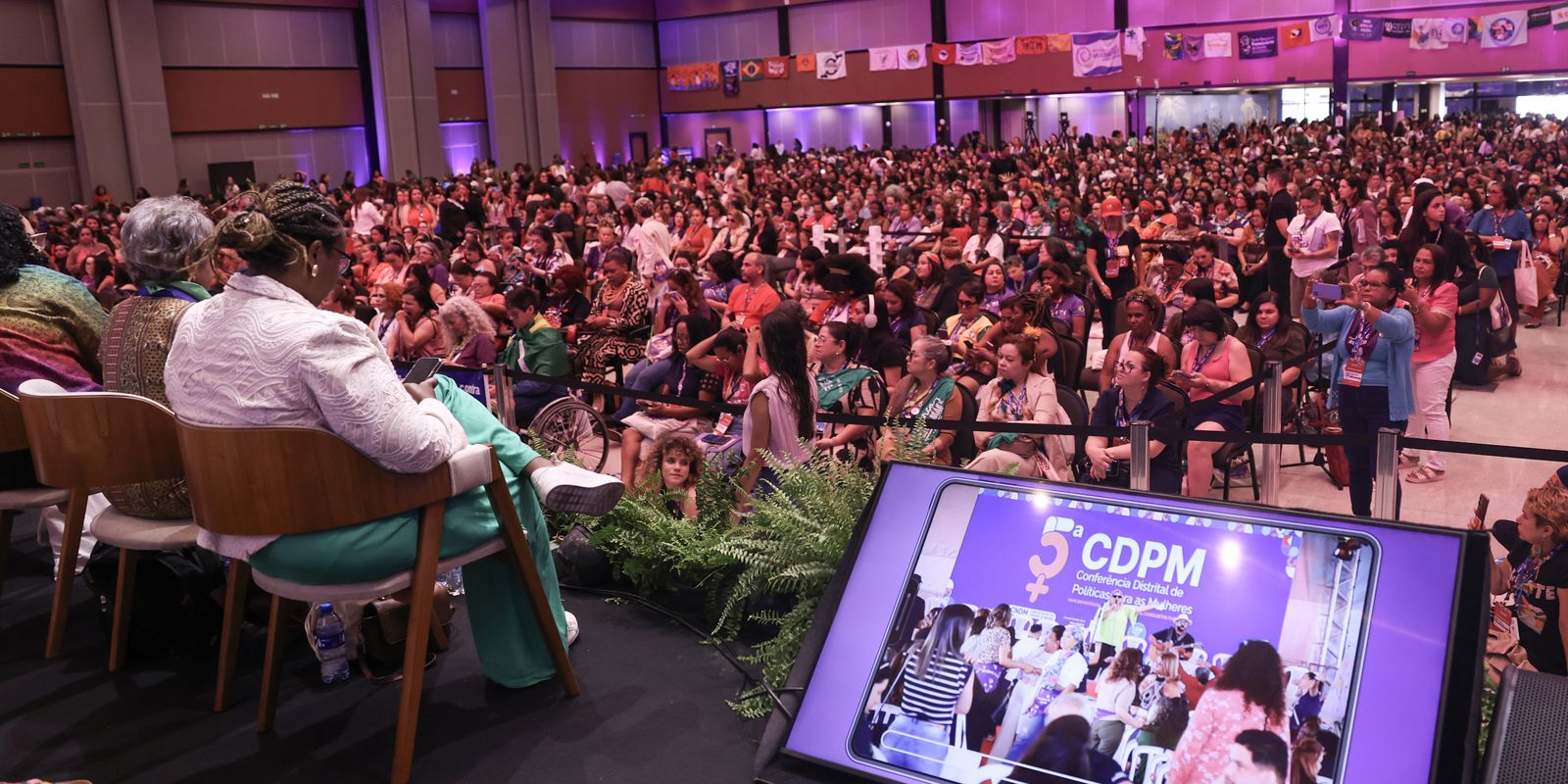
The song MARIA, MARIAby Milton Nascimento and Fernando Brant, was sung in choir by almost 4,000 accredited at the 5th National Conference on Women’s Policies (5th CNPM), in Brasilia, this Wednesday (1st), last day of national mobilization. Together they honored the strength and resilience of Brazilian women.
With the theme More democracy, more equality, more achievements for allthe 5th CNPM discussed issues such as confronting social, economic and racial inequalities; strengthening of women in spaces of power and decision; Fight all types of gender violence, care policies.
Multifaceted
Through the corridors of the event, the new concept of “women” was widespread to inform and highlight the plurality and diversity of identities of women living in Brazil and their experiences.
Black Women, with Disabilities, LbTs [lésbicas, bissexuais e transgêneras]indigenous, quilombolas, traditional peoples and communities, youth, the elderly, atypical mothers, women from the cities, the countryside and the waters, gypsies, migrants and refugees sent their representations. One to one in charge of fighting for rights and giving visibility to its causes.
From Jundiaí (SP), Mayara Alice Zambon asked for respect for all diversity, all ‘women’. She describes herself as a cis, pansexual woman. Mayara believes in intersectional feminism, an approach that recognizes different oppression axes that interconnect, such as race, sexuality, deficiency and economy class. “Women are women in their entirety. No one is born [mulher]. It becomes one, ”paraphrasing French writer and feminist, Simone de Beauvoir.
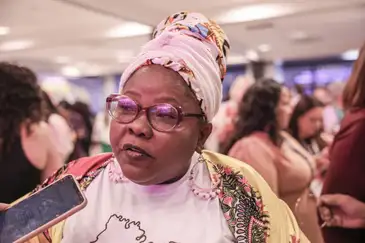
Dalvilene Cardoso considers herself a fiber woman – José Cruz/Agência Brasil
Nurse Dalvilene Cardoso, who is part of the collective of women with disabilities from São Luís do Maranhão, is considered a “fiber woman”. Her fist raises the end of the 6×1 work scale, gender violence, and the valorization of profession within the policy of care of society.
“Long live women. I want less violence, not amnesty [aos golpistas]more democracy, more respect and, of course, more education. Only through education will we become decided and determined women, ”understands Dalvilene.
In a wheel of wheelchair women, at the entrance of the conference building, the São José do Rio Preto (SP) cultural producer, Vanessa Cornelius, loves the capacitism, which is discrimination and prejudice against people with disabilities (PCD), wrongly based on the belief that they are inferior and incapable.
“We need educational policies that reach the population to demystify and take the pejorative and heavy image and label of a dependence. And although people recognize us beyond visible deficiency.”
Vanessa completes with the way that is seen in society. “We are often treated with infantilization, they do not recognize our potential. It’s a lion a day, every day. We have to put ourselves and explain who we are,” he says.
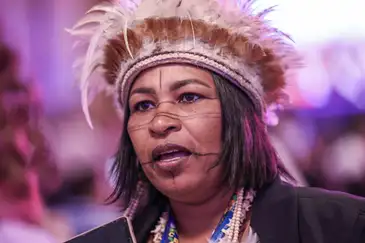
Magna Caíbé took the demands of Bahian indigenous peoples to the conference José Cruz/Agência Brasil
The indigenous Magna Caíbé traveled 1.5 kilometers (km) from Euclides da Cunha (BA) to the federal capital to bring the demands of peoples from Bahia. By reporting violence that indigenous people suffer, Magna does not admit that male violence be seen as a cultural and patriarchy phenomenon, where men would supposedly stop authority and power over women.
“Violence is not cultural. Our culture is our ancestry, it is our traditions. Indigenous women is not used to being raped. I came here to say“ no ”to the culture of violence of indigenous women.”
Professor Maria Elisângela Santos, from Aracaju, wants a just and egalitarian society, in the face of discrimination and racism. “Black women want at this conference that everyone is placed on a fine line, where no woman has more and others. The same health that is given to a non-black woman must be given to another black woman, a trans woman, regardless of her race and religion.”
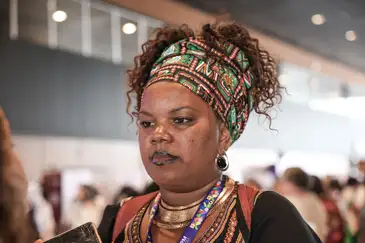
Maria Elisagela dos Santos wants a just and egalitarian society, in the face of discrimination and racism- José Cruz/Agência Brasil
The lecturer also questions the fact that the average salary of a black woman can be about 50% lower than that of a white man.
“Black women are below the salary pyramid. I fight for a fairer space, because we work equally to others, take care of the house, the family, most of the time we are missal mothers. For now, sorority, is just a beautiful word.”
Law student Ana Eva dos Santos, 24, acknowledges that she suffers from transphobia daily, but says she has maternal support. Ana Eva is a volunteer of the Gold Association Solidarity Project, LGBTQia+People’s Reception House, in a situation of socioeconomic vulnerability.
“The conference is a space of democratic dialogue to discuss public policies and listening space for the state to understand our demands, while trans people, in a homelessness, within the various intersectionalities: black people, disabilities and our women.”
Iyá Nifá Ifálere, priestess of Umbanda, a religion he chose 35, proudly brought in his suitcase the same garments he wears in the Cuiabá yard. In the Federal District, she circulates at the conference to mark a position and demand respect from axé mothers, which she says are invisible.
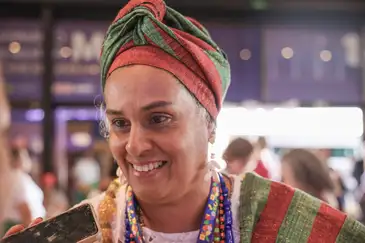
Iyá Nifá Ifálere was present at the conference to ask for respect from Axé mothers – José Cruz/Agência Brasil
“They tried to shut up. We suffered a lot, especially by our robes, we are not accepted before society, all this needs to be demystified. Because that is my identity, I am a woman of axé, I carry my axé and without him I am nobody.”
Tutóia Municipal Secretary of Women (MA), Cristiana Rocha Diniz, reports that even having implemented the Maria da Penha Patrol Program, public security, the municipality has no public resources to protect women victims of violence.
“I see in the localities that the Secretariat of Women itself, only has the name. We have no money to break this violence. The interior woman suffers violence and there is no transport to help her. There is a lot of politics, yes. But where are the training for managers? Where do we need to work?
And even in the face of so many divergences of warm points of view and debates, Francine Gagliotti came from São Paulo to represent the interests of the thousands of women who could not move to Brasilia to participate in the national mobilization.
“I hope policies will be approved to get women who have no possibility of being here. Everything has to come to all women in the country, especially the one that only survives, only works 8 and up to 12 hours a day. We are here to defend these women as well.”
Collective voice
“But it takes strength, you must have race, you must always have Ghana. Who brings the brand, Maria, Mary, mixes pain and joy.” This species of timeless anthem represented the collective yearning of social segments, feminist movements, public, academic managers, organizations of women and other sectors of civil society.
In the end, several fronts committed to the same guidelines; Equality and gender equity; confrontation to violence, discrimination and racism; Universality and access to public policies; Active participation of women in all phases of public policies.
The demands brought from the various territories of the stages prior to the National Conference were analyzed for three days, this week, in Brasilia, and voted by the delegates accredited on Wednesday afternoon
(1st). The deliberate proposals will contribute to the strengthening and improvement of the National Public Policy Plan for women, to guide the federal government in the elaboration of policies for all more than 100 million Brazilian women.
The Minister of Women, Marcia Lopes, argues that the National Conference does not end, after so many reunions, because the mobilization of women for rights and public policies continue in the communities of participants who return to their fighting territories. “Despite completing the 5th National Conference on Women’s Policy, which we understand and be aware that this conference does not end here, it does not end today. It has to continue until the beginning of the 6th National Conference of Policy for Women.”