According to AmCham, this extra cost has become an invisible tax that makes production more expensive, alters supply chains and reduces the margin for investment in innovation or expansion. “Security must be understood as an economic variable,” Guarro emphasized, noting that the lack of certainty and rule of law is affecting investment decisions in North America.
More than half of companies have suffered a crime
The diagnosis is shared by Coparmex, which brings together companies of all sizes. According to their data, around 51% of companies in Mexico have been victims of some crime, from theft and fraud to extortion.
“The impact is enormous,” explained Ángel García-Lascurain, national vice president of Economic Development of the organization. “Insecurity makes operations more expensive and makes companies less competitive, just when Mexico should take advantage of nearshoring.”
In some states, the situation is even more critical, for example, in the State of Mexico, 67% of business owners reported having been victims of a crime, compared to 42% in Quintana Roo and 40% in Durango, between the end of 2024 and the beginning of this year.
“Business planning becomes more complex in highly insecure environments; companies need a manageable level of risk to invest,” he added.
SMEs suffer the hardest blow
According to Coparmex, six out of 10 companies have had to increase their spending on security, and 17% have done so “significantly.” The most affected are small and medium-sized companies, which lack the financial margin to absorb this cost.
“SMEs are the most vulnerable; their profitability is directly reduced,” said García-Lascurain. This phenomenon, he added, explains why recent foreign direct investment is concentrated in the reinvestment of profits from already established companies, not in new projects.
Road robberies cost more than 1% of GDP
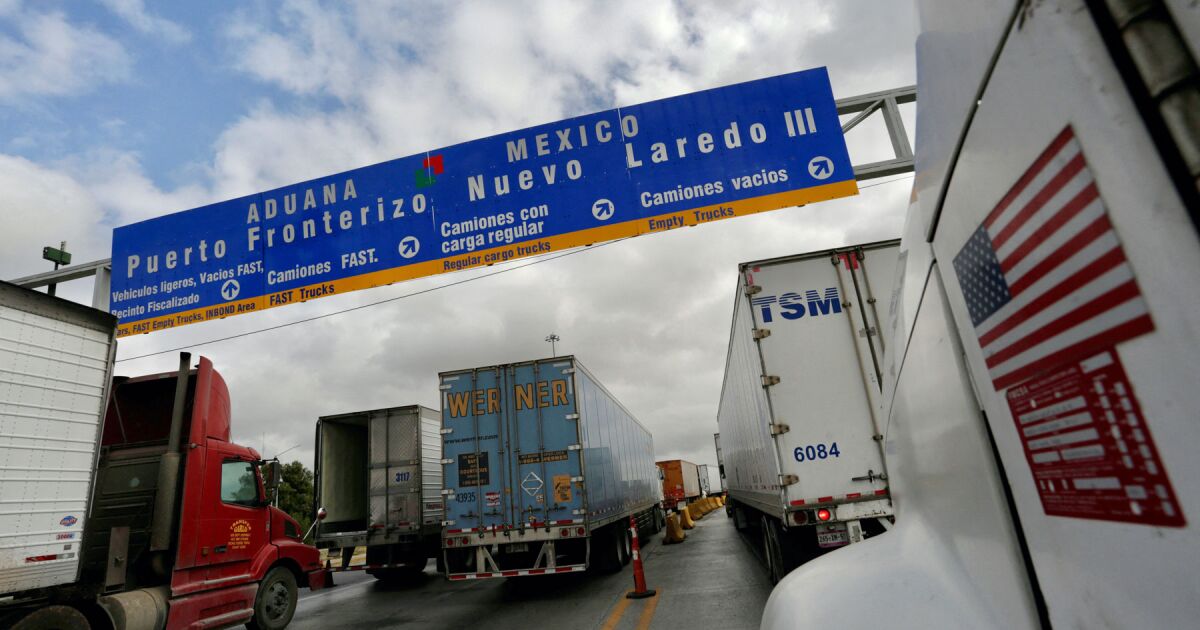
In the logistics sector, the economic impact of insecurity is tangible. Santiago Saviñón, Chief Growth Officer of 99 Minutos, explained that highway robberies represent a direct and indirect impact equivalent to more than 1% of the national GDP.
“Road insecurity worsened around 8% this year, and although we cannot eliminate the risk, we do reduce it with technology and coordination with the authorities,” he said.
Freight99, the company’s new heavy-duty transportation division, operates routes from ports such as Manzanillo and Laredo and has developed software to track units in real time, validate carriers and prevent information leaks.
“What we offer is operational certainty in an environment where logistical risks have become structural,” commented Saviñón.
The impact of violence on the economy also has empirical evidence. A study by EGADE Business School showed that a 1% increase in the homicide rate reduces foreign direct investment flows by 0.28%, while a 1% increase in robberies decreases them by 0.33%. That is, each spike in violence has concrete effects on the arrival of capital to the country.
A more recent study by the Institute for Economy and Peace (IEP) revealed that the economic impact of violence in Mexico increased in 2024 for the first time since 2019, reaching an estimated $245 billion, equivalent to 18% of the national GDP.
But in addition to the security problem, García-Lascurain pointed out that the increase in Foreign Direct Investment continues to be due to reinvestments by companies that are already established in the country, and that new investments are needed, new companies that bet on Mexico. And this requires certainty in energy, legal matters and modern infrastructure.
“If we want to be competitive, there must be security, legal certainty, sufficient energy, modern infrastructure and qualified labor,” García-Lascurain summarized.