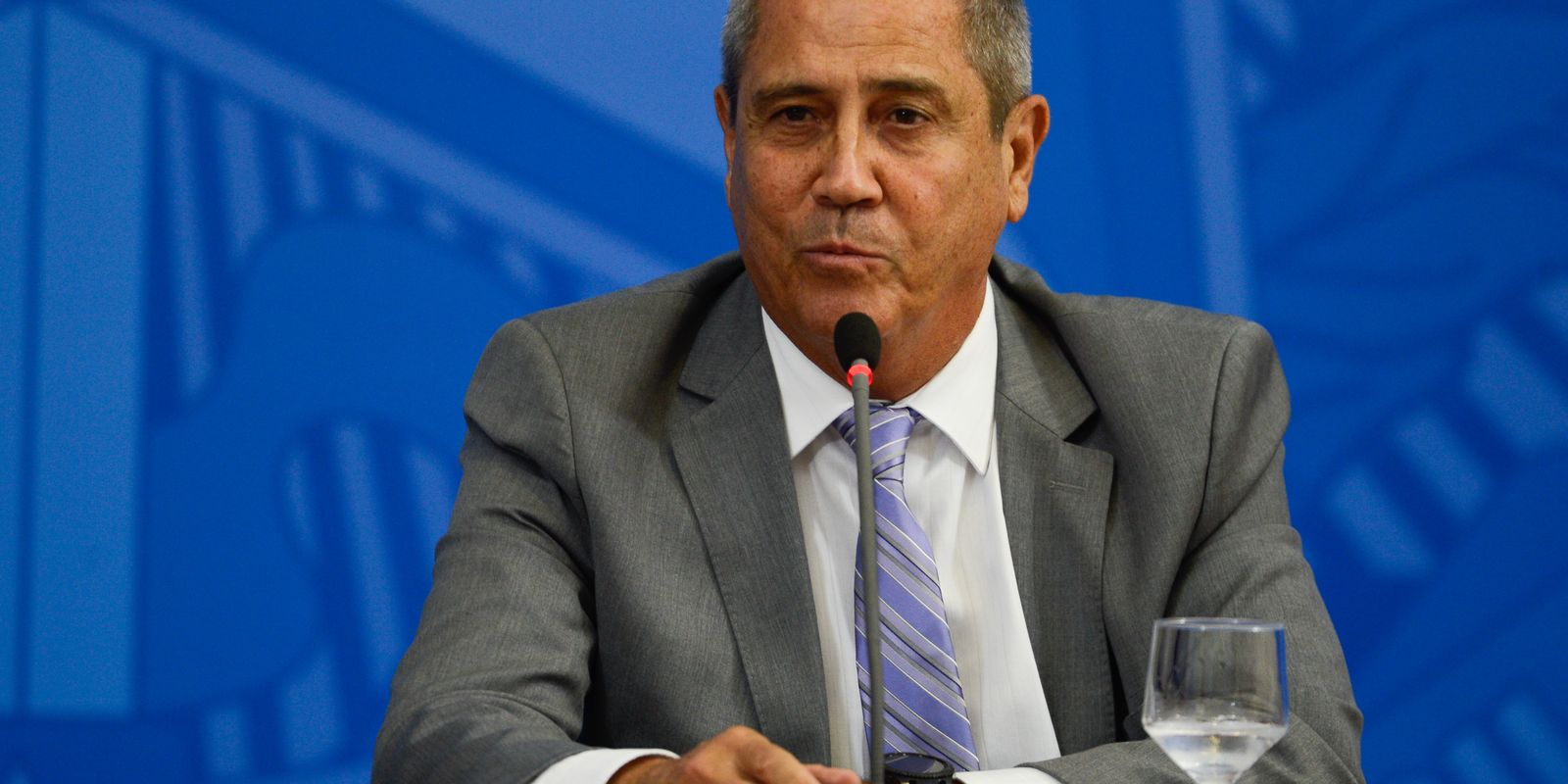
The defense of retired general Walter Souza Braga Netto presented this Monday (27) to the Federal Supreme Court (STF) motion for clarification against the decision that sentenced him to 26 years in prison for the crimes of attempted violent abolition of the Democratic Rule of Law, coup d’état, criminal organization, qualified damage to the Union’s assets and deterioration of listed assets. The case was reported by minister Alexandre de Moraes.
In the embargoes presented now, the general’s defense argues that the process was marked by “lack of impartiality” and “restriction of defense”. Lawyers claim that Minister Alexandre de Moraes would have adopted an “inquisitorial stance” when conducting the investigation of the case and ignored new evidence of suspicion presented after a previous decision by the plenary.
The piece also maintains that there was a violation of the contradictory and broad defenseas access to the vast set of digital evidence would have been a few days before the hearings began. According to the defense, the full analysis of this material would be impossible in the time available, which would render the procedural instruction null and void.
Another questionable point is the rejection of the request to record the confrontation between Braga Netto and Mauro Cid, held on June 24, 2025. The rapporteur prohibited both the official recording and recordings made by the lawyers themselves.
Embargoes also ask that the STF recognize the nullity of Mauro Cid’s plea agreementarguing that the collaborator had been coerced by investigators.
In addition to allegations of procedural nullities, the defense requests the correction of alleged material errors and contradictions in the dosimetry of the sentence. The lawyers claim that there was a mistake in the final sum of the sentences – which should total 25 years and six months, not 26 years – and question the use of different criteria for increasing the base sentence for each crime.
With the embargoes, Braga Netto’s defense requires the Supreme Court to annul part of the procedural acts, including the instruction and confrontation.
Judgment
In September 2025, the First Panel of the STF confirmed the conviction of Braga Netto, who has been in prison since December 2024. According to the indictment, the general played a central role in articulating a coup plot aimed at reversing the result of the 2022 presidential elections and deposing the legitimately constituted government.
The conviction was based on statements, messages, audio and videos collected by the Federal Police. Among the elements mentioned by the Attorney General’s Office (PGR), are records of meetings and conversations in which Braga Netto would have discussed the application of exceptional measures to prevent the inauguration of the elected president and the continuity of the democratic process.
According to the ruling, the general participated in the elaboration of a clandestine plan known as the Copa 2022 Plan, designed by retired military personnel, which provided for forceful actions against the Federal Supreme Court and other institutions.
THE plea bargain of lieutenant colonel Mauro Cidformer aide-de-camp to then-president Jair Bolsonaro, also was identified as a fundamental part of the accusation. In your agreement, Cid stated that Braga Netto had handed over resources in kind to finance the plot and participated in meetings with military personnel and civilians who planned acts of violence and kidnapping of authorities.
During the trial, ministers from the First Panel highlighted the seriousness of the conduct attributed to the general. Minister Luiz Fux highlighted that meetings between Braga Netto, Mauro Cid and other military personnel would demonstrate a concrete plan to “take the life of a Supreme Court minister”, which, according to him, would represent a direct affront to the Democratic Rule of Law.
For the magistrates, the high position occupied by Braga Netto – former Minister of Defense and candidate for Vice President in 2022 – gave greater gravity to the acts and increased their institutional responsibility.
Braga Netto’s conviction is considered a historic landmark, as it involved, for the first time, high-ranking military personnel in trial and punishment for attacks against the democratic regime. If the STF does not accept the embargoes, the defense may still appeal through extraordinary appeals or requests for habeas corpus.