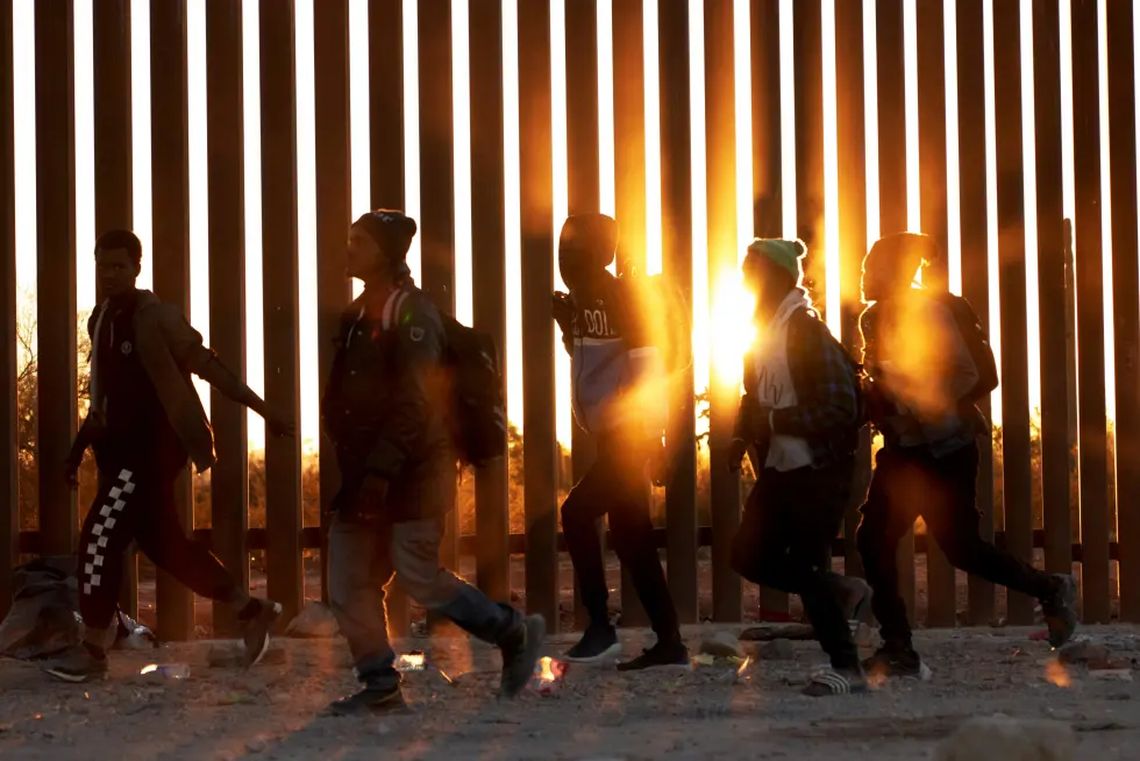
Illegal border crossings in the US-Mexico borderrecorded their lowest level in almost five decades in fiscal year 2025.
According to Border Patrol data released by CBS and confirmed by the Customs and Border Protection Agency (CBP), during the first eight months of the New York magnate’s term, migrant apprehensions at the border totaled fewer than 72,000 cases.
This contrasts with the 238,000 registered in the entire fiscal year, a figure that includes the first four months under the Biden Administration.
It is about the lowest number of arrests since 1970, when 202,000 arrests were recordedhe pointed out BBC.
The figures reflect “encounters” with migrants, which do not necessarily correspond to different individuals: the same person can appear several times in the records if they try to cross the border repeatedly before being detained.
In total, during the four years of Biden’s mandate, nearly 11 million encounters of this type were recorded.
Trump’s anti-immigrant policy
The White House, through its spokesperson Abigail Jackson, highlighted that These numbers show the fulfillment of Trump’s promise to secure the border.
“As a result, Americans are safer: criminal illegal immigrants and dangerous drugs no longer cross our border unchecked,” Jackson said, insisting that the measures implemented by the new administration are the key to the decrease in crossings.
Since his return to the presidency in January, Trump has reinforced the border with additional troops, temporarily suspended asylum requests and expanded operational capacity of Immigration and Customs Enforcement (ICE) to arrest and deport undocumented immigrants.
He has also promoted unconstitutional changes, such as the elimination of the right to citizenship by birth.
Specialists in immigration policy warn that despite the decrease in crossings, the need for a legal framework that regulates migration in a comprehensive manner remains, an issue that continues to be an area of dispute between Democrats and Republicans in Washington.
The debate over border security and immigration policy once again places the United States at the center of regional attention, as the country faces a historic decline in irregular migration, but with questions about the rights of those seeking to enter the country.