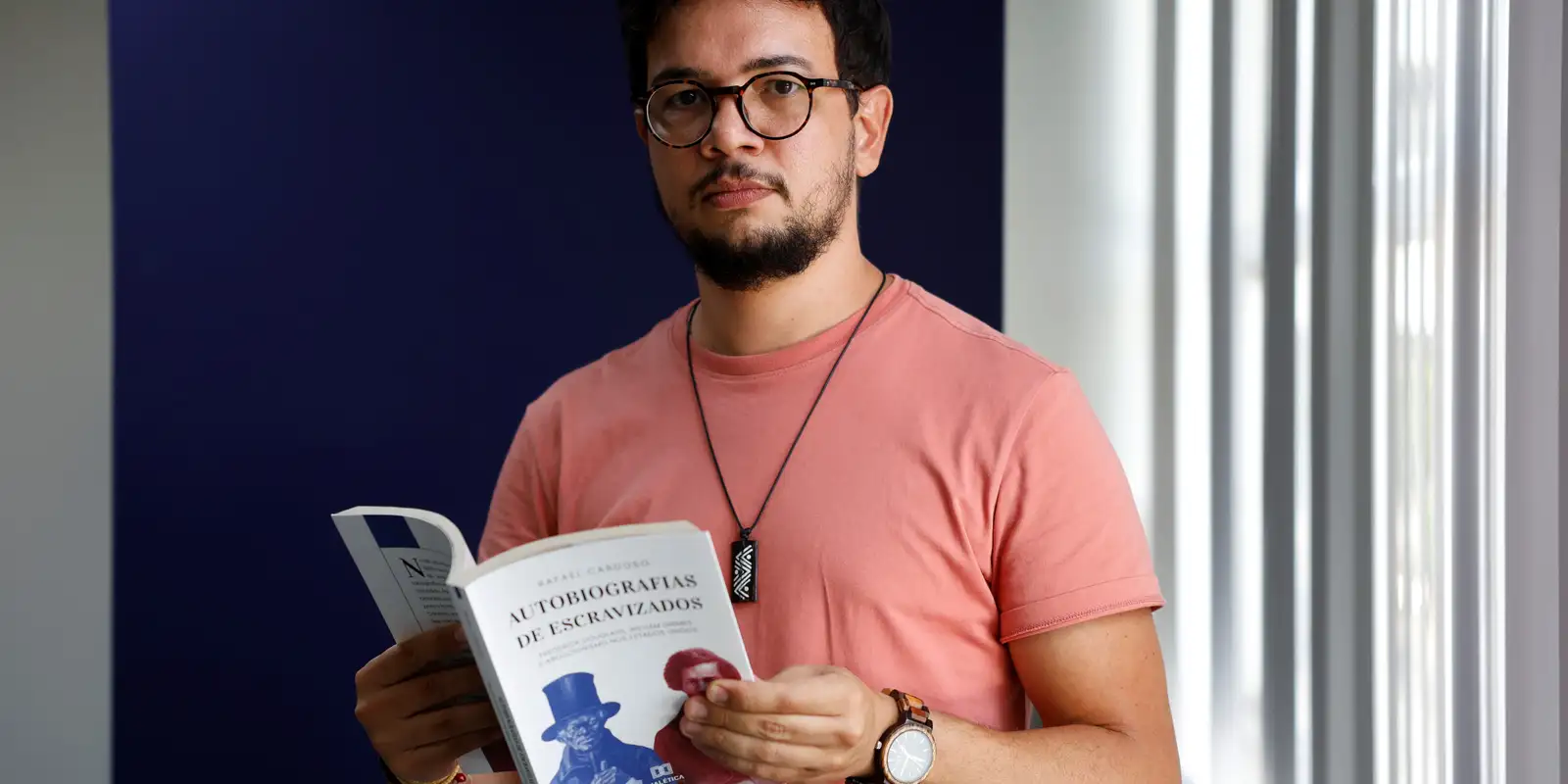
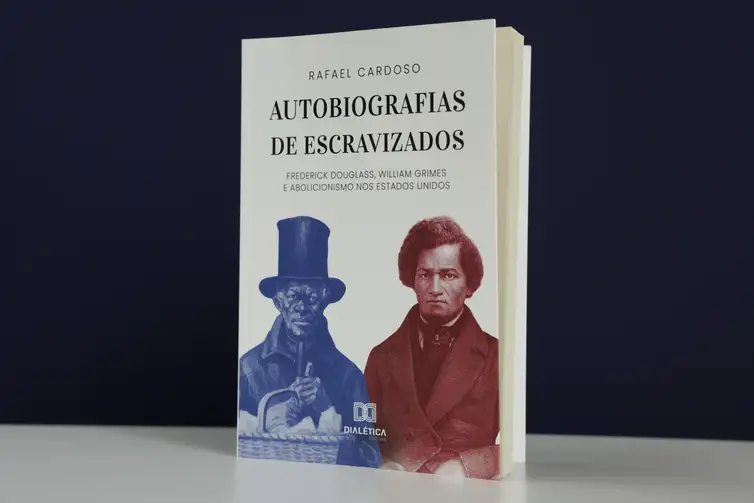
Journalist Rafael Cardoso launched this week in Rio de Janeiro the book Autobiographies of enslaved people: Frederick Douglass, William Grimes and abolitionism in the United StatesDialética publisher.
Fruit of the master’s degree in history at the Federal University of the State of Rio (UNIRIO), the publication takes the opposite path of the most common investigations in the social sciences: instead of a North American Brazilianist researching Brazil, it is a Brazilian scholar observing the United States.
Rafael de Carvalho Cardoso launches the book Autobiographies of Slaves – Frederick Douglass, William Grimes and abolitionism in the United States, by Dialética – Fernando Frazão/Agência Brasil
“We cannot limit our gaze to what is closest”, recommends Cardoso when explaining the interest in slavery in another country.
Among the differences that mark the history of Brazil and the United States, the master in history and reporter for Brazil Agency notes the availability of research material: hundreds of written accounts of people who fled the slave-owning south of the USA to the abolitionist north of the country.
“We didn’t have this type of text in Brazil, a first-person narrative”, he observes.
Without reports written by enslaved people, the vast majority of whom were illiterate in Brazil, Brazilian historians reconstructed the history of these people with notary documents, baptismal certificates and management sources from the places where they were exploited.
The only exception in Brazil, recalls Rafael Cardoso, is the Mahommah Gardo Baquaqua Biographya man born in present-day Benin (1824), who was taken to slave labor in Olinda (Pernambuco) and then resold to an owner in Rio de Janeiro, from where he left on a ship carrying coffee to New York, where he was released.
Douglass and Grimes
Cardoso chose as research subjects two men “from the second or third generation of slaves in the United States”: the abolitionist leader Frederick Douglass (1818-1985), and the barber William Grimes (1784-1865). Both published two autobiographies. Grimes in 1825 and 1855; and Douglass in 1845 and 1855.
In the 30-year gap between the autobiographies, Rafael Cardoso observes social changes in the slave-owning United States based on what the two authors described.
In individual experiences, the historian sees what the places where they lived were like, family ties, social relationships, and political context – “how all of this is capable of influencing the subject’s life and the way he wants to place himself in the world.”
For the Marxist-Gramscian historian, “structural, economic and social influences condition our choices, limit our choices and life possibilities.”
Making a living from the job of investigating and reporting on social and environmental issues for the Brazil AgencyRafael Cardoso says he believes that studying history calibrates “the critical and analytical vision” of reality – usual resources for his work as a reporter.