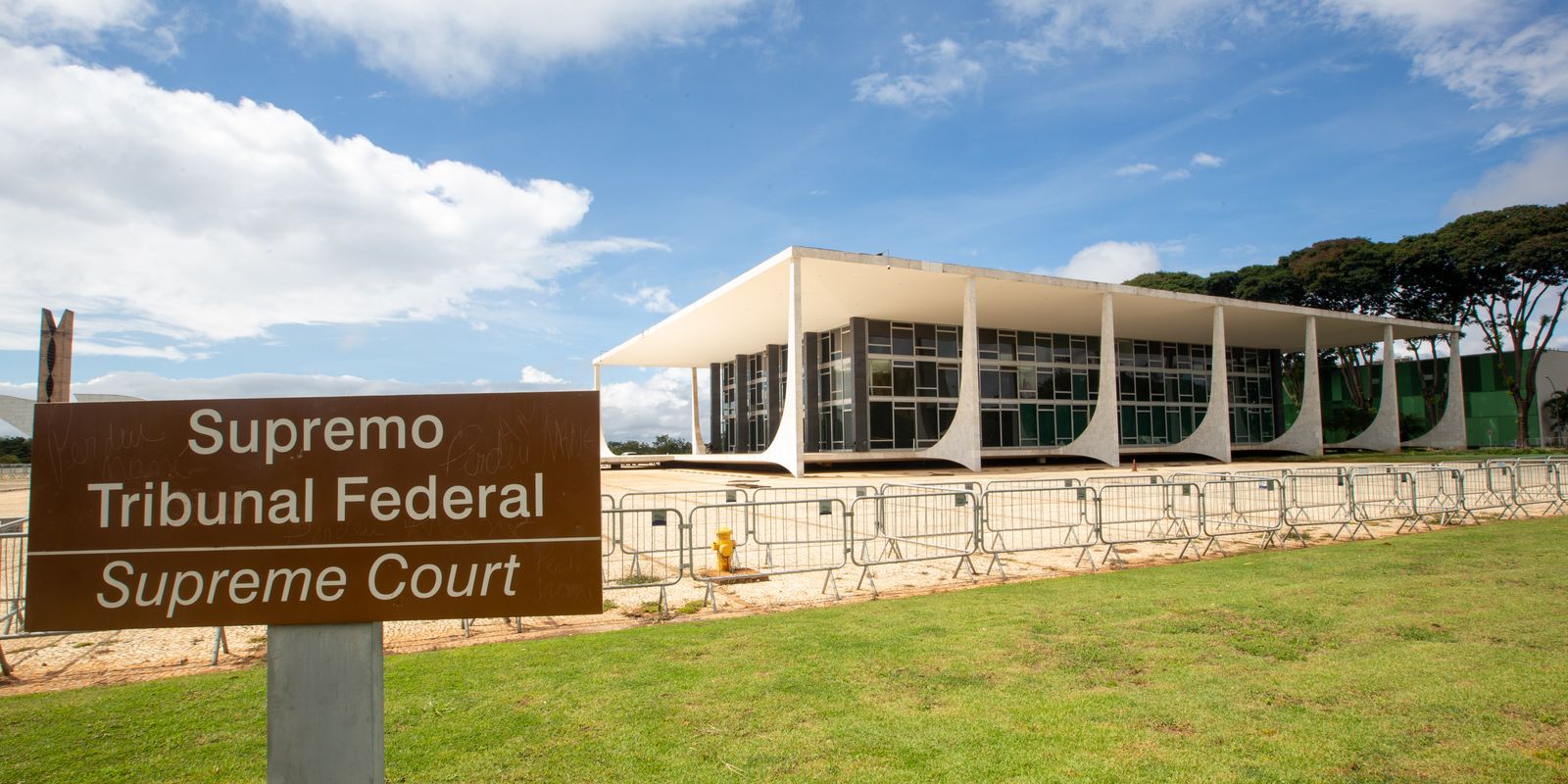
The First Panel of the Federal Supreme Court (STF) will judge, virtually, between the 7th and 14th of November, the appeal of former president Jair Bolsonaro against the decision that sentenced him to 27 years and three months in prison for crimes against democracy. 
In the same virtual session, the appeals of six other defendants should be judged, all former allies of the former president and who were considered the main nucleus of an attempted coup d’état that attempted to keep Bolsonaro in power even after an electoral defeat in 2022.
The criminal action in which everyone was convicted entered the trial agenda this Tuesday (28), one after the deadline for presenting appeals had passed..
Among those convicted, he just didn’t appeal: lieutenant colonel Mauro Cid, Bolsonaro’s former aide-de-camp and whistleblower of the coup plot. According to the sentence, he maintained the benefits of the plea bargain, receiving a lighter sentence of two years, and therefore should not be imprisoned in a closed regime.
In an appeal filed on Monday (27), Bolsonaro’s lawyers said there had been restriction of defense at trial. Among other points, one of the reasons was the lack of time given to the defendants to analyze an immense amount of information attached to the case by the Federal Police (PF), which would total more than 70 terabytes of data.
“The defense was not even able to access the entirety of the evidence before the end of the investigation; it did not have the minimum time to learn about this evidence”, says the embargo signed by Bolsonaro’s defense team, which is led by criminalists Celso Vilardi and Paulo Cunha Bueno.
The other defendants who also filed an appeal maintained similar arguments. The defense of General Walter Braga Netto – former Minister of the Civil House and Defense and vice-president on Bolsonaro’s ticket in 2022 -, for example, accused the rapporteur of the case, Minister Alexandre de Moraes, of partiality, in addition to restricting defense.
Embargoes
According to the procedural rules and internal regulations of the Supreme Court, appeals cannot be made to the plenary after conviction by either of the two groups of the court..
Furthermore, the rules also provide that, in the case of the central nucleus of the coup plot, the embargo of declaration is the last applicable resource before the criminal action becomes final, that is, before the start of compliance with the sentence can be determined.
The embargo of declaration is a type of appeal aimed at remedying what would be, in the view of the defenses, ambiguities, omissions, contradictions and obscurities in the text of the judgment (collegiate decision).
In theory, this type of appeal does not produce effects to reverse the result of the trial, although it is common for defenses to write the appeal in such a way that, if the requested clarification is granted and the supposed obscurity is remedied, the result of the trial ends up being reversed, in the so-called “infringing effect”..
Prison
Only after the judgment of the motions for clarification, therefore, will Moraes be able to determine the eventual start of Bolsonaro’s sentence. Due to the size of the penalty, the legislation determines an initial closed regime.
However, there are exceptions, such as in cases where there is no prison unit capable of providing the necessary care for a convict’s illness. In this case, the judge may order house arrest for humanitarian reasons.
As he is a former president, Bolsonaro also has the right to stay in a special room, which could be, for example, in a Federal Police (PF) facility. As a retired member of the Army, he can also stay at a military installation.
Who votes?
In the appeal, Bolsonaro’s defense cited several times the vote of minister Luiz Fux, the only one to vote for the acquittal of all the defendants. The lawyers particularly highlighted the part in which the minister says that the former president could not be convicted for “considering” committing a crime, and that even if he thought about carrying out a coup, he ended up “giving up”.
It is not yet clear, however, whether Fux will vote in the judgment of the appeal. This is because the minister requested a transfer to the Second Panel, which had a vacancy open after the early retirement of minister Luís Roberto Barroso.
When asking for the transfer, after being isolated in the coup case, Fux expressed his desire to continue participating in the coup plot trials. There is, however, no clear rule regarding the situation, which must still be resolved by the Supreme Court and its president, Minister Edson Fachin.