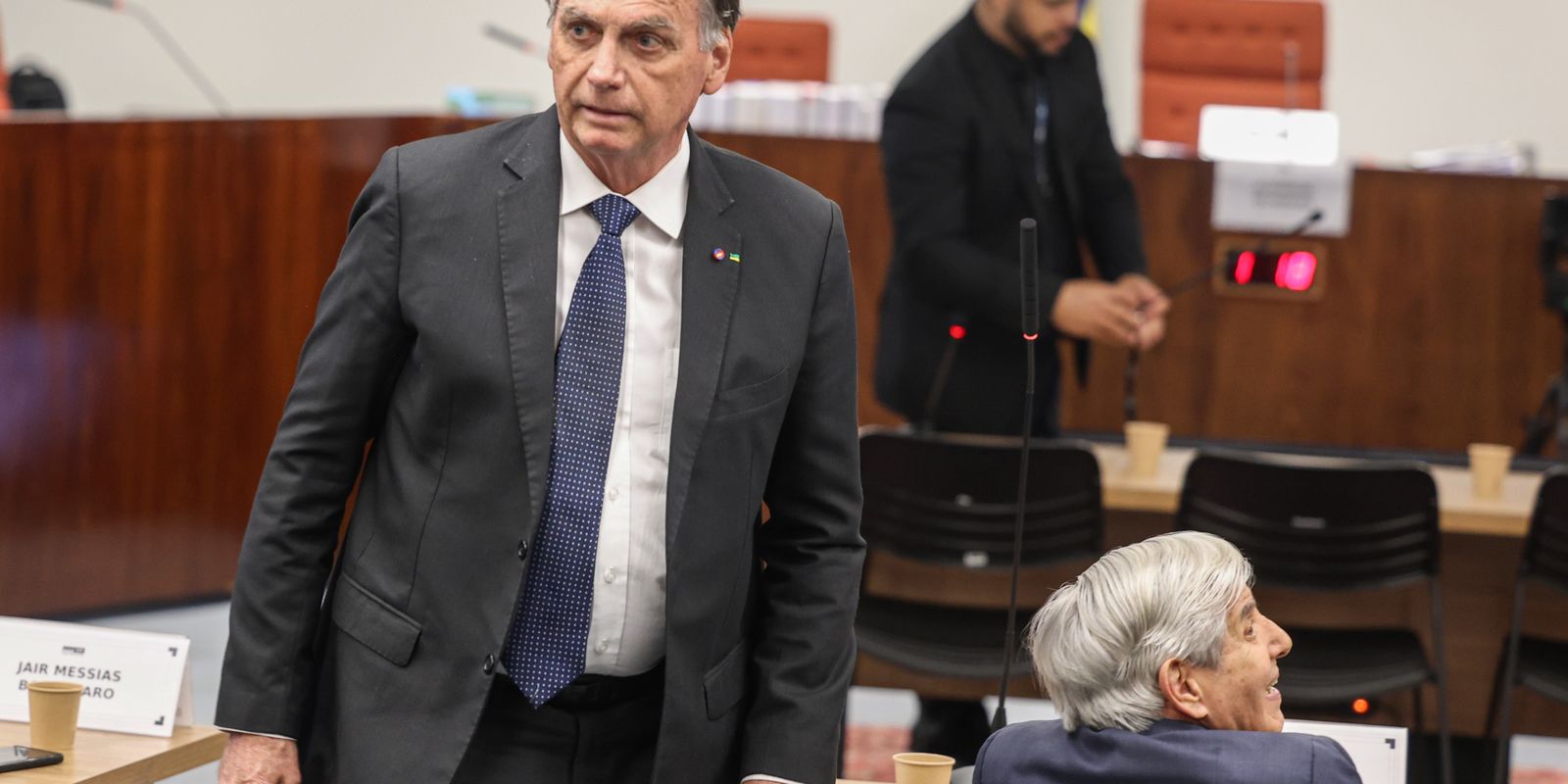
The defense of former president Jair Bolsonaro presented to the Federal Supreme Court (STF), on Monday night (27), embargoes for clarification to “resolve the ambiguities, omissions, contradictions and obscurities” of the STF decision that condemned him for an attempted coup d’état.
Bolsonaro is one of the defendants in Core 1 of the coup plot and was sentenced by the First Panel of the STF to 27 years and three months in prisonin an initial closed regime, for the crimes of attempted coup d’état, attack against the Democratic State of Law, an armed criminal organization, of which he was appointed as leader, damage qualified by violence and serious threat and deterioration of listed property.
Bolsonaro’s lawyers asked for a review of the dosimetry of the sentence, alleging a lack of adequate individualization and a violation of the principle of proportionality. According to them, the negative circumstances for establishing the penalty are not present in the ruling.
“It is not known, therefore, what each of the circumstances considered, by the Minister Rapporteur, as ‘broadly unfavorable’ meant. It is indisputable that from the existence of circumstances valued negatively, the high increase in the sanction was reached, without any calculation, without any demonstration”, says the defense document.
In the motion for clarification, Bolsonaro’s defense also claims that there was a restriction on his defense during the process that led to his conviction in the STF. According to the document, the lawyers did not have time or adequate access to the evidence produced in the investigation.
They say they received 70 terabytes of data, which would have made it impossible to examine the material before the end of the briefing. The defense also argues that requests to postpone the hearings were denied,
“The defense was not even able to access the entirety of the evidence before the end of the investigation; it did not have the minimum time to learn about this evidence. And it was not able to analyze the chain of custody of the evidence. After all, the documents were delivered when the investigation was ending and, despite the defense’s resources, the process continued.”