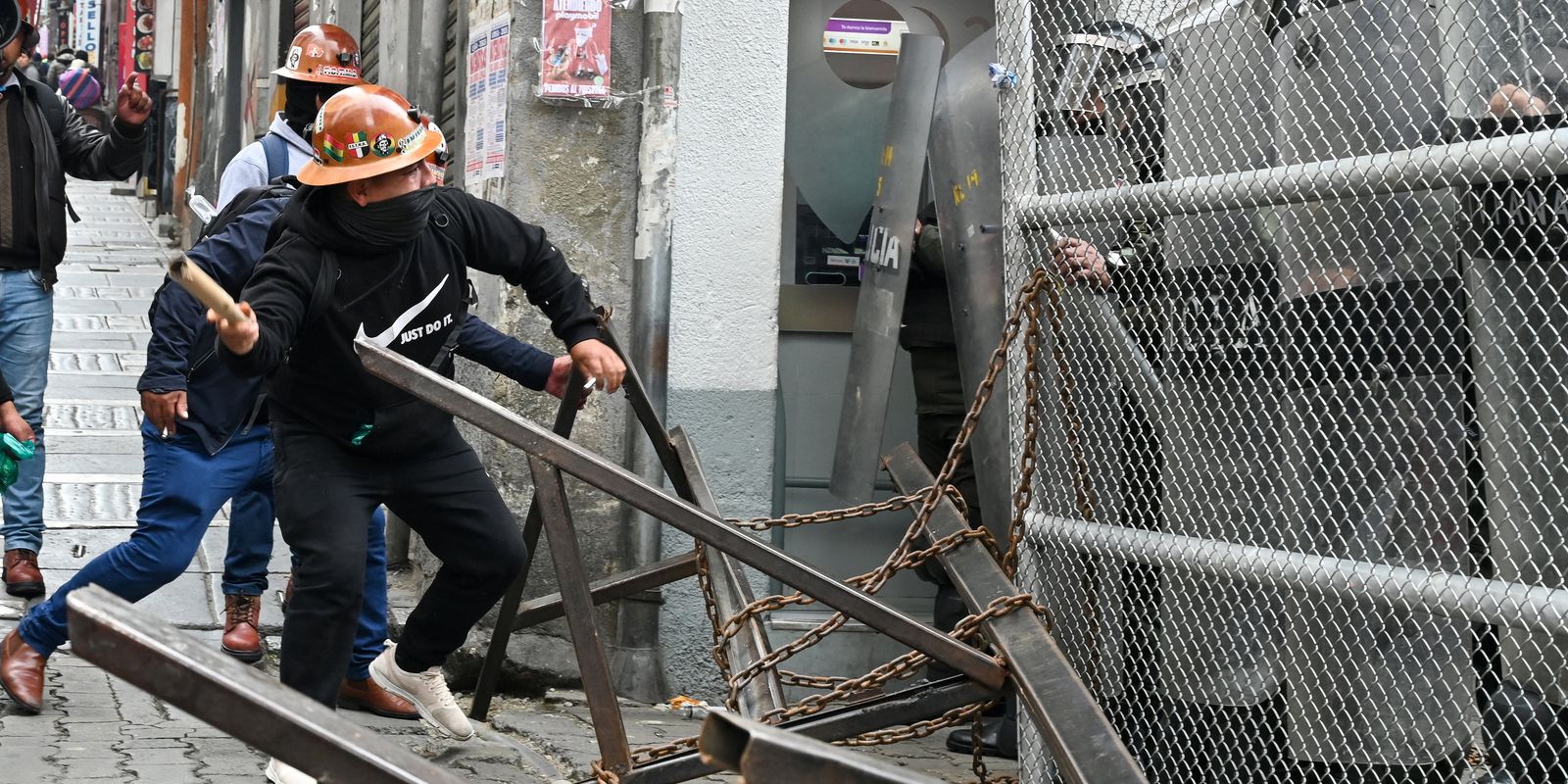
Less than two months after the start of the termBolivia’s new government is already facing the first wave of protests and strikes called by unions and social movements.
The organizations leading the demonstrations have been on the streets since December 22 calling for the annulment of the presidential decree that ended fuel subsidies, which had lasted around 20 years, causing increases of up to 160% in diesel and around 86% in gasoline.
To mitigate the increase in fuel prices, the same decree increased the minimum wage by 20%.
A new march was called for this Saturday (3), which should leave from Calamarca to the city of La Paz, where the unions have a meeting scheduled with the government next Monday (5) to discuss presidential decree 5503.
THE new decree It has 121 articles and was published on an “exceptional” and “temporary” basis. It establishes a new legal, tax and administrative framework that, according to the government, facilitates private investment, rebalances public accounts and favors exports.
To justify the measures, the government declared an economic, energy and social emergency “in view of the inflationary process that the country is experiencing, the scarcity of dollars and fuel”.
Crisis
Street protests, roadblocks, marches and even hunger strikes have been recorded in recent days in the Andean country. The Bolivian Workers’ Central (COB) – the country’s main trade union center – states that decree 5503 is a broad “neoliberal package” that places the burden of the crisis on the shoulders of the population.
COB executive secretary, Mario Argollo, said that the decree sells the country and goes over the heads of the Legislature, which did not analyze the changes.
“This decree raffles and sells our country to transnational corporations, private companies and agribusinesses that, unfortunately, benefited from this government’s position”, lamented the union leader in an interview with Telesur.
The COB called for a “general strike” for an indefinite period, having obtained support from other unions, such as teachers and miners.
When publishing the regulations on December 18, new president Rodrigo Paz highlighted that the measure was a “difficult decision”, but necessary to guarantee the supply of fuel and reduce the “bleeding” of the country’s financial reserves.
“We will defeat the ‘obstructionist State’ by implementing positive administrative silence, so that no procedure impedes the work of our people, and we will open the doors to investment with 0% taxes for those who repatriate their capital to produce in our land”, informed Paz.
The new rules also create a procedure for rapid approval of projects considered strategic by the government. Called Fast Track, the procedure provides for processing within 30 days after the project is presented.
Political rearrangement
Anthropologist Salvador Schavelzon, professor at the Federal University of São Paulo (Unifesp) and specialist in Latin American politics, highlights that the new regulations of Rodrigo Paz’s government are a “decree of coming to power” and that the country is going through a “political rearrangement” after almost 20 years of left-wing governments.
“Initially, it seemed that there were going to be stronger protests. On the first day they went out to block roads, but I feel that it lost strength, that the government’s negotiations with the transport sectors meant that the situation did not explode, as it did at other times”, assessed the expert.
For Schavelzon, this Saturday’s new act and negotiations with the government starting on Monday will define the future of the movement. The strikes have the support of the country’s vice president, Edman Lara, who broke with Paz and went into opposition.
Amid disputes with his vice-president, Rodrigo Paz issued a new decree this Friday (2) authorizing himself to govern from abroad, as a way of avoiding handing over the position to his vice-president while he is on international trips.
Other changes to the decree
The Bolivian decree also prohibits new hiring in the public service, limits adjustments to civil servants and establishes “free negotiation” between employers and workers, whether individual or collective agreements.
To attract investments, the decree creates a new “extraordinary” regime for national and foreign investments that would enjoy legal and tax stability for up to 15 years.
The decree signed by President Rodrigo Paz also eliminates restrictions on imports and exports “in order to streamline foreign trade”.