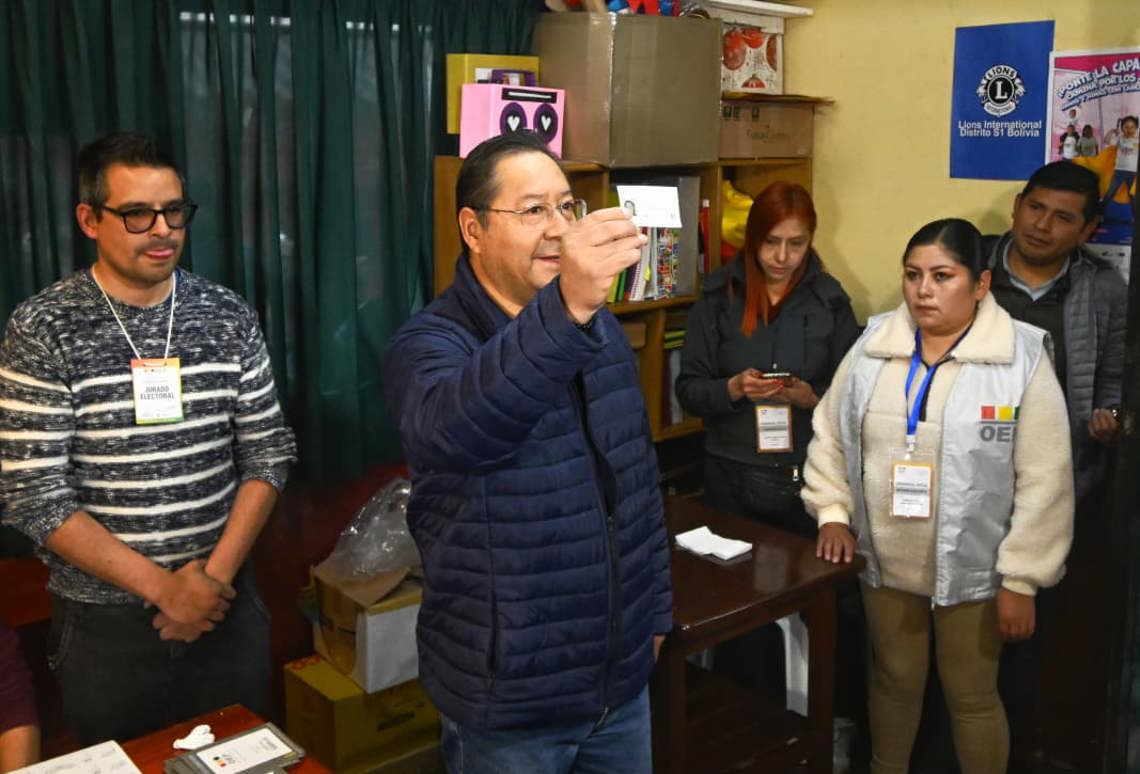
The election day in Bolivia began this Sunday with the opening of the voting tables to elect for the first time in the second round the president and vice president, among the pairs led by the centrist Rodrigo Paz Pereira and the conservative Jorge Quiroga.
The electoral precincts located throughout the country must operate for eight hours uninterrupted until 4:00 p.m., when they are scheduled to close.
Voting supervision is carried out by some 204,000 jurors for 35,253 polling stationsaccording to data from the electoral body, according to a report from EFE.
When inaugurating the day, the president of the Supreme Electoral Tribunal (TSE), Óscar Hassenteufel, remarked that this day “will be recorded in national history because it will be the first time that a second electoral round is held in Bolivia within the framework of the current Political Constitution.” Gandarillas
According to Hassenteufel, there were “some challenges” in organizing the runoff “that were adequately faced,” so the TSE is “in a position to offer the Bolivian people fair, clean, transparent, impartial and technically reliable elections.”
Senator Paz and former President Quiroga (2001-2002) were the two candidates with the most votes in the general elections on August 17, in which the national Parliament was also renewed for the next five-year period, although neither obtained enough percentage to be declared the winner in the first round.
Since the promulgation of the new Constitution in 2009, there have been three general elections in Bolivia in 2009, 2014 and 2020, in which the winners exceeded 50% of the votes, so until now a second round was not necessary at the national level, according to information from the TSE.
With the left now out of options, Bolivia will go to the second round to elect its next president
For this Sunday’s vote, the same registry from August 17 will be used, which means that 7,567,207 people in Bolivian territory and another 369,308 citizens in 22 countries are called to the polls again.
Voting in Bolivia is mandatory and after casting it, the person receives a certificate of suffrage that must be presented to carry out any procedure in public institutions and in banks within 90 days after the elections.