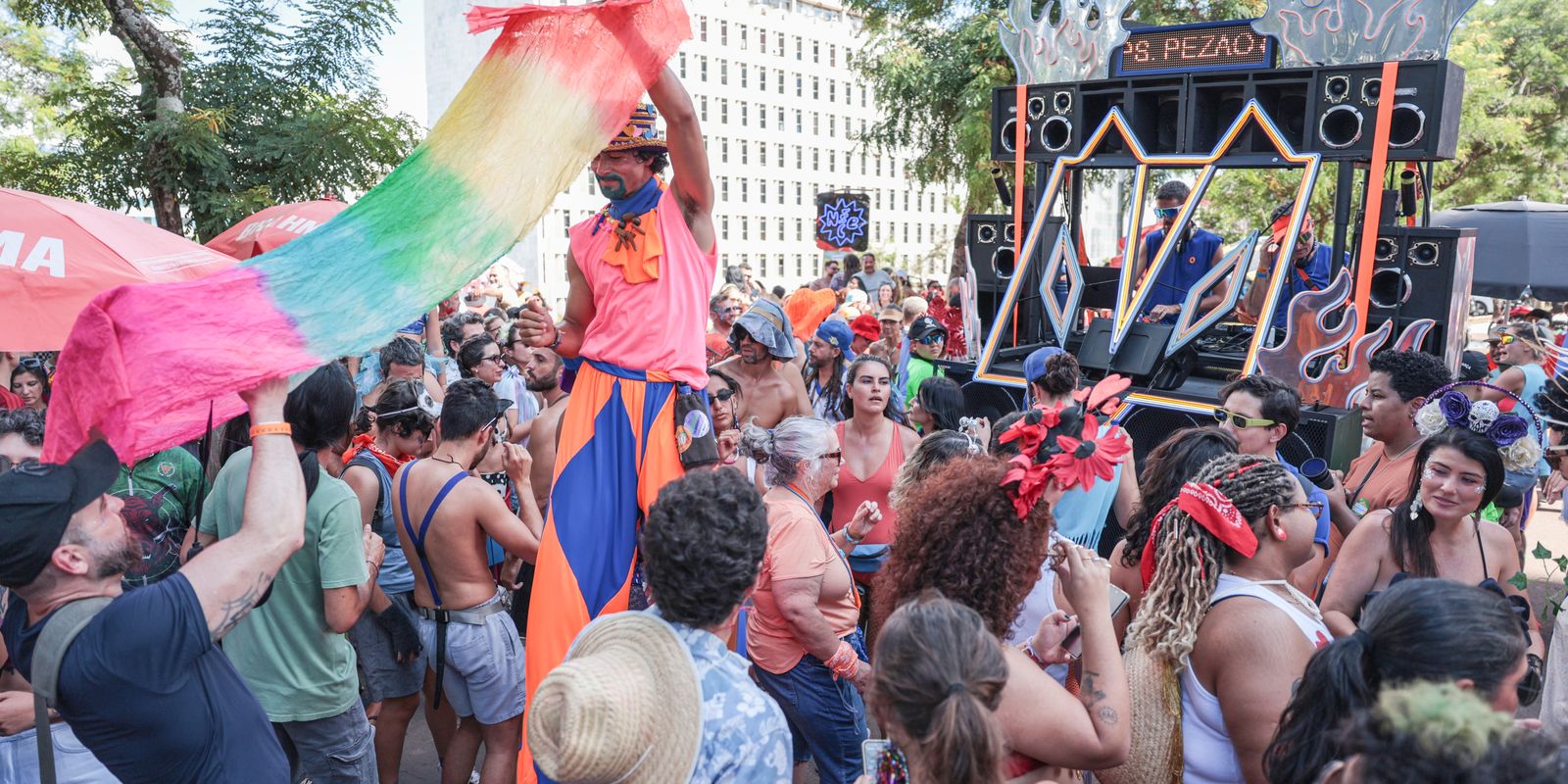
At first, it was just an electronic sound mounted on a float crossing the streets of the city where they said “there was no carnival”. Inspired by the sound systems of Pará, this Saturday (14), the little device completes 15 years, consolidated not just as a block, but as a movement to appropriate street carnival and re-signify public space in the federal capital.
“It’s pure love for the city, for the city’s streets, for the busy and colorful avenues; it’s a real desire to see the street carnival happening here”, said DJ Rafael Ops, one of the founders of the block, in interview with the program Art Space from the Radio Nacional FM in Brasília, this Friday (13).
“Just like a marching band that plays its flute, its instrument down the street, we want to push our cart down the street too”, said Ops.
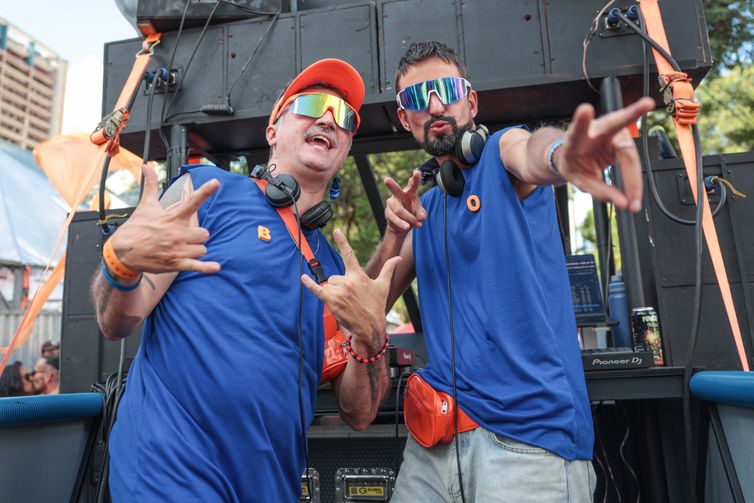
Bloco Aparelhinho street carnival in the south banking sector, the DJs, Rodrigo Barat (e) and Rafael Ops (d) – Joédson Alves/Agência Brasil
The DJ explained that the first cart was built in the carpentry workshop at the Institute of Arts at the University of Brasília (UnB). At the time, he was a performing arts student at UnB and created his first project in partnership with architect Gustavo Góes.
“It didn’t appear as an electric trio, as a stage, it emerged as a pushable object that can occupy a marquee, a tunnel, go up a sidewalk, it goes wherever we imagine. It was simple, with four active speakers. We arrived in the first year without any expectations and had a wonderful year. Right away, the city loved the project and today we are celebrating 15 years”, he celebrated.
Over the years, the electric cart has evolved into a more technological and visually striking structure with the block colors: blue and orange. The organizers explained that there was a wooden cart, an iron cart, it was online during the pandemic, it was a cart, it was a trio and it was a cart.
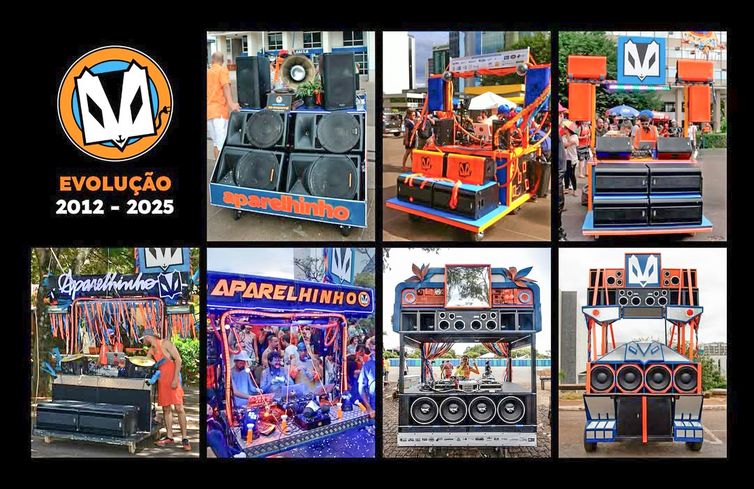
Evolution of the Aparelhinho Block – bloco.aparelhinho/Instagram
For a few carnivals, Aparelhinho takes to the streets with the financial support of the Federal District Department of Culture and, in 2026, there are around 100 people involved in the organization.
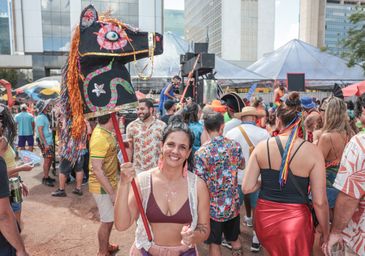
Bruna defends the importance of forming new carnival audiences so that the festivities can dominate the city once a year – Joédson Alves/Agência Brasil
Publicist Bruna Daibert has been attending the block since the first edition, in 2012, and sums up: “I really love carnival. As long as Aparelhinho is out, I’m going too.” “It’s the block where I meet my friends, where we are at home, where I bring my daughter, where I make a point of coming,” he said, explaining that his daughter, now 16 years old, has been having fun at the block since she was a child.
“I think it’s very important for us to form this new audience of carnival attendees, so that we can become more and more established and carnival can even occupy the middle of the courts. [residenciais]”.
Bruna referred to the dispute between those who want the popular party to take place in all spaces and those who defend the concentration of groups in fixed places, due to noise and dirt.
In 2023, for example, the Galinho de Brasília block, one of the most traditional in the federal capital, canceled the parade due to the restriction of travel through residential blocks in Asa Sul. Today, the frevo block is concentrated in the Setor de Autarquias Sul.
“I think we have to occupy the entire city, it’s once a year. Let the carnival happen, it’s so beautiful, so colorful, so happy”, added Bruna.
Electronic music
Dragging revelers through the South Banking Sector of Brasília, the block’s anniversary featured a repertoire of songs created by the founding DJs – Pezão, Rafael Ops and Rodrigo Barata – as well as guests Biba and Mica and Pororoca DJs, with Emidio and Leroy. “We play world music”, said Barata, also in an interview with Brasilia National FM Radio.
Barata said that the sound language is electronically based and includes remixes of songs from Brazilian carnivals, frevos, axés, sambas-enredos, brega funk, piseiro, even rock and roll and electronic music of various aspects.
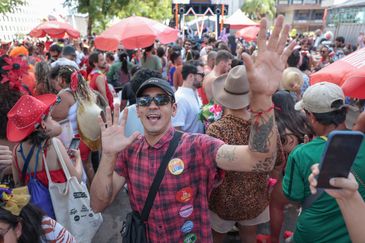
Iago Roberto says that the Brasilia carnival did not disappoint him – Joédson Alves/Agência Brasil
It’s cook Iago Roberto’s first carnival and the party, for him, didn’t disappoint.
“I don’t listen [música eletrônica] on a daily basis, but I’m enjoying it. Just the energy of the people in this place is wonderful,” he said.
Younger, Iago said he prioritized work and studies and, after three years living outside Brazil, he returned wanting to experience street carnival. “I love Brasília. I had high expectations and it is delivering,” he said.
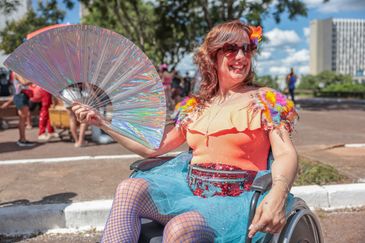
Fabiana Montandon encountered challenges on the streets of the South Banking Sector – Joédson Alves/Agência Brasil
Aparelhinho is promoted as a democratic and inclusive space and also welcomes children and people with mobility difficulties.
But dentist Fabiana Montandon encountered challenges on the streets of the banking sector. “Plenty of holes in the road, the sidewalk doesn’t have ramps to go down and the bathroom is pseudo-accessible.” She has been following Aparelhinho for 10 years and, this year, even with her leg immobilized, she was on the block.
“They announced that it was an accessible space and that’s why I came. But we only realize it when we’re in that situation,” he said.
“I really like electronic music, Aparelhinho is very diverse, it plays modern music, from the 80s, I love this group”, he stated.