The UNE predicts this Thursday a deficit close to 1,900 MW and blackouts that will leave up to 60% of the country without electricity.
MADRID, Spain.- The Cuban electrical system is going through one of its most critical moments so far this year, with widespread power outages in almost the entire country and a growing gap between real generation capacity and demand, according to latest official data.
During the last 24 hours, the network operated intermittently under deficit conditions, which on Wednesday afternoon reached peaks of up to 1,770 megawatts. As of this morning, available production barely exceeded 1,300 MW, while national consumption exceeded 2,100 MW. For nighttime hours, when electricity use increases significantly, projections place demand above 3,200 MW, which could translate into impacts close to or greater than 1,900 MW.
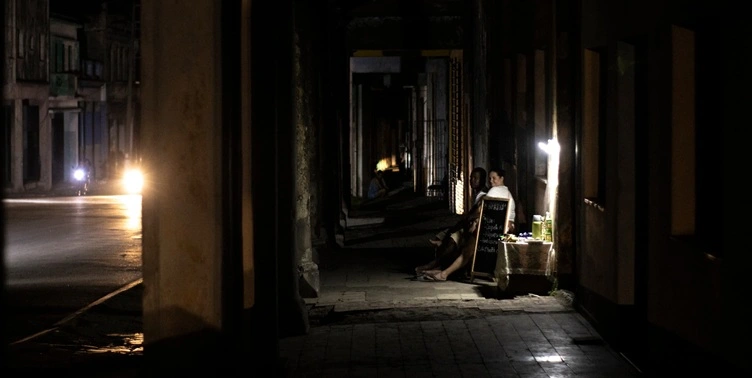
This imbalance causes simultaneous blackouts in large areas of the territory, and around 60% of the country will be without service at the same time, a figure that illustrates the magnitude of the deterioration of the system and is reflected in prolonged outages, instability in announced schedules and difficulties in sustaining supply even in main urban centers, including Havana.
The causes of the collapse are multiple and structural in nature. An important part of thermal generation is out of service due to breakdowns or prolonged maintenance, which reduces the production base on which the system is supported. Added to this are the limitations in distributed generation, affected by the shortage of fuel and basic supplies, which has left dozens of engines and support plants inoperative.
Although solar parks have been incorporated into the National Electrical System in recent months, their contribution, concentrated mainly in daytime hours, does not compensate for the loss of capacity of thermoelectric plants or cover peak consumption at night, when the largest disconnections occur.
The result is a system that works at its limit, with increasingly narrow margins to respond to demand and with a direct impact on the daily life of the population, basic services and economic activity, in a context where energy crisis It is consolidated as one of the most acute and persistent problems in the country.