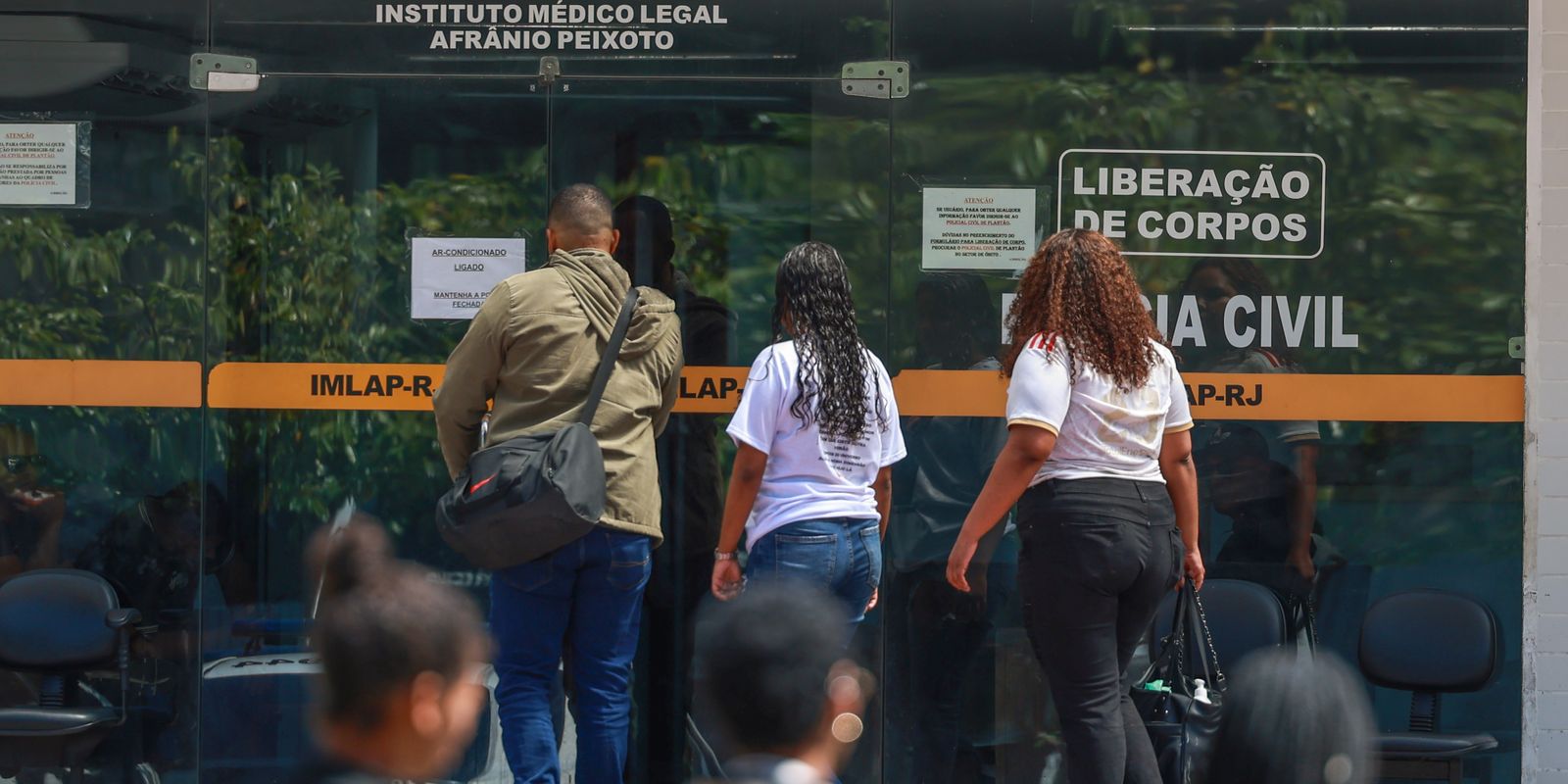
November 20th. Today is National Zombie and Black Awareness Day. One hundred and thirty-seven years after the abolition of slavery, this is the second time in history that the date is a national holiday.
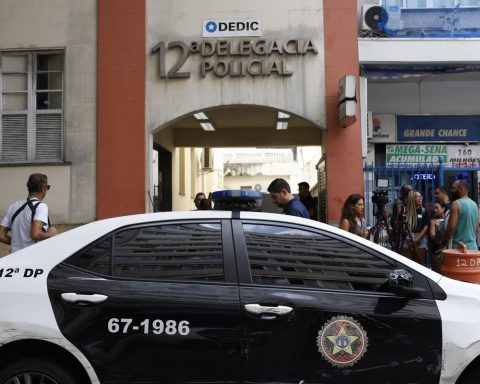
In the event, past and present meet, as experts assessed by the Brazil Agency. They hope that the date will encourage society to reflect on structural racism, violence and police lethality, as seen in the recent Operation Containmenton October 28th of this year, in the Penha and Alemão complexes, in the north of Rio de Janeiro. The action resulted in the deaths of 121 people, including 2 military police officers and 2 civil police officers.
The operation is the largest massacre to occur in Brazil. None of the 117 people killed by the civil and military police had been reported to court by the Public Ministry of the State of Rio de Janeiro. The Rio de Janeiro Bar Association created an observatory to monitor the investigation into compliance with the law by the civil and military police during the Operation Containment.
THE main target of the operation – Edgar Alves de Andrade, known as “Doca”, leader of Comando Vermelho (CV) – remains free after 23 days of the operation.
A survey carried out in 2023 by the Brazilian Institute of Social and Economic Analysis (Ibase), Instituto Raízes em Movimento and the NGO Educap revealed that 79% of Complexo do Alemão residents are black. There is no data on the Penha Complex.
“I think this is a very important date and that all the issues that affect the black population. In a significant and overwhelming way, the loss of rights and everything else must be commented on and analyzed on this date.” says educator Mônica Sacramento, program coordinator at the NGO Criola.
More than a commemorative date, it is the day of black resistance, of the construction of the Afro-descendant population in this country. The day is a reflective date, adds the coordinator.
For economist Daniel Cerqueira, one of the coordinators of the Atlas of Violence published by the Institute of Applied Economic Research (Ipea), talking about police operations on November 11th “is completely relevant”, because “we still live today in the country with a very strong legacy of institutions from the colonial period.”
“When we look at the history of Brazil – before there was a Brazilian society, and even before there was a State – there was a territory whose objective was the economic exploitation of the territory of the goods that existed here. Based on what? The use of violence”, says the expert, referring to the slave exploitation that began in the 16th century.
Places for war
For Daniel Cerqueira, “the history that happened in the Penha and Alemão complexes is a reflection of this legacy that comes from the colonial period”.
He points out that it would be “impossible to imagine” a similar police action in places like Copacabana, Ipanema or Leblon, in the south zone of Rio.
“It is only possible to imagine a war on drugs, a war on drug dealers only in those places where black and poor people live.”
Data Atlas of Violence shows that the chance of a black person being murdered in Brazil is almost three times greater than that of a white person – for every ten homicides of white people, there are 27 murders of black or brown people.
Lawyer Raquel Guerra, post-doctoral student and professor of Human Rights at the postgraduate course at the State University of Rio de Janeiro (UERJ), recalls that the slavery of the black population lasted more than 300 years, affected more than 20 generations of exploited people and that after abolition, no rights were established, whether to land, property or education.
“The presence of the State of the black and poor population has always been and continues to be one of non-promotion of rights.”
For the lawyer, current violence against black and brown people is just the “top of the iceberg of a historical problem.”
According to Raquel, Operation Containment will once again take Brazil to conviction at the Inter-American Court of Human Rights (Cide), for reasons linked to structural racism, as happened after two massacres (occurred in 1994 and 1995) in the Nova Brasília community; or how it occurred for violating the rights of 171 quilombola communities in Alcântara, in Maranhão (between 1986 and 1988).
Normalized lethality
For prosecutor Lívia Sant’Anna, from the Public Ministry of Bahia, National Zombie and Black Consciousness Day “was not thought of as just a commemorative date. It is a milestone of memory, struggle and also of denunciation.”
According to the prosecutor, reflecting on police operations, such as the one in the Penha and Alemão complexes, leads to the recognition that black men and women continue to die due to a security policy that normalizes lethality as a method.
Lívia Sant’Anna coordinates a group that works to protect Human Rights and combat discrimination. She observes that residents of places like the Penha and Alemão complexes practically only feel the “presence of the State on angry occasions such as Operation Containment”..
If the past extends into the present, current violence threatens the future. Police operations such as Containtion cause panic in favelas, prevent the functioning of basic services, such as schools, and worsen the risk of student dropout.warns professor Juliana Kaizer, from the Social Responsibility Laboratory of the Federal University of Rio de Janeiro (UFRJ) and the Business School of the Pontifical Catholic University (PUC) of Rio.
“The impact of this is socioeconomic and long-term. If a pre-adolescent or adolescent student leaves the school routine, they lose contact and are unlikely to return. We will continue with generations of functionally illiterates, who can sign their name – but do not know how to decode a complex text. These people will not be inserted into the formal job market”, warns the teacher.
Symptom rather than the cause
People with little education and less qualifications tend to occupy jobs in the informal market, which pays the lowest wages, does not guarantee social security rights and exposes workers to further exploitation. “They want to resolve a public safety issue by looking at the symptom and not the cause”, says Juliana Kaizer.
“The State cannot be present only in terms of security understood as a war. The state needs to be present in education, culture, social assistance, care, health, right, and not just through repression”, says prosecutor Lívia Sant’Anna.
The New Illegalism Study Group (Geni), linked to the Universidade Federal Fluminense (UFF), highlights that security forces in Rio de Janeiro prefer to carry out operations in places dominated by factions such as the Penha and Alemão complexes rather than carry out operations in areas dominated by the militia..
Data from 2017 to 2023 show that over 70% of locations where there is a faction registered confrontations with the police. This percentage is 31.6% in militia areas.
There is also disproportion when counting the number of shootings. According to the data, of the total number of shootings mapped in police actions, 40.2% of them occurred in drug trafficking areas. When analyzing militia areas, this number is 10 times lower. Only 4.3% of shootings with police presence took place in militia areas.
Article changed to adjust information