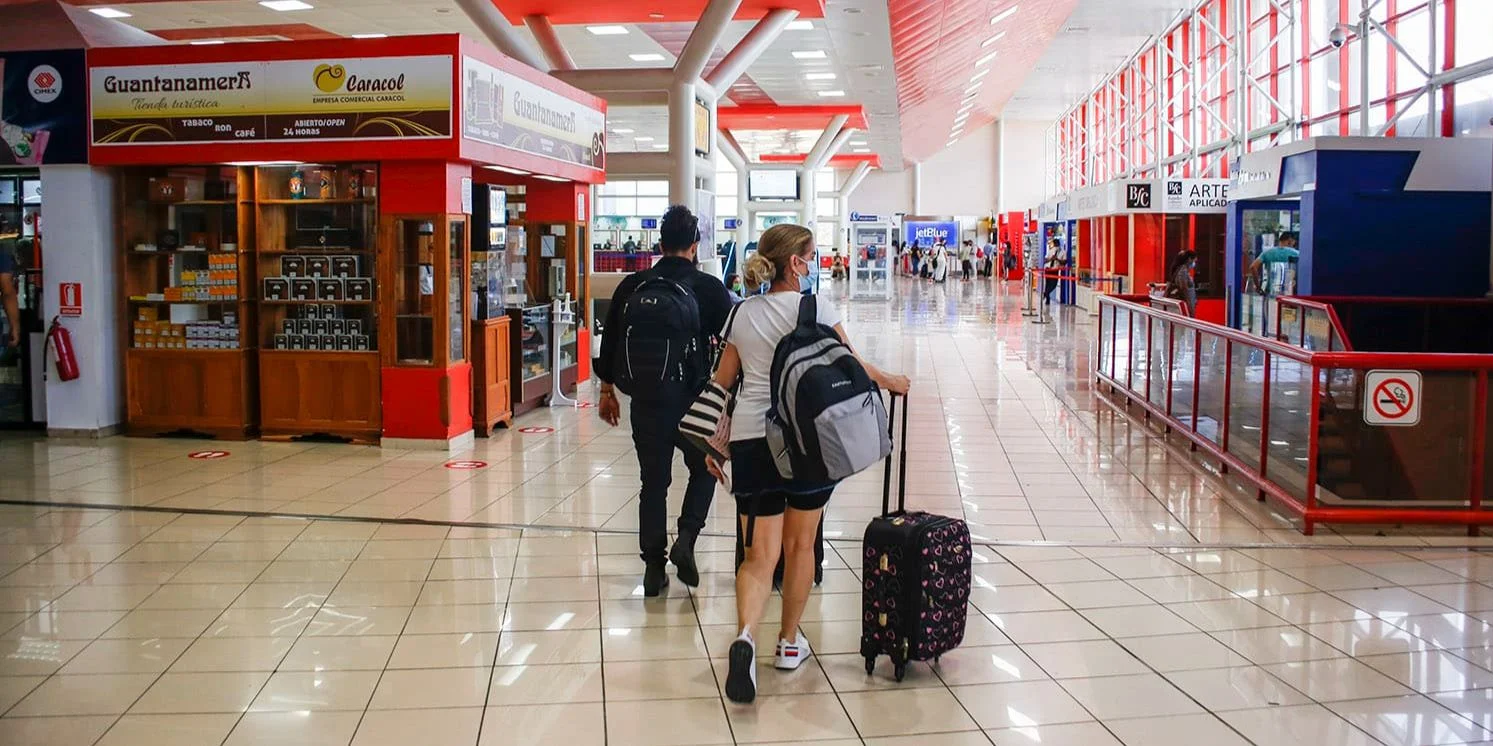
Between necessity and profit, travelers who bring orders constitute an informal import system.
HAVANA.- In popular Cuban slang, the word “mule“has lost all animal connotation. It does not refer to horses, but to ordinary people who, taking advantage of a trip abroad, self-financed or not, become human agencies for the transportation of goods. In other cases, they are Cubans who live outside the island and travel to it loaded with packages or products to sell.
The mules transport medicines, food, power plants, clothing, computer equipment and spare parts from different countries to Cuba. In a constant coming and going, and taking advantage of the exemption from paying customs taxes for certain products, Cubans from both shores choose to sell the space in their luggage. Those who live abroad, for the most part, do so to pay for the ticket and be able to visit their families.
One of them is Yurelvis, a man from Santa Clara based in Tampa, Florida, who has been traveling to Cuba for years selling the pounds of his suitcases. In an interview with CubaNet, the 27-year-old young man comments that being a mule today is more “difficult and distressing” due to the questions towards residents who benefited from asylum policies and continue traveling to the country from which they supposedly escaped.
“I go to Cuba weekly. I have even traveled up to two times in less than seven days. The ticket is free, I have something left for myself and, when there were fewer flights, I obtained better profits. I managed to charge 30 dollars per pound. Now it is not so simple anymore,” says Yurelvis.
The service does not currently have a fixed price, although from Miami it usually ranges around eight dollars per pound of merchandise transported if a private mule is hired. In the case of shipping computers and cell phones, payment is not calculated by weight, but by item.
If the merchant travels from Spain or MexicoFor example, the cost is higher due to less supply. In the case of Mexico, the amount usually exceeds 10 dollars per pound.
On the other hand, there is a different type of mule that does not transport packages sent by families. These are small businessmen who buy merchandise abroad to resell it in Cuba at a higher price.
The most common destinations are clear: Mexico City, Panama, Russia, the Dominican Republic and even Haiti. The choice depends, to a large extent, on the ease of obtaining visas. With the exception of Russia, Cubans must request entry permission for all other destinations.
Once in these countries, they stay in hostels and purchase merchandise that they will later take to Cuba. Given the shortage on the island, almost any product has an outlet and sells quickly.
However, the mules interviewed agree that the risk upon arriving in Cuba has increased due to the increase in fines and seizures. In many cases, the solution has been to resort to bribery in exchange for the authorities allowing the merchandise to pass through.
“It’s not that I’m getting rich, but a trip to Panama allows me to live well here without going through so much work. I bring just enough: things for the family and a few trustworthy orders. In addition, I know the cities and disconnect a little from the situation in Cuba. Now what I’m ordered to do most are electric bikes, generators and power plants, seasonings, canned and vacuum-sealed products,” explains Lisandra Méndez, a Cuban resident in Bauta who is dedicated to selling imported products through networks. social.