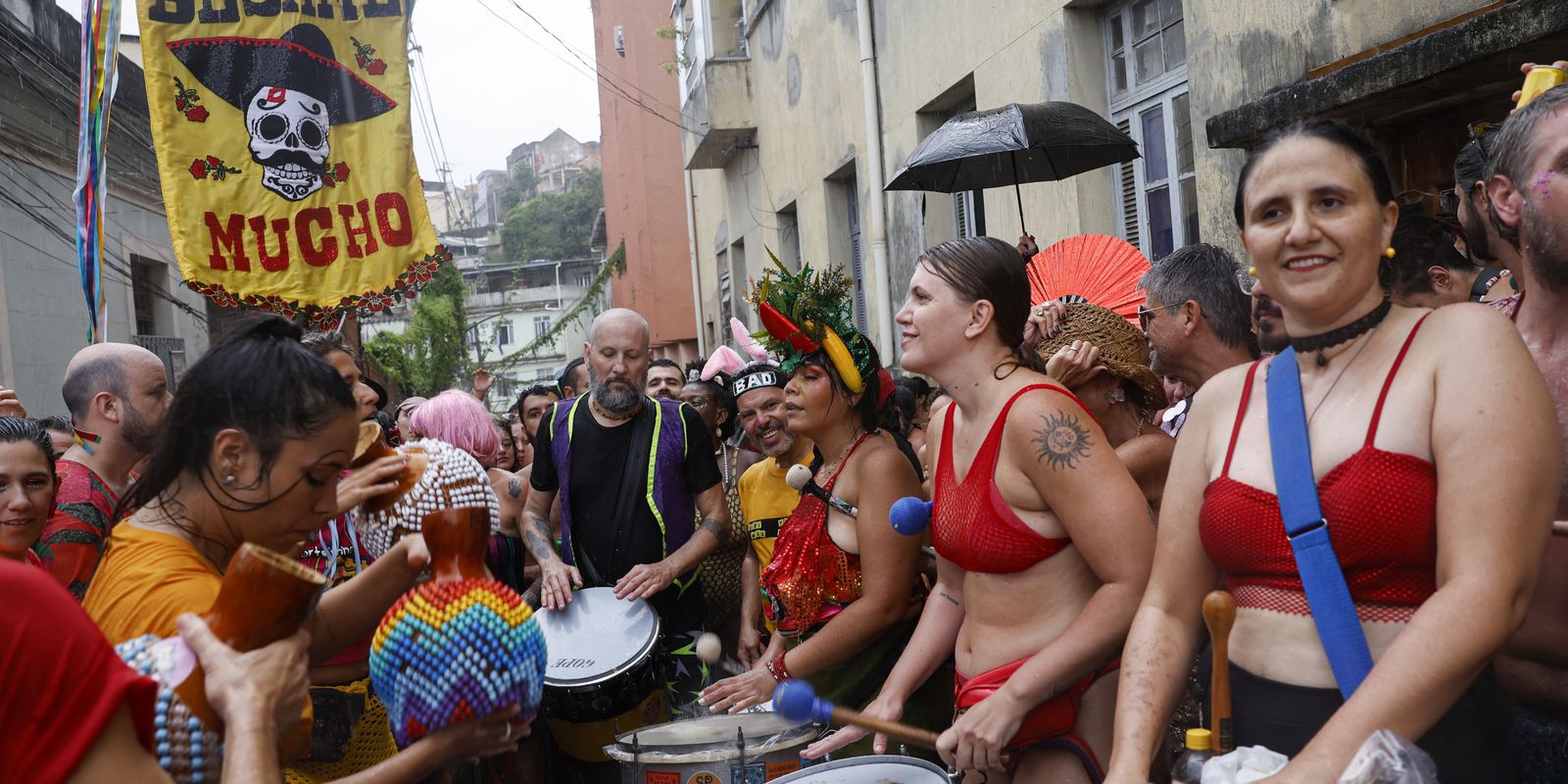
This Sunday (8), the Besa Me Mucho block occupied the slopes of Morro da Providência, in the center of Rio, with a procession that mixed Latin American rhythms, Brazilian drums and a political message of continental integration. The gathering took place on the steps of Rua Costa Barros, on the corner of Ladeira do Livramento, bringing together residents, immigrant musicians and revelers from different regions of the city.
Created from collectives that have been traveling through the territory for years — such as Cortejinho RJ, born in Providência itself — Besa Me Mucho reaffirms the cultural occupation of the streets as a political gesture. “The intensity of making Latin music in the alleys of Pequena África is resistance”, summarize the organizers, highlighting the block’s historical relationship with the first favela in Brazil.
Among the revelers, Spanish Andrés Martin, 21, who came from Madrid to experience his first carnival in Rio, said that the block symbolizes freedom.
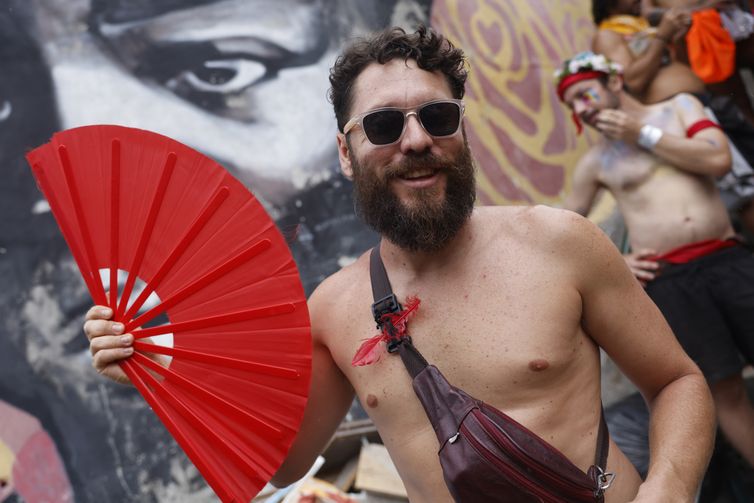
Filmmaker Rodrigo Freitas parades in Rio’s traditional Latin block, Bésame Mucho – Photo Tânia Rêgo/Agência Brasil
“Everyone is free to do what they want. Carnival and Latin American culture represent this,” he said.
For him, the parade also opened up space to reflect on United States migration policy. “The way immigrants are being treated, especially children, is taking the problem to the limit,” he said, commenting on Donald Trump’s government policies.
Venezuelan biologist Salomé, member of the Besa Me Mucho band and resident of Brazil for seven and a half years, highlighted the political nature of the street carnival.
“Carnival is a movement of resistance, of struggle, of occupying living spaces,” he said.
For her, the bloc’s proposal speaks directly to the idea of Latin American belonging. “Brazil is Latin America. I don’t understand this separation. Borders are human, they are in our heads. We are inhabitants of the planet”, he stated.
According to Salomé, the street is the central space of this symbolic dispute. “One thing I love about Rio is that the street belongs to people. It’s where the party, the meeting takes place. We always have to keep occupying this space”, he added.
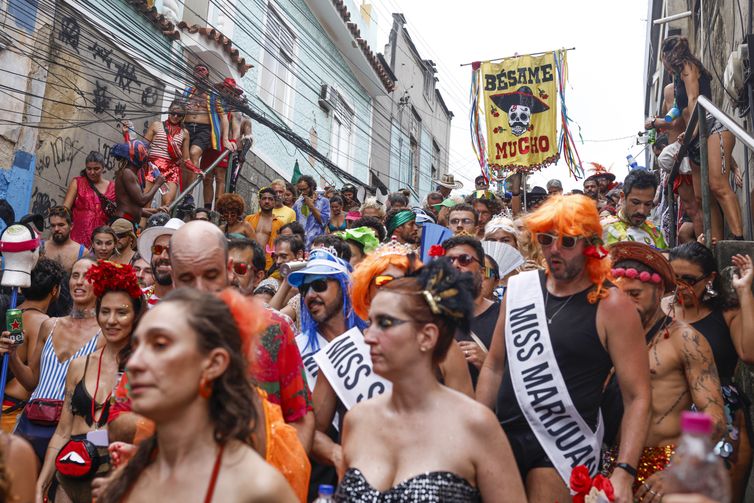
Traditional Latin block from Rio, Bésame Mucho descends the slope of Morro da Providência – Photo Tânia Rêgo/Agência Brasil
Sociology professor and musician from the block, André Videira de Figueiredo highlighted that the political character of Besa Me Mucho is inseparable from its musical proposal.
“It’s a block of Latin American music, and that includes Brazilian music. We understand that we are part of this great political cluster that is Latin America,” he said.
Made up mostly of immigrants, the block, according to him, assumes greater responsibility at times of visibility such as Carnival. “Speaking of a free Latin America, of an idea of an America that preceded North America, is an important task,” he stated.
For editor Felipe Eugênio Santos e Silva, a longtime fan of the block, Besa Me Mucho helps break the idea that Brazil is separate from the continent.
“There is a very bad idea that Brazil hovers above Latin America. This is a huge mistake. The block helps to connect us with the culture of our brothers, with the music and with the ways of existing”, he assessed.
In his view, cultural resistance also produces political consciousness. “It’s carnival, it’s a party, but it creates an identity among people. It’s an anteroom that politicizes us”, he said.
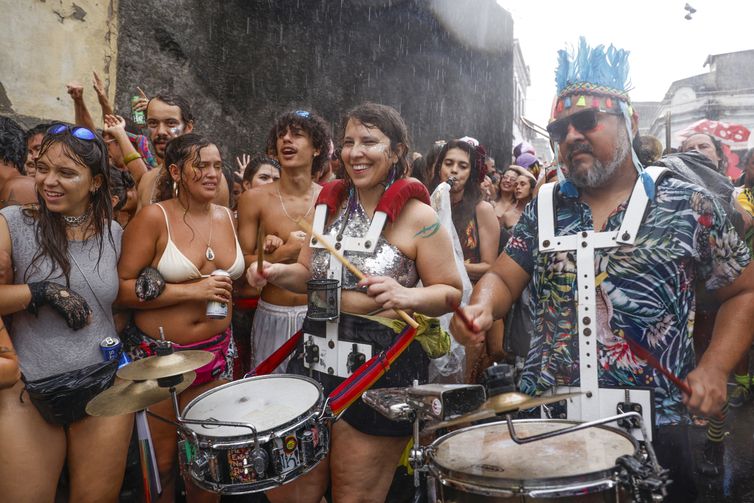
Immigration is the theme of Rio’s traditional Latin bloc, Bésame Mucho – Photo Tânia Rêgo/Agência Brasil
Rio businessman Michael Pinheiro also highlighted the political role of street carnival. “Carnival is Brazil happening in a very objective way. It shows the world who our people are”, he stated. For him, it is a political demonstration “from end to end”. Immigration “Historically, carnival teaches the people themselves, it is a tool for communication between the population and themselves,” he said.
In the assessment of sociologist Rodrigo Freitas, the parade on the slopes of Providência reinforces Latin American identity.
“It’s an act of resistance. A block that takes place on the slope connects us with the slopes of Latin America and identifies us as a people who need to resist imperialism”, he stated.
For him, initiatives like Besa Me Mucho help Brazil to recognize itself as part of the continent. “We are Latinos. A bloc like this updates this awareness,” he added.
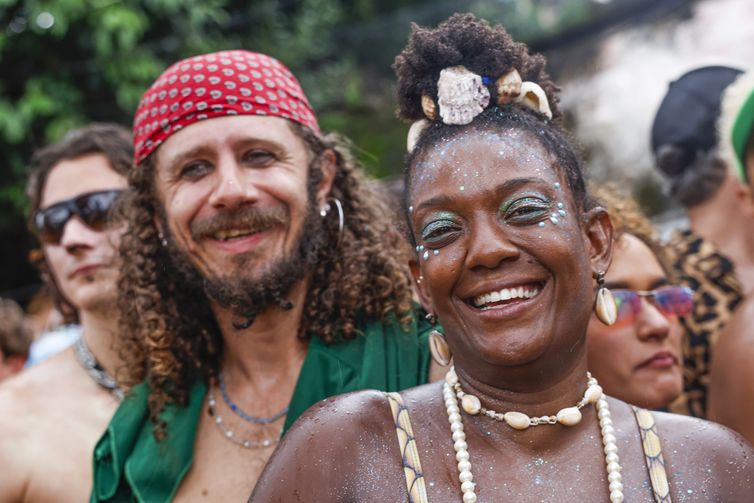
Bésame Mucho occupies the slopes of Morro da Providência, in the center of Rio – Photo Tânia Rêgo/Agência Brasil
Service
In total, 432 blocks are authorized to parade in Rio de Janeiro’s street carnival in 2026. The program continues until February 22nd and can be consulted on the Blocos do Rio 2026 app and on website official of street carnival of the city.