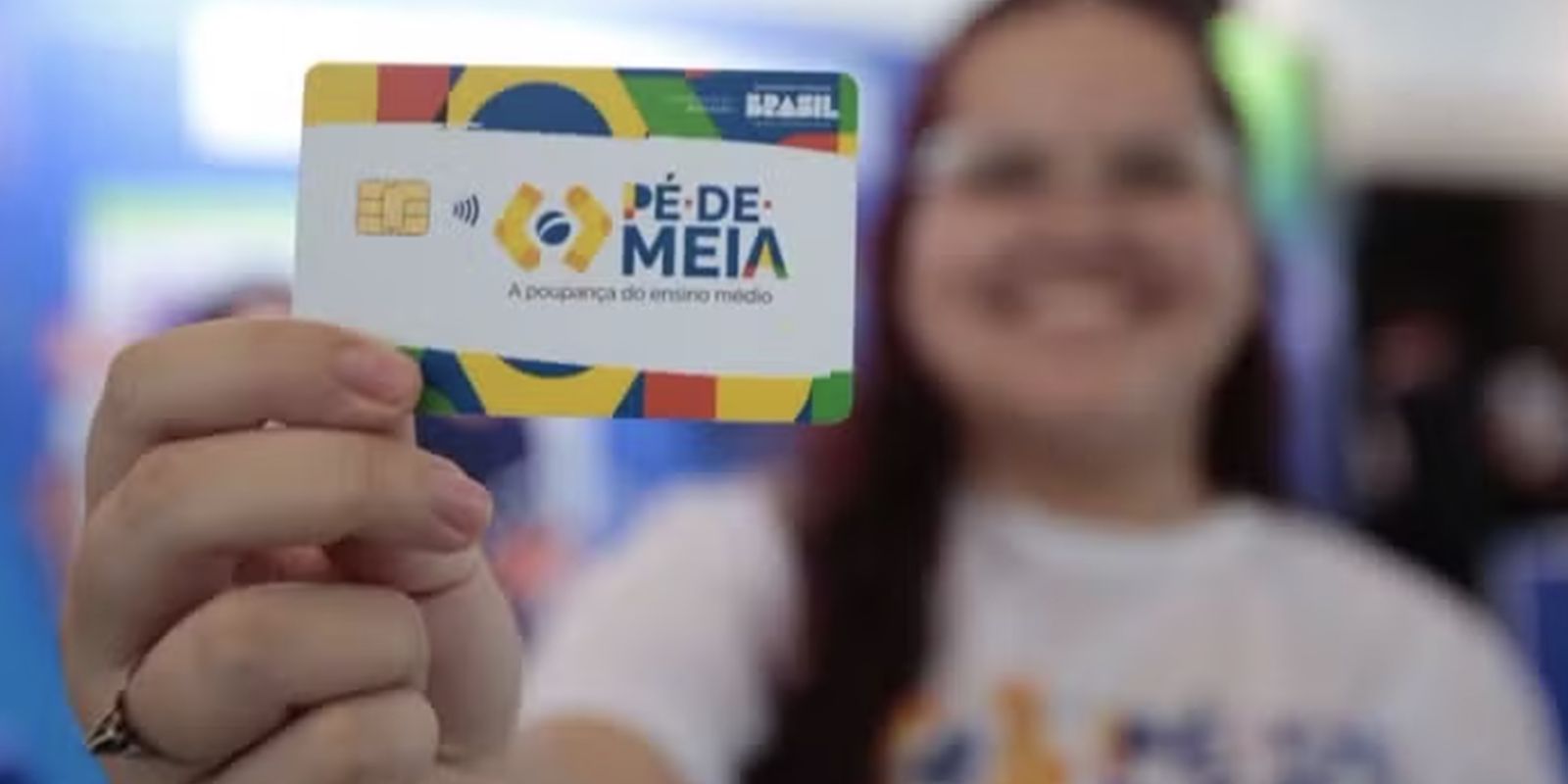
Student beneficiaries of Pé-de-Meia will be able to choose how to invest the resources they receive from the program: the amount can be kept in savings or invested in the Selic Treasury. The partnership between the National Treasury Secretariat (STN), Caixa Econômica Federal, the Ministry of Education and B3, the Brazilian stock exchange, was made official this Friday afternoon (30). 
This partnership has been in operation since November through the Caixa Tem application and, since then, 50 thousand Brazilian students who benefited from the Pé-de-meia program have already invested in Tesouro Direto.
Pé-de-Meia benefits around 4 million students through a financial-educational incentive from the federal government.
Previously, the money received through the program could only be invested in savings. Now, with this partnership, students will also be able to invest these resources in the Selic Treasury, which follows the basic interest rate of the Brazilian economy, the Selic, set by the Central Bank of Brazil.
“This is another financial education initiative mixed with inclusion”, said the Secretary of the National Treasury, Rogério Ceron.
“Give the option [de como investir] It makes the student have to think about it, look for information about it. And this generates learning. Then, he will be able to make a conscious choice to keep the resource where it is or transfer it to the Treasury Direct. This freedom of choice is something very positive and we believe that it transforms the ability of these young people to prepare themselves to make conscious choices in their lives.”
Just like savings, Treasury Selic yields will vary depending on market conditions, but without the risk of losing the investment. According to the secretary, the Selic Treasury was linked to the Selic to “be a safe gateway and not generate any type of loss” for students.
Choosing the type of investment and monitoring the profitability of the application and the evolution of income can be made using the Caixa Tem application, from Caixa Econômica Federal.
“Students today receive the benefit of the Pé-de-meia program through the Caixa Tem application. In this application, they have the option where they can choose whether they want to keep the completion incentive resources invested in savings or in Tesouro Direto”, explained Tiago Cordeiro, director of government products at Caixa.
“During the journey, the differences between the two types of investments are explained to students so that they can make the decision they find most convenient,” he added, in an interview with Agência Brasil.
nest egg
Created in 2024 by the Ministry of Education, the nest egg It is aimed at low-income public high school students, who receive a financial incentive to complete their studies.
The program works as a savings account for low-income high school students, with the aim of promoting retention and completion of school at this stage of education. Upon proving enrollment and attendance, regular education students begin receiving monthly incentive payments worth R$200, which can be withdrawn at any time.
The Nest Egg beneficiary also receives R$1,000 at the end of each completed year, which can only be withdrawn from savings after high school graduation.
Considering the incentive installments, annual deposits and the additional R$200 for participating in the National High School Exam (Enem), the values reach R$9,200 per student, informed the ministry.