The average rainfall at practically all measuring stations in the metropolitan region of São Paulo is below the historical average for January and tends to remain that way throughout the first quarter of the year, with the exception of the Mirante de Santana measuring station, in the north of the capital, which has already exceeded the average for January. 
The situation is due to the difficulty of advancing cold fronts, coming from the South, and humidity coming from the West, originating from the Atlantic and the Amazon, conditions that are related to the anomalous high caused by the persistence of the La Niña phenomenon in the Pacific Ocean.
With the influence of La Niña, confirmed by the National Institute of Meteorology (Inmet), the drought condition across the state of São Paulo worsens. The state has already been in severe or extreme drought since January 2024, with the exception of the north, which has experienced severe drought in the last 12 months. The other regions of the state are considered by Inmet to be in extreme drought over the last 12 months.
The year 2025 has already been considered dry by the agency, as the summer rains (2024-2025) were not enough to replenish the water supply in the soil.
“In the first quarter we will have below-average rain across the entire region between the south of the Bauru mesoregion, the Itapetininga region and the metropolitan region”, said meteorologist Leydson Dantas, from Inmet. He also clarifies that there is a possibility of improvement from the second half of the year, with the weakening of the phenomenon, a condition considered 75% likely by the National Oceanic and Atmospheric Administration (Noaa), a United States government body that monitors the waters of the Pacific and their influence on the world climate.
According to the researcher, an exceptional concentration of rain is also expected in the southern region of the country, including the coast of Paraná, Santa Catarina and mainly Rio Grande do Sul, as well as neighboring Argentina and Uruguay, as long as La Niña remains strong.
The water scarcity situation already has short-term impacts throughout the state of São Paulo and long-term impacts in the northwest and east portions, according to monthly monitoring by the National Water Agency (ANA).
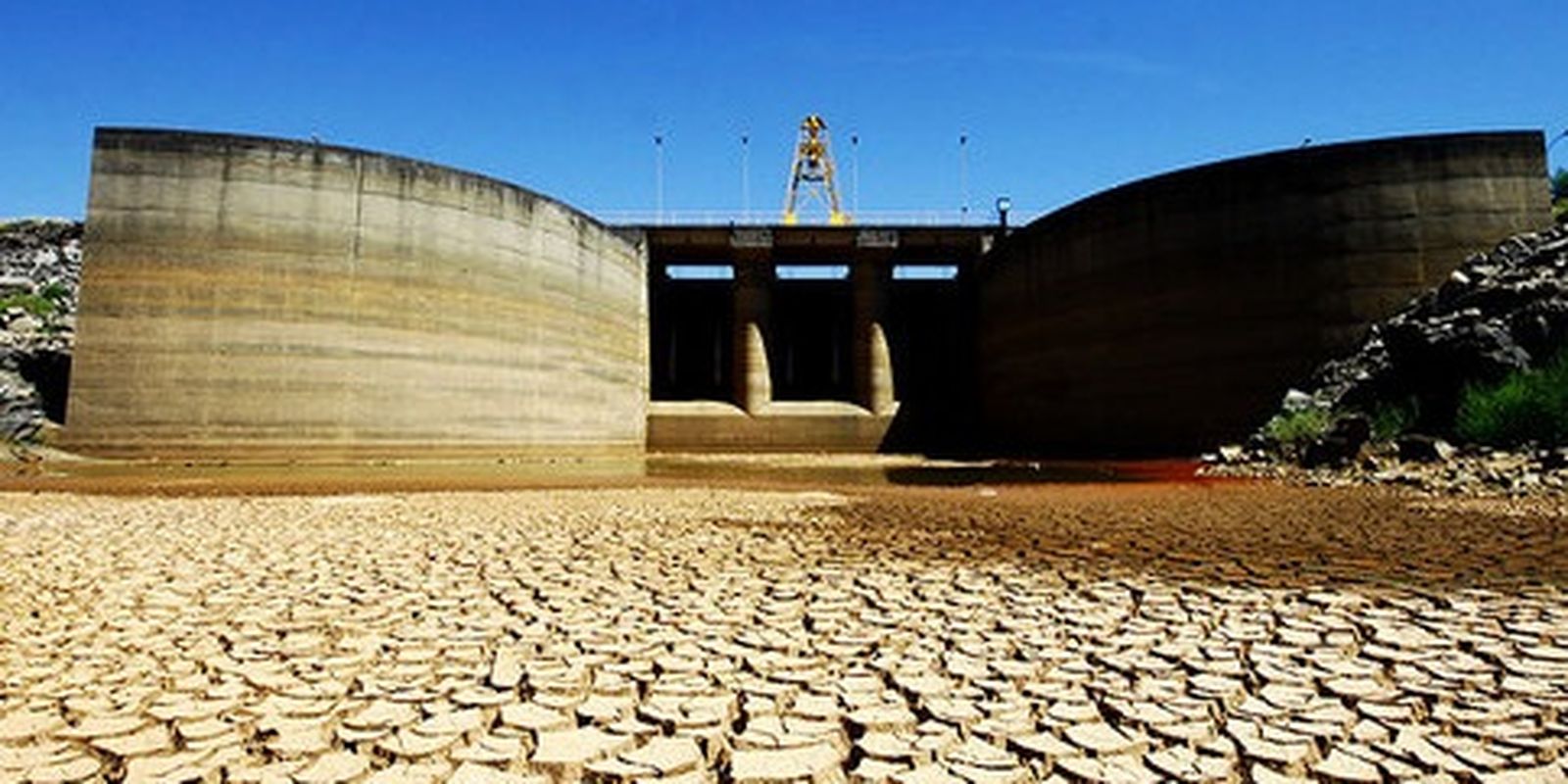
The reservoirs that supply the capital and other municipalities in the metropolitan region are at critical levels. In this Friday’s measurement (16), the Metropolitan Integrated System, monitored by Sabesp, was at 27.7% of its capacity, the same amount as on January 16, 2016, when it was recovering from the historic drought of 2015, and higher than the volume on January 16, 2014.
ANA’s monitoring of the Cantareira system, with 19.39% of the volume of its reservoirs, is the largest source in the region, being responsible for more than 40% of the total volume of the system. The Jaguari-Jacareí reservoir, which in turn holds around 85% of Cantareira itself, is at just 16.89% of its capacity.
According to Sabesp, tackling the crisis is happening with the expansion of abstraction, which increased in the Alto Tietê system, which added to its waters the volume captured from the Itapanhaú River, and investments in modernizing equipment and measures to reduce waste in the system, such as pipes, treatment stations and a pumping station.
The company reported that it has reduced or stopped supplying the region during the night since the end of August 2025.
Investments, in turn, do not lessen the gravity of the moment. According to Sabesp itself, in a note, “the metropolitan region of São Paulo faces a historically challenging water situation”.
“Local water availability per capita is extremely low, around 149 m³ per inhabitant per year, comparable to semi-arid regions and much lower than internationally recommended. This situation is due to the large population concentration and the limited natural supply of water in the basin”, explains Sabesp.
According to the company, “in 2025, the region went through one of the worst droughts in 10 years, with rainfall rates between 40% and 70% below average and drastically reduced tributary flows”.
According to Sabesp, “the effects of climate change are already evident, with increasingly irregular rainfall, more frequent heat waves and high demand worsening water scarcity”.
Droughts in Brazil
This Friday, ANA released the map of its Drought Monitor with consolidated data for December. There were changes in critical regions in the Northeast, in the north of Minas Gerais and in Goiás, in addition to the maintenance of severe conditions in the north, center and northwest of São Paulo and in the south of Minas Gerais. These regions already have what the agency considers to be long-term conditions, with impacts on hydrology and ecology.
According to the monitoring, which considers five levels of drought, from S0 (weak drought) to S4 (exceptional drought), in the Northeast Region there was a worsening of indicators, with an increase in extreme drought (S3) in parts of Rio Grande do Norte, Paraíba, Pernambuco and Bahia, and an expansion of the area with weak (S0) and moderate drought (S1) in Alagoas, Sergipe and Bahia. In Ceará, in turn, the regions considered to be in moderate (S1) and severe (S2) drought also increased. There was improvement in some points, with a retreat from the severe drought (S2) in Maranhão, Piauí and Bahia, and the extreme drought (S3) in Piauí.
In the Southeast Region, the area with severe (S2) and moderate (S1) drought in Minas Gerais, and moderate (S1) in Rio de Janeiro and Espírito Santo increased. The west and center-north of the state of São Paulo, however, saw an improvement in indicators, with a decline in moderate (S1) and severe (S2) droughts.
The South and North regions saw an improvement in most areas, with a reduction in weak (S0), moderate (S1) and severe (S2) droughts in Paraná, in addition to the disappearance of the weak drought (S0) in Rio Grande do Sul, a retreat in weak droughts (S0) in Acre, Amapá, Amazonas and Pará, moderate drought (S1) in Amazonas and Rondônia, and severe drought (S2) in Tocantins and attenuation of moderate drought (S1) to weak drought (S0) in Acre, Amazonas and Rondônia.
The south and southwest of Paraná had an advance of weak drought (S0), while in the North there was an advance of weak drought (S0) in Amapá, Amazonas, Pará and Roraima.
Rain in the Central-West was above average in Mato Grosso and Mato Grosso do Sul, both with some areas of weak drought (S0) and the persistence of areas with moderate drought (S1) in MS, where there was some advance of severe drought (S2) in the southeast of the state.
Arsesp
The Public Services Regulatory Agency of the State of São Paulo (Arsesp) informed, in a note, that it has continuously monitored the situation of reservoirs and water resources in the state of São Paulo. “The current scenario requires attention and has been conducted based on technical and preventive protocols established in the State Water Security Plan,” he said.
The agency recalled that in October 2025 the government of the state of São Paulo announced a new model of integrated management of water resources, with the objective of protecting the reservoirs of the Metropolitan Integrated System (SIM) and guaranteeing the supply of Greater São Paulo. “The initiative, developed in partnership with SP Águas and the Secretariat of Environment, Infrastructure and Logistics (Semil), reinforces water security and sustainability in the management of water sources.”
Currently, according to Arsesp, SIM is in Operation Band 3, with 27.74% of water reserves, and the contingency actions in force, such as Night Demand Management (GDN) of 10 hours a day and awareness campaigns, aim to maintain its levels in this band or reduce them to less restrictive levels. “If the SIM enters Activity Band 4 (from 27.53% reserve), and remains there for seven consecutive days, new measures, such as the expansion of the GDN, will be adopted, in accordance with the technical protocol defined for the intensification of contingency actions”, he explained.
Regarding volume recovery, Arsesp said that the management of the system is dynamic and depends on hydrological factors and the effectiveness of the measures adopted. In this context, Arsesp emphasizes that it “monitors the situation together with SP Águas to adjust strategies whenever necessary, ensuring water security”.
Arsesp also reported that through the GDN, implemented in August 2025, more than 70.29 billion liters of water were saved by the beginning of January, a volume equivalent to the consumption of 12.33 million people, a population greater than that of the city of São Paulo, for one month.
“The state of São Paulo today has an integrated and more resilient system of reservoirs, capable of facing prolonged periods of drought. Arsesp reinforces the importance of conscious use of water. Small actions, such as turning off the tap when brushing teeth or washing dishes, reducing shower time, reusing water from the washing machine and fixing leaks, contribute to the recovery of water sources and help ensure water for everyone”, highlights the agency.
THE Brazil Agency is open to ANA’s comments on contingency measures in São Paulo.
* Article amended at 7:09 pm to add a note from Arsesp.