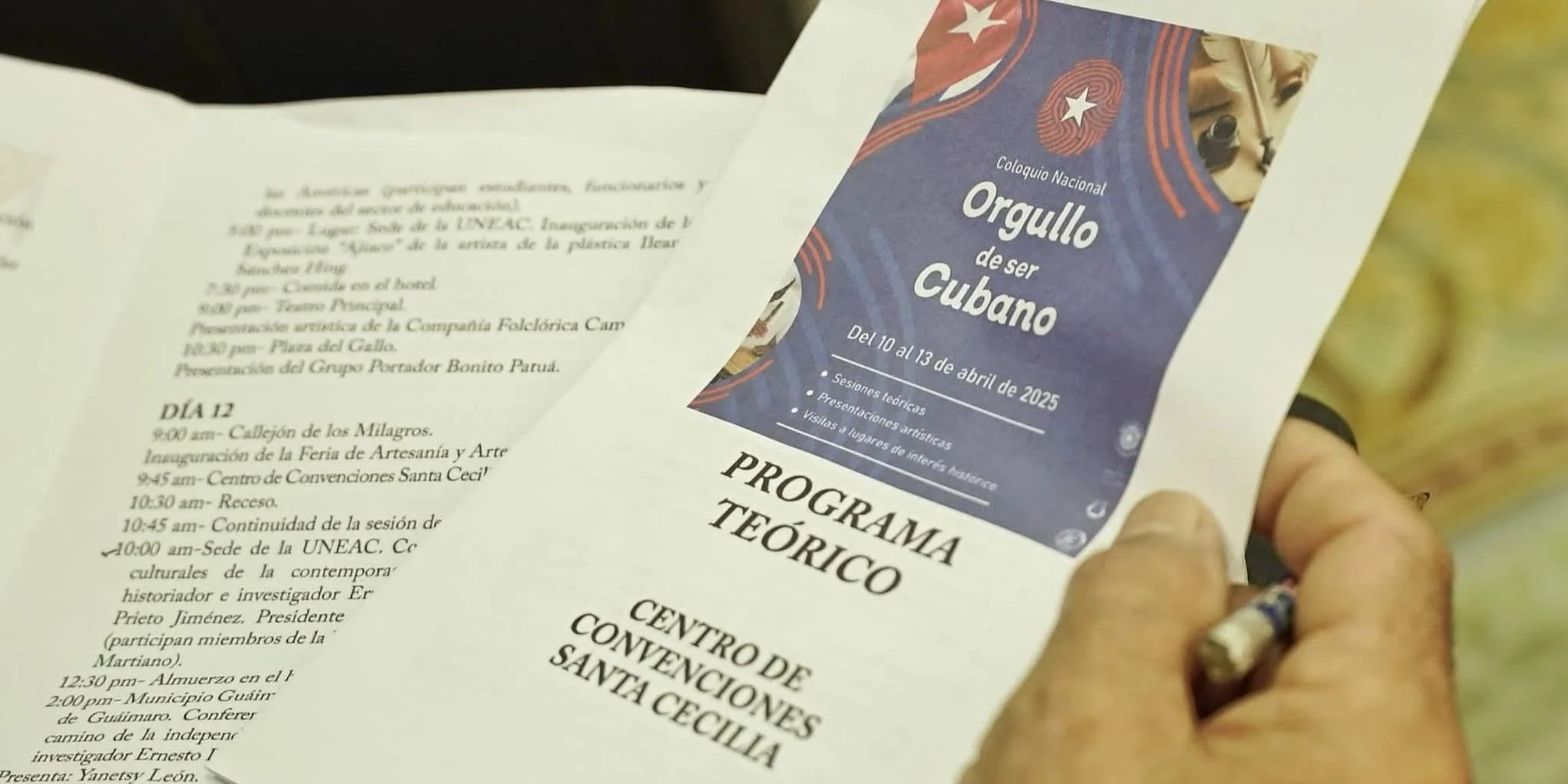
Havana, Cuba. – It has just concluded in the city of Camagüey the First national colloquium of being Cubanwhich brought together representatives of the Ministry of Culture, the UNEAC, the Brothers Saíz association, the house of the Americas and other entities that defend the official culture on the island.
Of course, the thematic axis of the event revolved around that narrow concept of the Cubanity that the Castro rulers wielded, and that identifies the Cuban with the belonging or admiration to the regime that governs the destinies of our homeland.
The president of the house of the Americas, Abel Prietodid not miss the opportunity to show that everything that departed from the cubanity – of course, the cubanity of the regime – could be related to the cultural colonization with which the West tries to unseat the Cuban revolution. In that sense, he said that “today, in digital social networks, there is a contest against the pride of being Cuban; they want us to feel inferior to destroy the revolution.”
Mr. Abel Prieto does not understand that the problem is not to dwarf Cubans who sympathize with Castroism, but understand that no one owns cubanity. That is a broad concept that includes all those born on the island, and perhaps also those who feel for it, wherever they are, and sympathize with the political system they want.
In another order of things, because of the ambiguity that encompasses the concept of cultural colonization, it could be related to the cultural revolution carried out by the Maoists in China in the 60s. Actually it was a repression against the Chinese people who had very little cultural, like now any Cuban creator could be accused of “colonized” just by being uncomfortable to the Cuban regime.
On the other hand, we cannot ignore the relationship that keeps this appropriation of cubanity by Castroism with the teaching of history. The current rulers of the island have conceived a kind of historical teleology, in the sense that everything that happened before was to facilitate Fidel Castro the arrival to power. They have kidnapped the legacy of the founders of Cuban nationality, and with it they have confused many young people who identify our founding parents with the current state of affairs on the island.
We cannot fail to mention the viciousness with which the Castro authorities react every time members of civil society claim the Cubanity that also belongs to them.
We must remember the archbishop of Santiago de Cuba, Pedro Meurice, who in 1998, on the occasion of the visit to Cuba of Pope John Paul II, spoke of “those who had confused the homeland with a political party; or the future of the Cuban nation with the most recent events that occurred on the island.” A few words that caused a deep discomfort in the official ranks.
Or the call “The country belongs to everyone”, of the authorship of the opponents Marta Beatriz Roque, René Gómez Manzano, Vladimiro Roca and Félix Bonne Carcases, which cost them a prison sentence to the four dissidents.
And what to say about that ugly habit of calling everyone who opposes an abroad to the Castro regime, such as “the anticuban mafia of Miami.”
Because, more than a semantic problem, the appropriation of cubanity by Castroism is today one of the main obstacles for the solution of the Cuban problem.