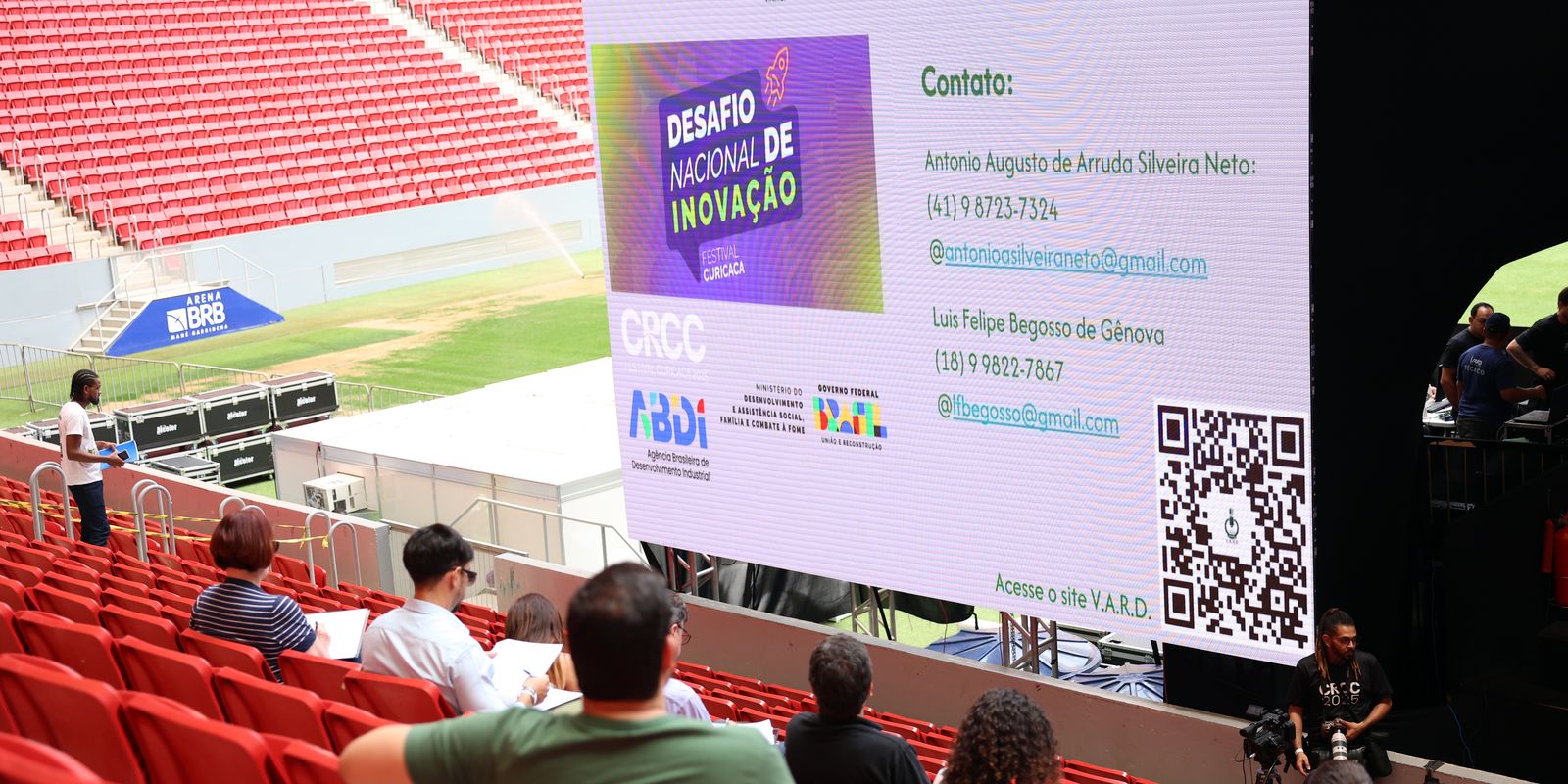
Go on stage, grab the microphone and sell a technological solution to some of the country’s production problems in three minutes. At stake, ten prizes of R$20,000 for the initial push of the business.
It was with this challenge that the first edition of Curicaca, a festival on technology and sustainability in industry promoted in Brasília by the federal government with the participation of several entities linked to the national industry, reached its last day, this Saturday (11).
The notice had been launched in August by the Brazilian Agency for Industrial Development (ABDI), a body linked to the Ministry of Development, Industry, Commerce and Services and one of those responsible for carrying out Curicaca.
In total, 40 projects signed up for the National Innovation Challenge, designed to occur as a “battle of startups”, a format already well known to young entrepreneurs who travel the country in search of financing for original ideas.
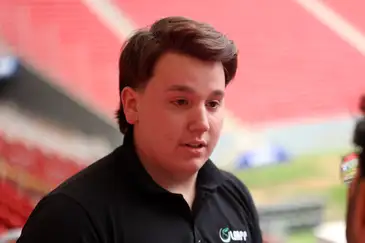
Antônio Silveira participates in the Curicaca Festival. Photo: José Cruz/Agência Brasil
“For our project, this type of pitching round is very common”, says Antônio Silveira, 19 years old, one of the youngest members of an extension project at the Faculdade Tecnológica de Pompéia Shunji Nishimura, in the interior of São Paulo, which became startup.
The group, now with 12 student members, developed the Agricultural Surveillance and Digital Response project, integrating old pest capture techniques with artificial intelligence analyzes that allow optimizing the placement of traps to combat bugs such as thrips, small insects that harm cotton crops and others.
The idea has initial funding from the college itself and recently won another “battle”, this time for R$ 15 thousand, in the Holambra Cooperativa Innovation Challenge, one of the most traditional disputes for technological solutions for the agroindustry.
“This first financial support helps a lot, we need it. Today we have a prototype, but we want to transform it into a commercial product, also pursuing the technological patent”, observed Silveira.
Curicaca
Held between the 7th and 11th of October at the Mané Garrincha Stadium (Arena BRB), with free entry, the Curicaca Festival was created this year by ABDI with inspiration from major international technology conferences that combine the promotion of innovation, academic discussions, debates on industry challenges, environmental issues and cultural programming.
There were four stages that hosted discussions on technology, innovation and sustainability for industry and development over the five-day event.
The debates were divided into ten “knowledge trails”:
- Renewable energy and energy sustainability;
- Innovation in health and biotechnology;
- Digital transformation and Industry 4.0;
- Technological security and defense;
- Green industry and circular economy;
- Sustainable agroindustry and family farming;
- Social innovation and regional development;
- Policies and regulation;
- Sustainable infrastructure and green mobility;
- Creative technology and digital inclusion.
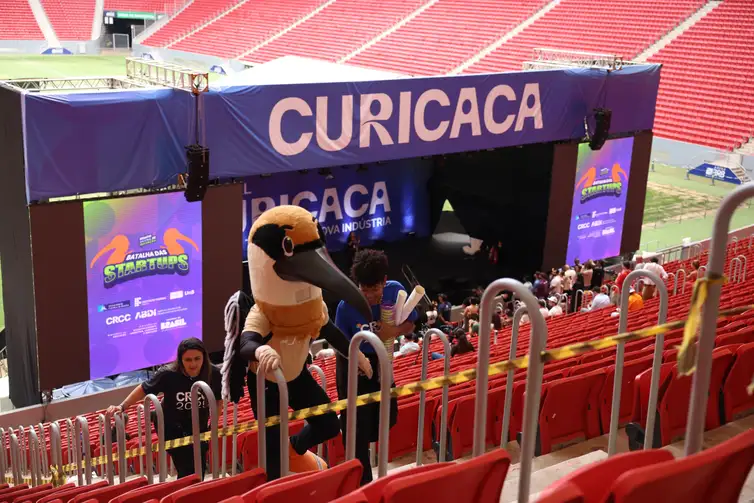
Curicaca Festival was held in Brasília Photo: José Cruz/Agência Brasil
This Saturday (11), for example, the topics “women in Brazilian deep tech” were discussed, about the female presence in science and innovation, and “narratives that build or dismantle: how misinformation impacts the industry and what to do in the face of fake news?”.
At night, the event will end with a show by Jorge Aragão, on a stage set up in Mané Garrincha itself. In other parts of Brasília there are other musical performances, with artists like Dj Marky and bands like Dead Fish.
The festival is one of the initiatives planned in the Nova Indústria Brasil (NIB) program, a long-term industrial policy launched by the government in 2024 and which foresees a total investment of R$300 billion by 2026.
The president of ABDI, Ricardo Capelli, described the Curicaca Festival as an “effort to bring together industry, innovation, universities and federal institutes, to strengthen and discuss the industry of the future, which is no longer made of chimneys and smoke, but of innovation, biotechnology and sustainability”.
In addition to direct state investment, the event was partly funded by Petrobras, through the Rouanet Law, which encourages culture.