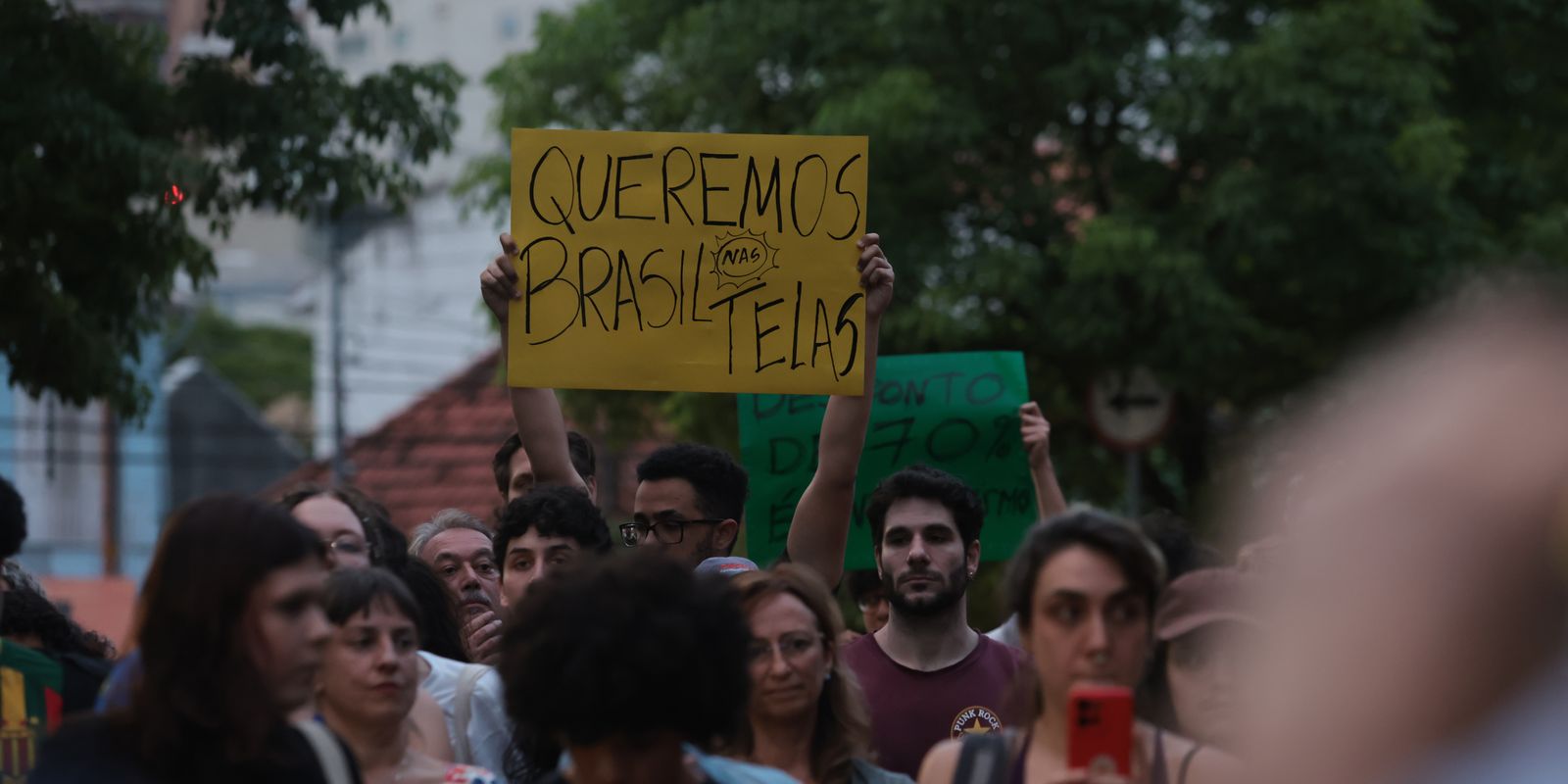
Filmmakers, screenwriters, producers and audiovisual technicians protested this Monday (3) in several capitals in defense of independent Brazilian cinema. The acts, called “Grab the Vision: Act for VoD”, are against the Bill 8,889/2017which proposes the regulation of streaming platforms in Brazil.
The demonstrations took place simultaneously in front of the Ancine headquarters, in Rio de Janeiro, at the Cinemateca Brasileira, in São Paulo, and at the Cine Walter da Silveira, in Salvador.
According to the movement, the report by federal deputy, Dr. Luizinho (PP-RJ), on the project “represents a historic risk of dismantling the national audiovisual industry”for contradicting Ancine’s technical opinion and the consensus built with civil society, and favoring large foreign companies in the sector.
The rapporteur proposes a maximum Contribution for the Development of the National Film Industry (Condecine) of 4% for streaming and 70% of the amount can be used by the platforms themselves in their own projects. The text also provides for a minimum quota of 10% of national works in catalogues.
Filmmaker Lúcia Murat, member of the Advisory Board of the Brazilian Association of Filmmakers (Abraci), classified the project as a distortion of the category’s historical demands.
“This turns regulation into a kind of ‘Rouanet Law for streaming’. It’s crazy — public money for foreign companies. It cannot pass,” he said, adding that it is a direct threat to the creative autonomy and survival of independent producers.
Producer Clarissa Guarilha, responsible for the award-winning film Get uphighlighted the impact of the project on the production chain.
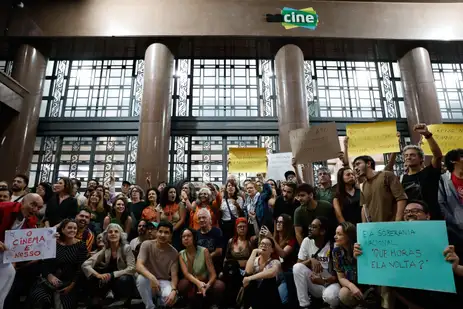
Rio de Janeiro (RJ), 11/03/2025 – Film producers take action against the streaming regulation bill being processed in the Chamber of Deputies, in front of the National Cinema Agency (Ancine). Photo: Fernando Frazão/Agência Brasil
“They are voting on a project without dialogue with those who make the audiovisual. This affects not only those who produce, but everyone — those who work, those who watch, those who make a living from it. Independent cinema is what guarantees that our stories are told by ourselves, without depending on the interests of large international corporations.”
Audiovisual sector researcher, Pedro Butcher highlighted that the current text does not address the needs of the Brazilian market.
“Platforms still do not contribute to the development of the sector, as the rest of the chain does. The lack of stability and financing threatens what we have achieved so far and could lead to a major setback.”
São Paulo
At the Cinemateca Brasileira, in São Paulo, the event brought together dozens of professionals. Filmmaker Tatiana Lohmann, vice-president of the São Paulo Filmmakers Association (Apaci), highlighted that the text “is full of traps and doubts”:
“Platforms operate in Brazil without transparency about profits and revenue remittances. This PL needs to be blocked so that we can propose fair regulation”, he stated, citing that Brazil is Netflix’s second largest market in the world, but that clear rules are needed for investment by these platforms.
Filmmaker Laís Bodanzky reinforced the importance of guaranteeing 20% of national works in the platforms’ catalogues.
“They [plataformas] They can produce whatever they want with private money, but they do not have the right to decide what Brazil has to say through audiovisual media.”
Representing the Brazilian Association of Screenwriters (Abra), Paulo Marcelo highlighted that streaming regulation is essential to keep the sector’s ecosystem balanced. “The important thing is to ensure that Condecine supplies the FSA [Fundo Setorial do Audiovisual] and that the quota is for independent Brazilian production, with the patrimonial rights in the hands of national companies”
The movement’s Manifesto Letter — signed by names such as Anna Muylaert, Gabriel Mascaro, Laís Bodanzky, Jorge Furtado, Marieta Severo, Matheus Nachtergaele, Daniela Thomas and Joel Zito Araújo — says that the project weakens public financing, reduces the Condecine tax rate and “puts the future of audiovisual production at the mercy of foreign companies, emptying the role of Ancine and the Brazilian State”.
According to a technical note from Ancine and the Ministry of Culture (MinC), the report could cause a drastic reduction in FSA resources and open loopholes for self-declaration of income, making inspection difficult. Furthermore, it would allow foreign companies to create “national producers” controlled in the country, weakening the sector’s independence.
The 12,500 independent Brazilian producers ask for the vote to be postponed and the premises of the previous text, reported by deputy Jandira Feghali (PCdoB-RJ), which provided for a minimum quota of 20% of national works, Condecine of at least 6% and priority allocation of resources to the FSA.
What does the project say
The bill provides for the collection of the Contribution for the Development of the National Film Industry (Condecine) from streaming services, such as video on demand (VoD) platforms. The proposal could be voted on this week in the Chamber of Deputies.
Deputy Doutor Luizinho (PP-RJ) has said that rates may vary between streaming platforms and social networks that share videos.
In the report, the parliamentarian argues that the PL brings a “mature proposition, which ensures balance between a fair competitive environment, which encourages free initiative and technological innovation, and a dynamic audiovisual ecosystem, which guarantees cultural sovereignty, the development of Brazilian and regional content production and the generation of jobs and income in the country”.
* Collaborated with Guilherme Jeronymo, from São Paulo
* With information from Agência Câmara