Gustavo Castillo García
La Jornada newspaper
Tuesday, September 23, 2025, p. 4
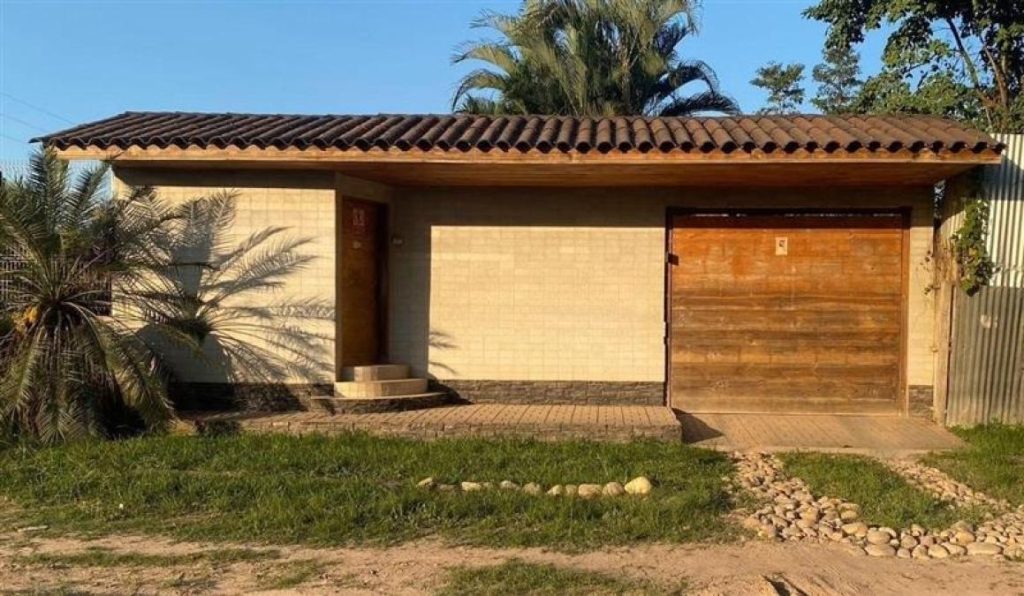
On September 23, 1965, he marked the beginning of the history of the guerrilla groups that emerged in Mexico in the second half of the twentieth century. On that date, the popular guerrilla group (GPG), composed of rural teachers, peasants, agrarian leaders and students, carried out the first armed anti -government action of a socialist nature: 13 guerrillas tried take By assault the Army Barracks in the Municipality of Madera, in the Sierra de Chihuahua.
The organization, headed by Solomon Gaytán, Arturo Gámiz García and Pablo Gómez García, founded in 1964, was the result of the “tyranny with which the cacicazgos of the zone submitted to the peasants,” says the report prepared at the time by the current special prosecutor for social and political movements of the past (FAMOSPP).
Documentary records report that in 1960, Chihuahua “had 24.5 million hectares, of which, from 6 to 8 million corresponded to huge estates that were in the hands of 300 owners.
“Only Luis Terrazas, at that time he owned one and a half million hectares, closely followed by the Forest Company of Chihuahua, S de RL, and of the livestock society four friends (owned by the banker Carlos Touyet and Antonio Ortiz Mena, secretary of the Treasury and Public Credit, among others), while another 145 families were 3 thousand 761 hectares,” says the historical report.
“At the same time, 100 thousand ejidatarios were in legal possession of 4.5 million hectares. In 1963 there were 50 thousand men from the landless field and 400 files in Chihuahua and 400 files requesting the formation of new agricultural population centers.”
However, the state authorities of the branch blocked the execution of presidential resolutions that benefited the day laborers, although some petitioners had about 20 years of having initiated their efforts seeking a favorable resolution.
On the other hand, in 1965 Ciudad Madera already had 12 thousand inhabitants, although its forest wealth was in the hands of the company Bosques de Chihuahua.
Its livestock wealth, valued that year at 100 million pesos (150 thousand heads of cattle), concentrated mostly on the Ibarra family. José Ibarra, the founder of the clan, had arrived from Temósachic to Ciudad Madera in 1935 without cattle or land.
“For years they dedicated themselves to the clandestine manufacture of Xotol. They exploited their pawns and stole their payment as in the Porfiriana_ [_] They have burned some ranches, such as Timothy Castellanos, in the saltpeter, and that of the olives in the rods [_] People have killed in yellow water, Carrizito, Dolores, Temosachic, on the Royal Camino. They have manufactured crimes and slander to send to jail how much honest and peaceful citizen hinders them. They have whipped dozens, they have stolen women. All unpunished. They buy authorities or name them ”, they narrate the records that gave rise to the nonconformity and the armed struggle as the only way to try to give land without land.
The leaders of this movement, the Masters Arturo Gámiz and Pablo Gómez, had links with many normalist teachers in the country in the Federation of Socialist students of Mexico (FECSM), to which Lucio Cabañas, another guerrilla leader, as general secretary, from 1962 to 1963 also belonged.
The conclusion of the work of the FOSPP emphasizes that “the revolutionary movement of the Magisterium, headed by Othón Salazar, also allowed meaning to the peasant struggle with which the teachers were organically linked organically. The Communist Party, the Independent Campesina Central and the different student conflicts that arose throughout the country served as a link of linking, reflection space or combative group They allowed those who participated in them to learn forms of struggle, organization and communication around common ideals.
The assault on the wooden barracks was held early on September 23. Cristina Gómez Álvarez synthesizes in the book The Foundation of the Communist League September 23, by Enrique Condés Lara, what happened: “The result was the defeat of the group: six soldiers and eight dead guerrillas. The soldiers were buried with honors, the guerrillas were exhibited in the main square as a lesson for the population, and then thrown their bodies in a common grave. The governor of Chihuahua sentenced:“ Did they want land? Thus was born a new type of struggle in Mexico: the revolutionary focus ”.
On March 15, 1973, members of guerrilla cells, representatives of various organizations that had emerged in the country and that were housed in security houses located on Porfirio Díaz de Guadalajara, Jalisco, Jalisco, met and constituted what would be called the Communist League September 23.
60 years after what happened in wood, Chihuahua, already 52 years of the foundation of the Communist League September 23, there are records of more than 550 people who were missing – ensures in different sources – by federal forces, particularly the Federal Security Directorate and the Army.
Likewise, the National Human Rights Commission maintains an investigation into the so -called death flightssince documents recently located in the archives of the Eureka Collective, which founded Rosario Ibarra de Piedra, refer that between 1972 and 1974, 183 people arrested by the authorities would have been victims of these actions, which consisted of throwing into the sea – from an Arava plane that started from the military base of the slope, in Acapulco -, their bodies already lifeless or life or died.
What happened in wood on September 23 remains alive in the memory and struggle of hundreds of members of the guerrilla groups and their relatives, who were also victims of torture and persecution, not only when armed organizations emerged, mainly in the decades of the 60s and 70s of the twentieth century, since at present there are more testimonies of those struggles, although the fear of being repressed has not disappeared.