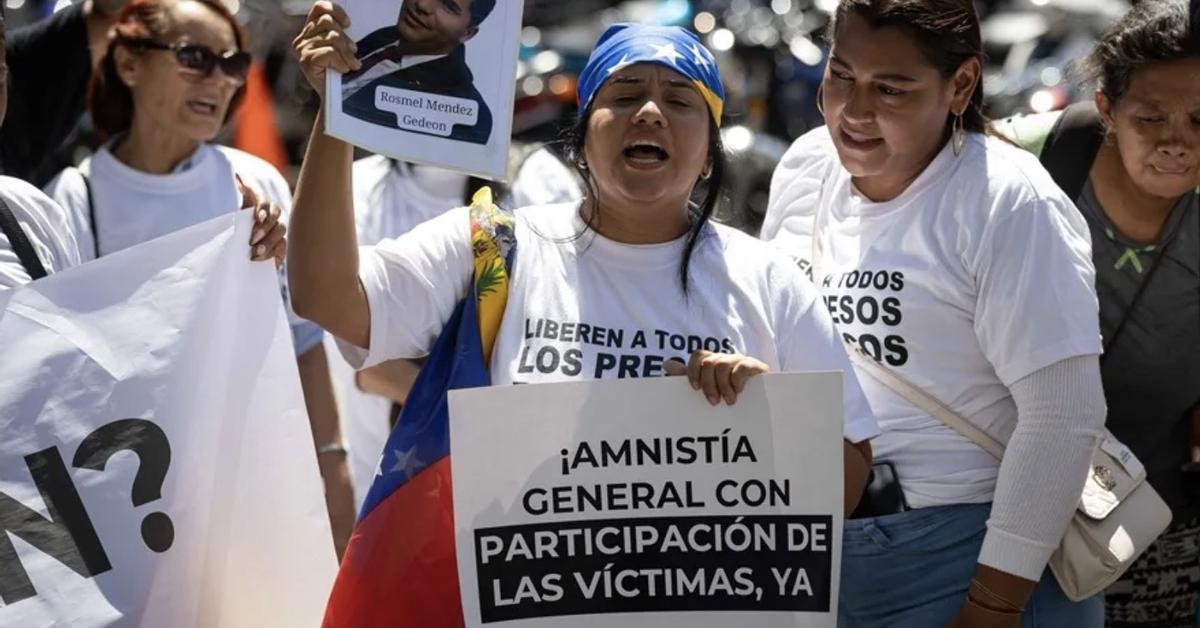
Caracas/Some 400 political prisoners in Venezuela are excluded from the amnesty law approved by Parliament on Thursday, given that this instrument only benefits detainees at 13 specific times between 1999 and 2026, the NGO Foro Penal stated this Friday.
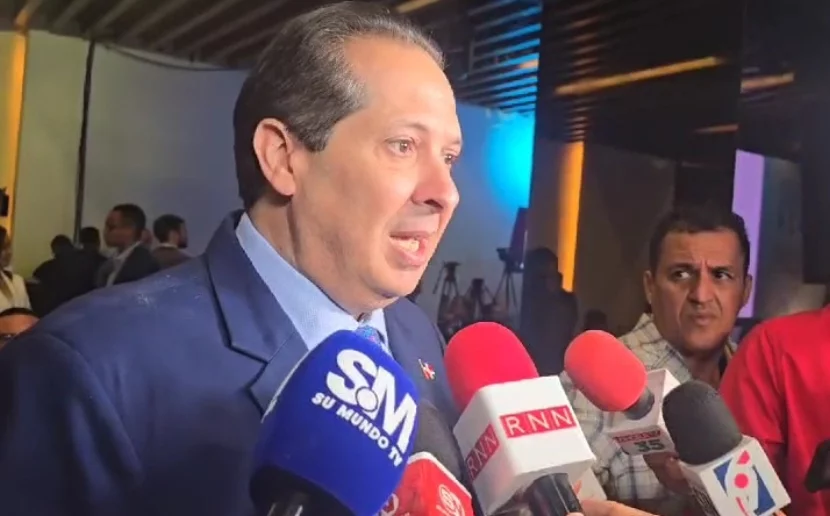
The president director of the organization, Alfredo Romero, specified during a press conference that these 400 people are linked to military operations, although the group also includes civilians.
In this context, he stressed that there are people excluded from the amnesty who, for example, were “accused of crimes they did not commit” and cannot be amnestied because they were arrested at times that are not included in the law between 1999 and 2026.
Therefore, Romero requested the release of all political prisoners, who number more than 600 according to Foro Penal’s count, after the release of 448 people since last January 8.
For his part, the vice-president director of the NGO, Gonzalo Himiob, criticized that there have been “15 years completely outside” the law, which in his opinion ignores that “the persecution and political imprisonment” has “been continuous” in Venezuela.
In this sense, he pointed out that the amnesty law makes a “kind of improper and quite arbitrary selection of specific moments and months” in the years 2002, 2003, 2004, 2007, 2009, 2013, 2014, 2016, 2017, 2019, 2023, 2024 and 2025.
The amnesty law becomes a “kind of improper and quite arbitrary selection of specific moments and months”
Himiob specified that if the months included in the amnesty are added, they do not reach more than 20, when, he criticized, it was supposed to cover the entire period of 1999 and 2026.
On the other hand, he indicated that there are 2,742 people who “are immediately covered by the amnesty”, since they were detained between 2024 and 2025 in the context of a political crisis, a period included in the law.
Of this group, 2,186 have been released with precautionary measures, 321 remain detained and 235 “were released completely or were not presented,” as Himiob detailed to EFE.
The amnesty law was approved unanimously on Thursday in a debate in Parliament and presented by Chavismo as the possibility of laying the foundations for a new political future in the South American country, while NGOs and opponents expressed doubts about the possibility of reconciliation.
Article 9 of the new legislation excludes from the application of the amnesty crimes involving serious violations of human rights, crimes against humanity, intentional homicide, very serious injuries, drug trafficking, as well as crimes provided for in the anti-corruption law. Those people who promote military actions against the country are also excluded.
For the opposition party Primero Justicia, the law is “insufficient and biased,” while the general coordinator of the NGO Provea, Oscar Murillo, said that what was approved does not correspond “with the spirit of peace and reconciliation that a norm of that nature should have.”