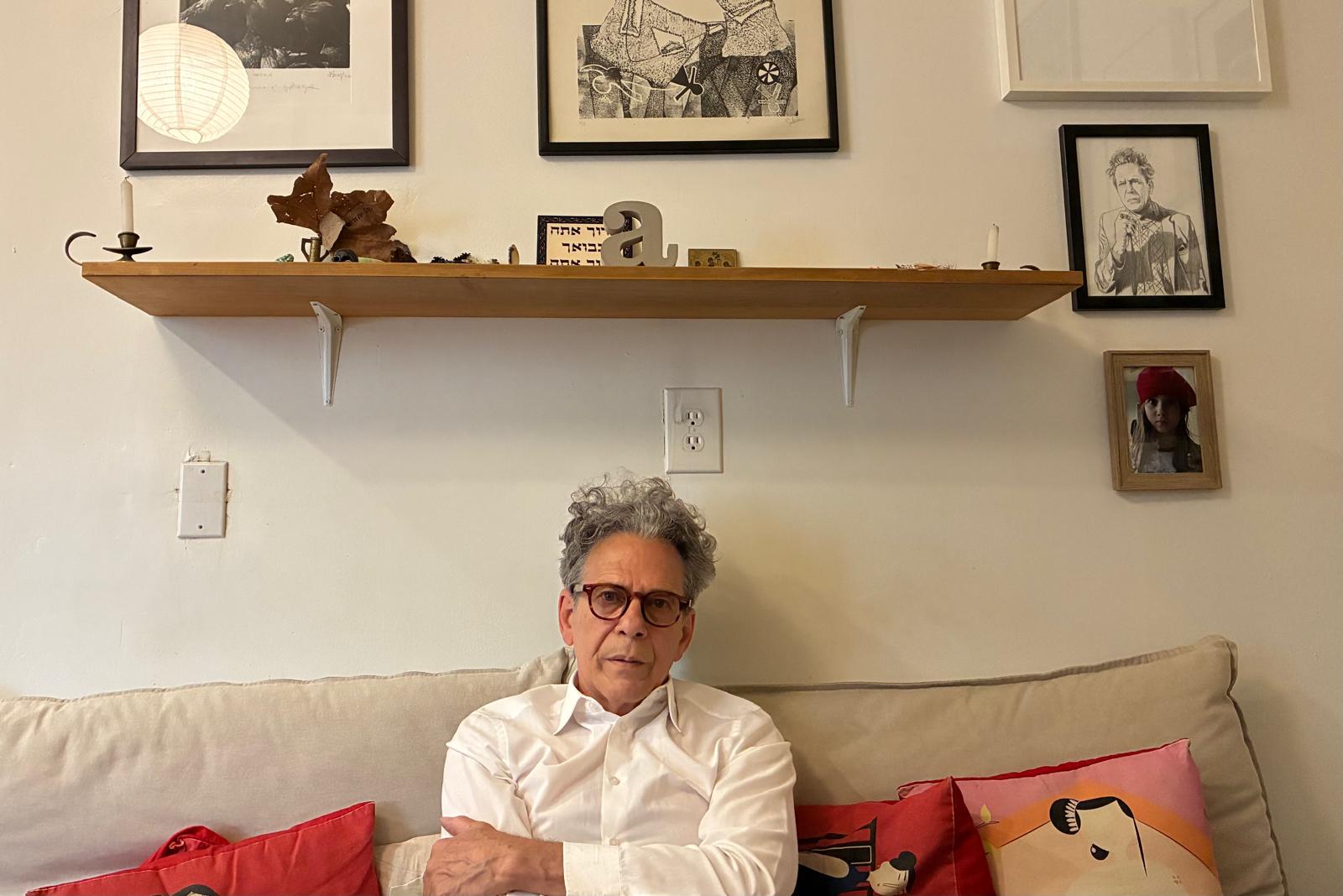
In a recent one Interview with the newspaper El PaísArmando Suárez Cobián (Banes, 1957) declared that “being a poet is a sweet curse.”
The ultimate sense of the poet is not his song, as romantically believes. The poet is to shout words, secrete them, wield them with the strength of those who have no more grip.
He can sing, however, but his song is usually hallucinated, bitter, because joy, the feeling of fullness, are not artistic. The poet writes about Tutto Ciò Che Manca1, The lost, the unattainable, which was not, and there is nothing more terrible than detecting errors in a dream. From the falls of being, poetry is nourished.
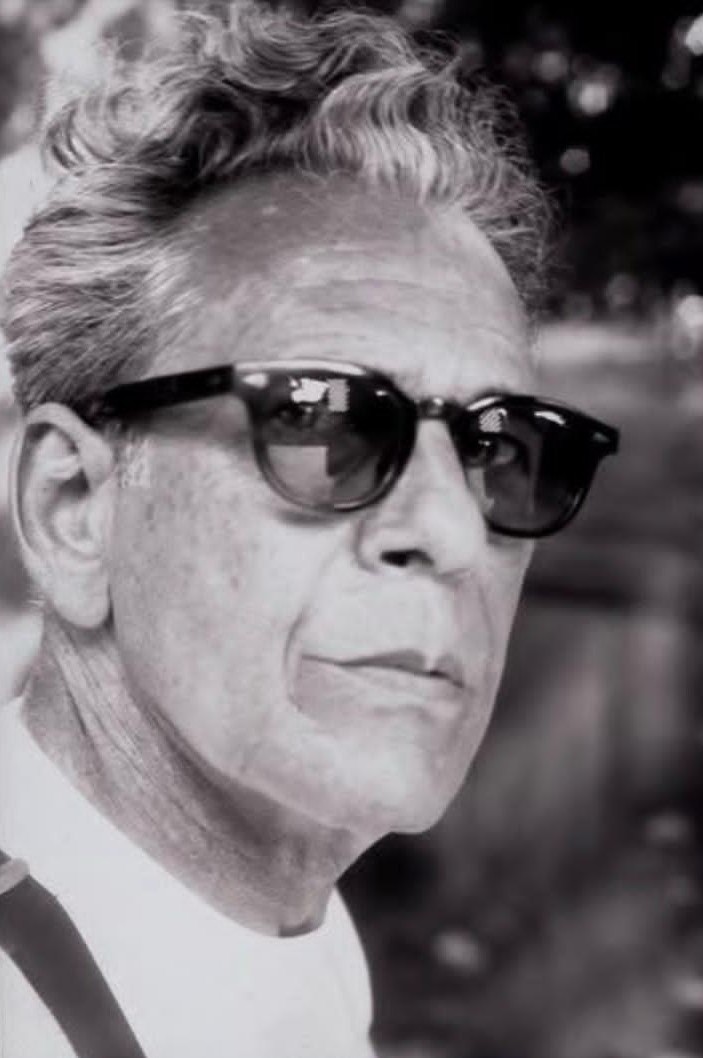
Armando Suárez Cobián (Mandy, in Havana) has lived in New York for 33 years. In Cuba he had published two verses notebooks: Run, go and tell him (Extramuros, 1985) and New York is not you (Torre de Letras, Havana, 2013).
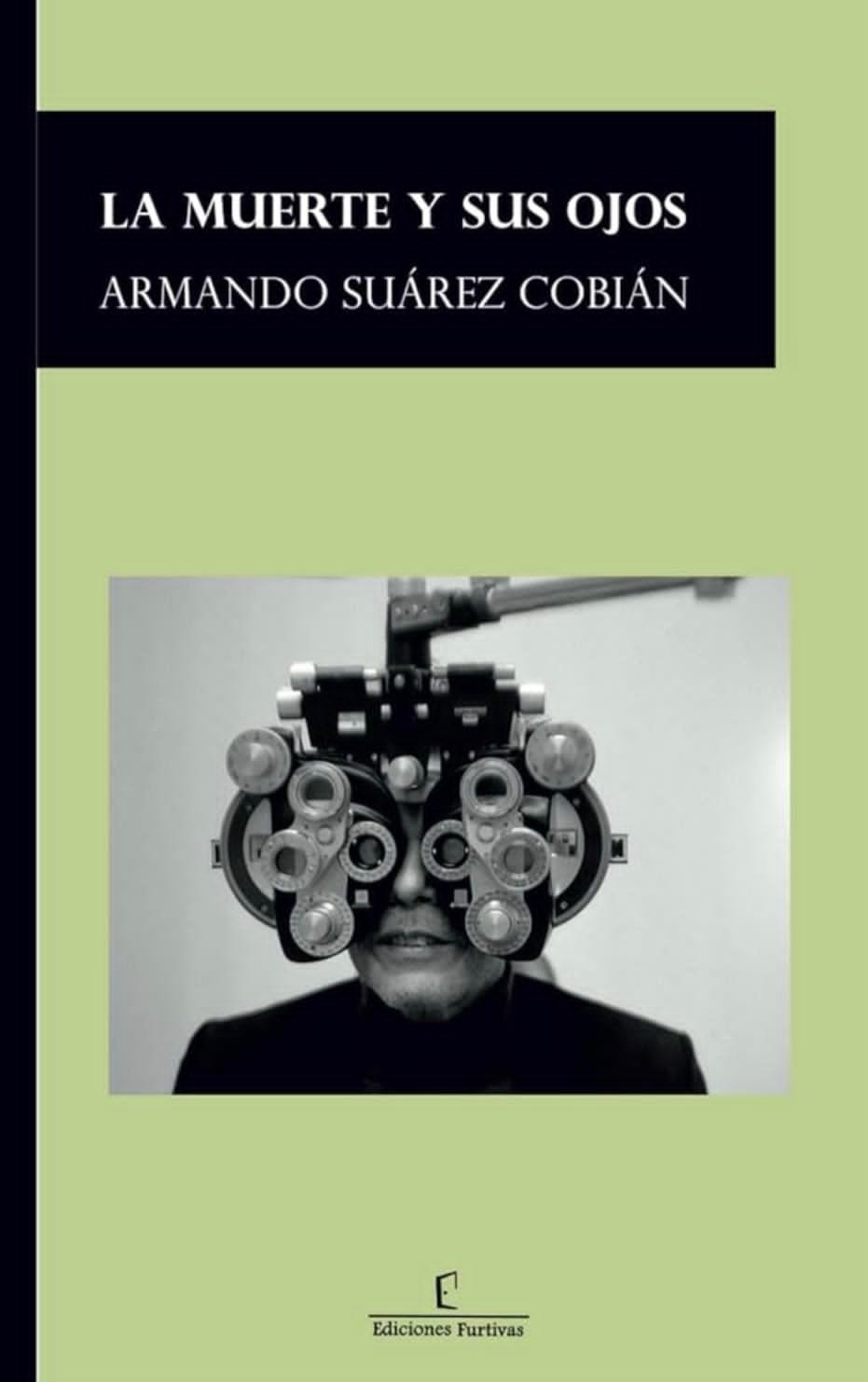
Now, after a long hiatus, he has given the presses Death and his eyes (Furtive editions, 2025), volume that brings together two poems: The one that gives title to the set (2012-2013) and The house is all the roads (2020), with two inlumine prologues of Reina María Rodríguez, who knows the evolution of ASC’s work since its inception.
Although between the gestation of one manuscript mediated eight years and personal circumstances of different visceralities, the same voice and the same angle of placement before the mystery of existence are felt.
The word death champion for most poems, but not as a symbol of anguishing finitude, but of its reverse: the reaffirmation of the prodigy of living, although in the chest crystals explode and what seemed indestructible, such as couple relationships, family, between again and again in painful crises.
In Death and his eyes, Mandy dialogue with a Cesare Pavese appointment: “Verrà la Morte E Avrà i Tuoi Occhi. “2 It is a set that narrates heartbreak, longing, the carnal desire that grows in the nostalgia of the smells and smoothness of the bodies. It is a poems of impossibility.
Our poet launches as if he and the object of his love were, like the original couple according to Christianity, alone in the world. But not. External circumstances ravage and decide; also the different personal stories and the cultural fields to which each one belongs.
The house is all the roads, part of some verses of Borges: “The house is the size of the world; / rather, it is the world.” Conceived the whole in full pandemic, and in New York, one of the most attacked by the virus, the author is held in his apartment, far from the daughter and the woman who was her partner.
Then he finds no other resource to navigate. Trace the skies from forced immobility3. Throw signs of pain and uncertainty from there.
Mandy’s verses are direct, stark, with the precise words, more in the wake of the Anglo -Saxon lyric than in that of Castilian leafs.
The “poetic”, where appropriate, is not achieved with bright and superfluous metaphors. All verbal pyrotechnics is alien to you. The poetic here is the extremely stylized use of everyday language, which fits with precision to its intentions to tell its own circumstances. They are books, both, where the poet is shown as is.
Gather verses for themselves and for their closest peers. He defines himself “as a man who loves, writes and lives” He writes for beats – he has confessed – that is, his, existential, intimate, is the poetry of experience. Cava within the being that is. And from that hondon, sweet and cursed, it is given to the world, which is everyone’s house.
Six poems by Armando Suárez Cobián
Of Death and his eyes (2012-2013)
Sandy, New York, October 29, 2012
I return to the same words, the wind is the only audible thing tonight, the wind and those voices inside me that force me to speak, to say anything that makes visible that there is no one by my side. The night thickens with its sound that moves and sweeps and I with those voices that want to turn it off and cannot.
Voices that become words, names, I think of Arturo that he no longer sees, he does not listen, does not suffer at least here, where everything is visible except the wind, that to prove us that it exists lets us breathe and hits everything.
I think of Claudia, her daughter, almost mine. And in Phoebe, today so far, in his nose that stumbles slightly along with his breasts against my back, when he hugs me to sleep, in the smell and the particular taste he has in his center, and I want to retain it against all the storms. I listen to his voice that goes and sometimes comes in sounds that warn me and become messages and I think of his mouth, perfectly drawn, with whom he sometimes tells me I love you and sometimes without saying anything, he kisses me and swallows my desire and, in the fear I feel that one day he gets up and leaves his smell and the desire to put out his thirst and his desire in another mouth.
 Gramorcy Park
He wants the meekness of the Mancebo. He also wants the fibrous body of the warrior, the restlessness that causes him when he reads his body and renames the sites he plays. They are every time different words. Improvise. It depends on the day, on the station, on the hour, on the presence of death. They are so close. He knows that time is everything and nothing, that his body has to be able to as rot everything he ingests, how sometimes rots, what he feels, as what he forgets is rot. Tonight is the last. She thinks of God. He retains selfishness.
Fear. It has grown with the idea of punishment. He looks at him. Picture apologies. He fears someone suddenly arrives at their door, to discover it. He is now his lover. She has chosen. He has begun to die differently.
It just can’t be
I know there is a person who looks for me in his hand,
day and night…
César Vallejo
It can’t be that certain streets do not walk with the idea of seeing me. It cannot be that before going to certain places you don’t know believing that I look at her. It cannot be that some of the verses I write, or that some, or another repeated word do not make my image visit it at certain hours of the day. It cannot be that a flavor does not remind him of the meals he did. It cannot be that sometimes, when he is alone he does not touch and after smelling he does not want to put his fingers between my nose and my mouth. It cannot be that I do not look at my photos, that I am not aware of the publications, my silence, or The comments of others. It cannot be that it goes up to a taxi and my smell makes him believe that I was in it before. It cannot be that when he is sick, he does not remember tea, caresses in the belly, songs before sleeping, the wake up. It can’t be that sometimes I don’t look at the miniature furniture, clock Russian, books, dedications. It cannot be that some of those nights when masturbating or caressing it, it is not me who you want. It cannot be that when it is distracted and asked, what happens to you? Or where are you? Do not lie and answer anything, because I will be inside it.
Of House is all roads (2020):
The house is all the roads
I distribute the days,
From my room to the bathroom, to the kitchen, the living room, the dining room.
I have all kinds of beans, pasta, rice, granola, tuna, I have coffee, tea,
enough food for a couple of months.
Also soap, shampoo, paper towel and sanitary paper,
As we would say in Cuba, and the good or bad luck of having lived there,
To survive anywhere.
My books with which I travel from one country and from one continent to another,
according to the mood and the hours.
The movies and the news in this illuminated metal box with which I write.
My faith, my gods, thirst and, above all, the desire to be again together,
anywhere. That is why I have turned the house into all roads.
When you wake up
In this house are all the cities, the ones I have lived, the ones I have visited and the ones I have not seen yet. The fresh waters of my rituals and the sea that always reaches everywhere. Today I visited some, I swam in peace without thinking that at the end of the afternoon they would not exist. I crossed words in languages that I do not With the certainty that those who spoke to me were confused. If I dreamed it was heresy and if it was a dream, I thought I heard: Dad stories to write, to tell me later what you have lived. I didn’t know anymore what I saw, they were bread houses, water houses, houses with wings to live Flying, they were sand houses, in each granite a window, in each window a lamp, in each lamp a genius willing to share what he knew. I asked them what was going to happen, what would be like later, for all at once, one told me, I cannot deprive you of that knowledge, you will have to discover it when you wake up.
Havana, 1977
I am sitting in the courtyard of the Focsa building, near the pool.
I have long and wild hair, rather an Afro, bell pants, boots
Spanish brand Chiruca, and a sailor -style striped pulon in the hands.
The fibrous, naked and tan torso. The photo is black and white,
But I know I was tanned because it was summer, we were in August,
I had gone to watch the movie Love at twenty years The day I fulfilled mine.
I found the photo within a book.
I decided to share it on Instagram and Facebook, the answer was unforeseen,
hundreds of Likeshearts, wow, and joint comments.
In these months social networks have been more active, but, yes,
It was beautiful then, I thought. I felt joy especially for Mila Rufina.
I imagined her and proudly showing her father’s photo to friends.
Grades:
1. Italian, “everything that is missing.”
2. “Death will come and will have your eyes.”
3. Lezama, who came out very rarely from Cuba, called himself “the immobile traveler.”