Professor Roberto López Sánchez warns about the migration of university students who seek to practice their profession in other countries where they are well paid
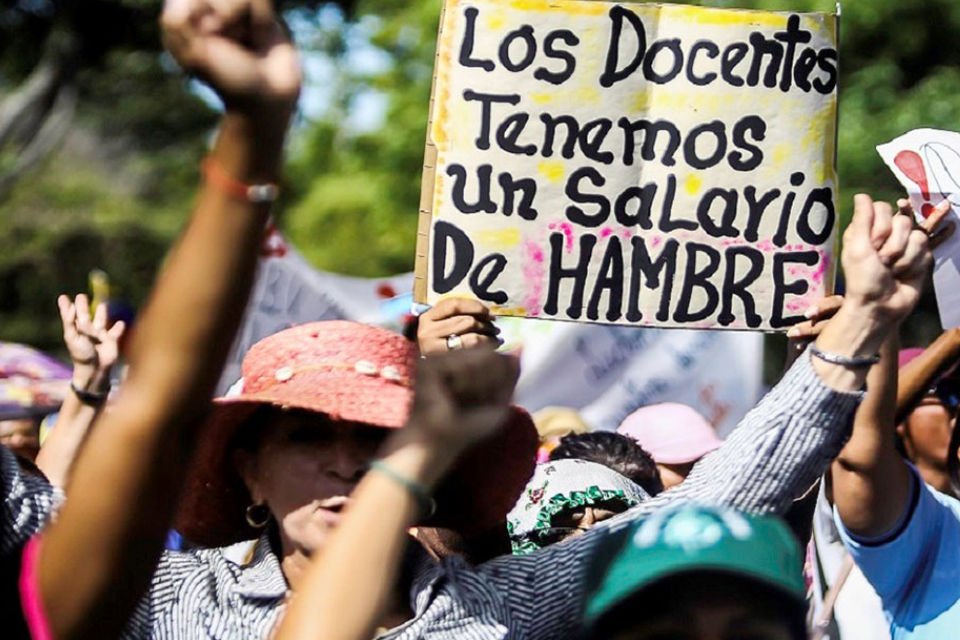
Professor Roberto López Sánchez, delegate of the Association of Professors of the University of Zulia (APUZ) to the Federation of Associations of University Professors (Fapuv), asks citizens to support the claims and salary demands of university students. He warns that given the serious salary crisis that teachers are experiencing, many are leaving the classrooms and others are migrating.
“We want to denounce before national and international public opinion the precarious salary situation that we university students are experiencing in Venezuela where – in practice – the right to a decent salary enshrined in the Constitution has disappeared,” says López, who notes that a full-time professor, the highest ranking, receives a monthly salary of two dollars.
López, tenured professor at LUZ, called on citizens to support the salary claims and demands demanded by university professors.
“It is necessary for the Venezuelan community to react to this and support all the initiatives carried out at the national level to restore this constitutional right to a living wage so that the university can recover from the deep crisis it is going through.”
*Also read: UCV demands fractional payment of the Christmas bonus: “It is an intolerable injustice”
In this sense, the teacher expresses his support for the initiatives carried out by the Association of UCV professors, Fapuv directors and UCV authorities to “make the country see” the serious situation of university students.
He points out that teachers are migrating because in other countries their work is well paid. He states that in Latin American universities, a professor earns between 1,000 and 1,500 dollars upon entry and if he has more than 20 years of experience, his monthly salary ranges between 3,000 and 5,000 dollars.
«Venezuela is losing its professionals. Those who are graduating also emigrate because they do not have opportunities here. “It is an intolerable situation for the future,” he warns.
*Journalism in Venezuela is carried out in a hostile environment for the press with dozens of legal instruments in place to punish the word, especially the laws “against hate”, “against fascism” and “against the blockade.” This content was written taking into consideration the threats and limits that, consequently, have been imposed on the dissemination of information from within the country.
Post Views: 237