The National Institute of Traffic and Land Transportation (Intrant) explained in detail the new technical regulations which establishes which helmets can be used on motorcycles in the Dominican Republic and which are prohibited.
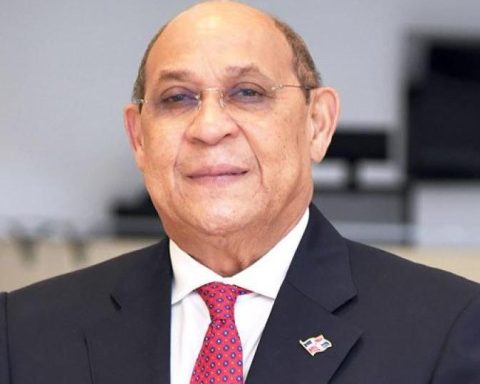
The director of Road Safety of the Intrant, Andiel Galvanoffered details about the scope, deadlines and motivations for the measure, which seeks to raise the minimum protection standards for motorcyclists and passengers.
Galván recalled that since 2017 the Law 63-17 requires the use of helmets driver and passengerbut clarified that “that helmet has to be approved.”
After the approval of the regulations by presidential decree, it was up to the Intrant define by a technical regulations the standards that the helmets permitted in the country will meet. These regulations have already been signed, presented to the WTO and are immediately and mandatory.
Dominican Republic adopts international standards
Galván pointed out that the country adopts between eight and nine international standardscoming from regions such as the European Union, the United States, India, Vietnam, the United Kingdom, Brazil and Japan. “The country decided to be very open and plural so as not to limit anyone. There are different typologies and origins. Not all the standards in the world are there, but there are those that respond to the objective of save lives“he indicated.
He Intrant establishes that they may only be used certified helmets by laboratories accredited in accordance with the ISO/IEC 17025 standardand that comply with any of the following standards: UN/ECE 22-06 (European Union). FMVSS No. 218 (DOT) – United States. SNELL M2020/M2025. GB 811-2022 – China. QCVN 2:2021/BKHCN – Vietnam. IS 4151:2015 – India. NTC 4533 – Colombia. NBR 7471 – Brazil. JIS T 8133:2015 – Japan. BS 6658:1985 – United Kingdom. And as long as it remains in force, the UN/ECE 22-05 standard will also be accepted.
The regulations require that helmets have rigid shellshock absorption system and adjustable retention, and that keep their certification labels intact. Any helmet without certification will be considered not permitted.
The half helmet is excluded
Galván confirmed that the so-called “half helmets” either open face are outside the permitted standard. “They are helmets like a hat. After consulting and analysis, we understood that for public health purposes we need a minimum of protection that starts with three-quarters of the helmets,” he explained.
Deadlines for entry, marketing and inspection
Although the regulations are already in force, they establish three deadlines:
- 30 days: so that no helmet that does not meet recognized standards enters the country.
- 180 days: so that the authorities begin to supervise the wearing of approved helmets.
- Period of socialization: so that importers, sellers and users adapt to new demands.
“We don’t want helmets that do not guarantee life to continue entering,” Galván said.
How much will approved helmets cost?
The director pointed out that the market will adjust with the mandatory minimum standard. “In a few years the supply of helmets should increase and, to that extent, there will be more affordable helmets.” He stated that approved models have been identified that could be found from one thousand to one thousand five hundred pesos, and even cheaper in some cases.
Galván insisted that the helmet is an object that “life jacket” and that the consultation process included importers, distributors, sellers, users and deliveries.
One helmet for each motorcycle
Regarding whether the regulations will require that each motorcycle be sold with a helmet included, Galván clarified: “No, the regulations do not contemplate that. It only regulates the quality and type of helmet.” However, he highlighted that there is a voluntary agreement with the motorcycle industry to encourage this model of joint sale.
Mandatory use for driver and passenger
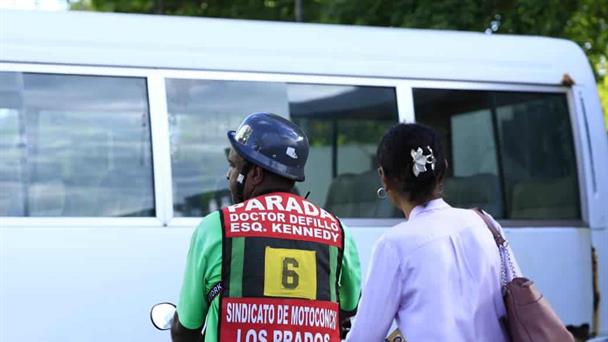
Galván recalled that the law prohibits more than two people from traveling on a motorcycle and requires that both wear a helmet. The inspection corresponds to the Digestettwhich will verify both the type of helmet and the number of occupants.
road safety: young people, accidents and new initiatives
During the National Road Safety Weekhe Intrant develops meetings with the Ministry of Public Health, Unicef and local entities. Galván explained that almost 40% of fatalities on the roads are young people, which is why they are working on prevention and education campaigns.
· Workshops on safe mobility for young people
· A forum on pre-hospital care
· The signing of an agreement to unify road safety statistics
· and the first local road safety plan, developed with the Moca mayor’s office.
Galván reiterated that the helmet regulations are “a good news for the country,” but he said the work continues. “The challenge now is to increase the level of helmet use in driver and passengerwith standards that guarantee real protection”.