President Luis Abinader has a Term of five days to promulgate or observe the bill of the Criminal Code, as established by the Constitution of the Republic, approved last night by the Senate of the Republic in the only reading with the 64 modifications made by the deputies.
“Any law approved in both chambers will be sent to the Executive Power for its promulgation or observation. If you do not observe it, it will promulgate it within ten days of receipt, if the matter was not declared urgently, in which case it will promulgate it within five days of received, and will publish it within ten days from the date of promulgation.”
“Once the constitutional term for the promulgation and publication of the laws sanctioned by the National Congress is defeated, promulgated and the president of the Chamber that has sent them to the Executive Power will publish will be published,” says article 101 of the Constitution of the Republic in relation to the promulgation and publication.
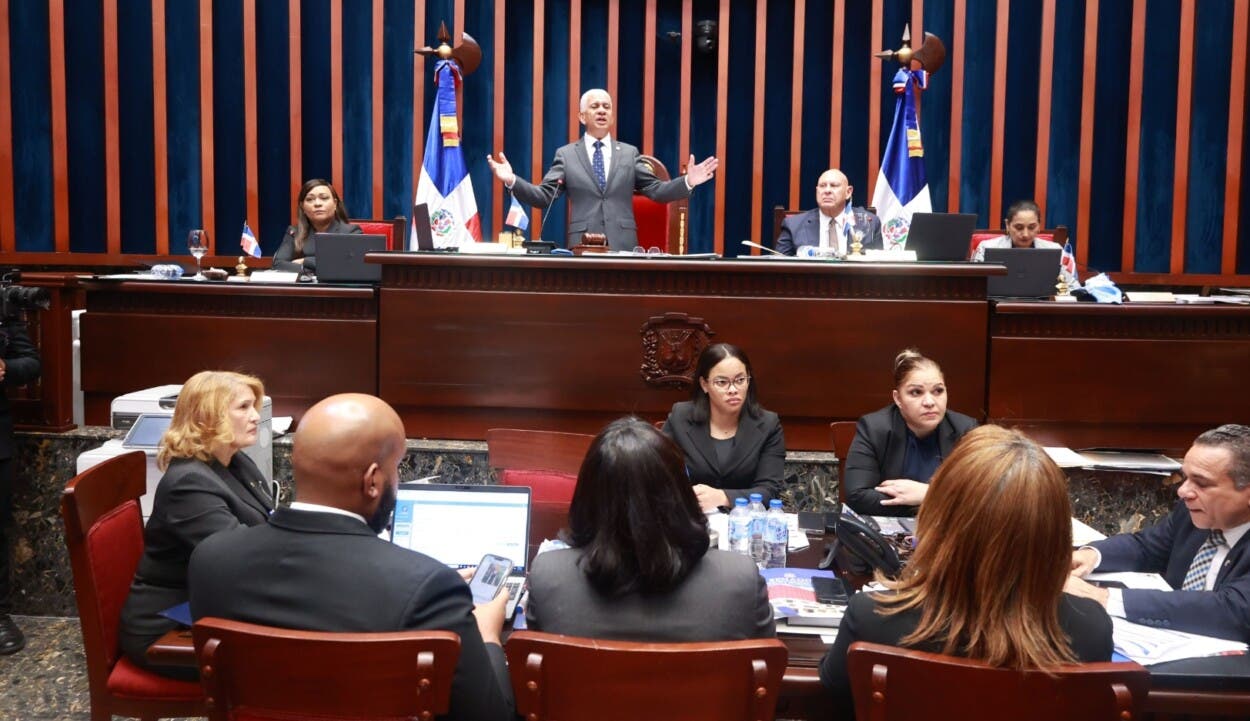
The Criminal Code project was approved with a vote of 26 senators of 27 present the Plenary of the Senate, which knew the legislative proposal that remained under study for more than 25 years in the National Congress.
Luis Abinader has five days to promulgate the new Criminal Code, which strengthens sanctions for serious crimes
In the first session of the Extraordinary Legislature, the Plenary welcomed the modifications made by the deputies early on Thursday.
In the works, the senators exhausted several turn -out shifts where they valued the great work carried out by deputies and senators, as well as the members of the Bicameral Commission that was in charge of the study of the piece, as well as advisors and different specialists.
In the session, the president of the Senate, Ricardo de los Santos, expressed his satisfaction with the work that the National Congress has done to give the country a new Criminal Code, and made a count of the amount of special laws that were in the original project and that are already approved.
When addressing their peers, he reminded them that this bill has the conditions that allow any modification proposal to be submitted during the Vacatio Legis period that provides for the piece (one year to enter into force).
He thanked the senators, deputies, to the Dominican judicial system, the Bicameral Commission that was in charge of the analysis of this piece and all those who made possible the approval of the Criminal Code of the Dominican Republic.
The bill of the Criminal Code marks a pillar in the structural transformation of the country’s criminal system. This reform seeks to strengthen the sanctions for serious crimes, protect the victims and guarantee a more effective, equitable and updated justice.
New sanctions
The piece, highlights the typifications that would be added such as terrorism, sicariate, genocide; very serious war infractions, infractions against humanity; Forced disappearance of people; femicide, aggravated feminicide, related feminicide, related violence in femicide scenario; induction to suicide, suicide cooperation; Damage with chemical substances (devil’s acid), among others, as well as the accumulation of penalties.
The legislative proposal was presented to Plenary by Senators Ramón Rogelio Genao, Alexis Victoria, Félix Bautista, Cristóbal Venerado Castillo, Jonhson Encarnación, Moisés Ayala Pérez, Guillermo Lama and Odalis Rodríguez.
This reform to the Criminal Code, which constitutes a structural transformation not only of the law, but of the own understanding of the Dominican criminal system, contains novelties such as the one that highlights article 52, which indicates that the limit of the penalty applicable in the contest of very serious infractions that entails penalties of the same nature may not be more than sixty years in prison.
Other projects
The senators included three agreements on the agenda: the first would be used in the Universal Sanitation Program in coastal and tourist cities of the Dominican Republic, executed by the National Institute of Potable Water and Sewerage (INAPA); Another to be used in the Climate Resilience Program for bridge infrastructure in the Dominican Republic, which will be executed by the Ministry of Public Works and Communications (MOPC); and a third agreement for the use of the Extension project of the Eastern Aqueduct of Salinity and Transfer to Santo Domingo Norte, executed by the Corporation of the Aqueduct and Sewerage of Santo Domingo (CAASD), all sent by the Executive Power.
In the legislative works of this Thursday the Senatorial Plenary hosted and approved in a single reading the modifications suggested by the Executive Power to the Family Good Law.
After sending a letter to the Senate, addressed to its President Ricardo de los Santos, dated July 31 of this year, the President of the Republic, Luis Abinader presented changes in article 15, which indicates that it constitutes a family asset by social improvement plans of the State, those real estate transferred by the Dominican State to individuals, they must contain in the file presented in the registry of titles an indication that the housing has been built by the state Dominican.
Aggravated bullying
The project of the new Criminal Code also punishes the reckless attack on life; Responsibility of legal entity for a guilty attack against life; bullying, aggravated bullying; Commercial operations with children and adolescents. As well as responsibilities of legal entity that cause disabilities with more than 60 days.