A Federal Court of Appeals has attended a hard blow to the Trump administration to continue using a law of the eighteenth century of times of war in order to accelerate the deportation of Venezuelan immigrants.
In a ruling of 2 to 1 issued on Tuesday, a panel of the Court of Appeals of the Fifth Circuit blocked the use of the Administration of the Law of Foreign Enemies of 1798 to expel alleged members of the Venezuelan Gang Train of Aragua, considering that it did not meet the requirement of the law of “invasion” or “predatory incursion”.
The decision grants a preliminary judicial order to migrants arrested in Texas, Louisiana and Mississippi who challenged expulsions.
While the government can still request deportations under other immigration laws, it cannot be covered by the Law of Foreign Enemies, drafted in the 18th century to deal with hostile foreign forces in times of war.
Judge Leslie Southwick, appointed by President George W. Bush, wrote the majority opinion, to which Judge Irma Carrillo Ramírez, appointed by Biden.
They rejected the government’s argument that the presence of members of the Aragua train constituted an incursion similar to military action. “The Aragua train was not the type of organized force or participated in the necessary actions to constitute an invasion or a predatory incursion,” Southwick wrote.
The foreign enemies law allows the President to stop or deport citizens of a hostile nation during a declared war or when he faces an invasion.
Historically, it has been invoked in times of open conflict, such as the War of 1812 and the World Wars.
The Trump government argued that the Aragua train operated under the direction of the Government of Venezuela and that mass migration itself was a form of incursion. The panel found no evidence to support this statement.
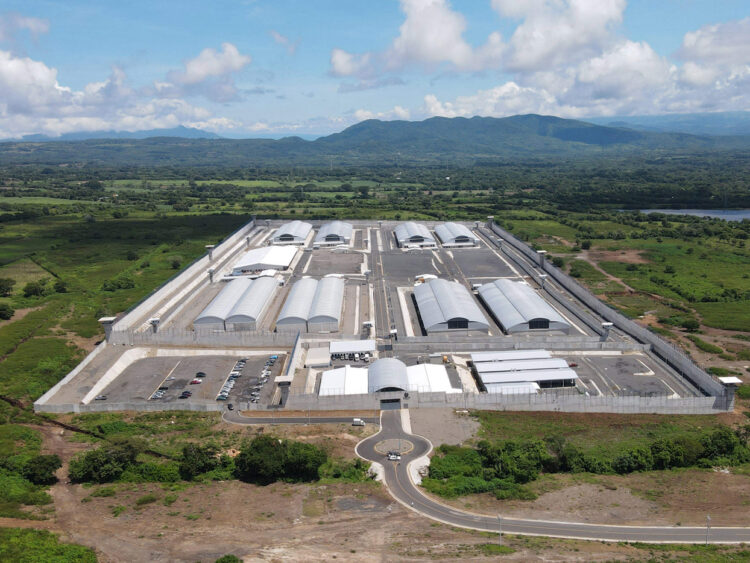
Earlier this year, the government deported hundreds of immigrants accused of links with the Aragua train, sending many to Venezuela and others to the maximum security prison CECOT of El Salvador.
Many immigrants deported to El Salvador had no criminal record, which generated doubts about the criteria used for deportations.
In July, several deportees were returned to Venezuela as part of an exchange of prisoners. Civil Rights Groups, led by the American Union of Civil Libertads (ACLU), questioned the policy, qualifying it as an abuse of the Executive Power and a violation of due process.
The case had already reached the Supreme Court at the beginning of the year. In April, the Supreme Court temporarily blocked deportations, claiming the concern that migrants had received only 24 hours of notice before deportation.
Subsequently, the government reviewed its policy to provide a seven -day notice. The fifth circuit suggested that this could be adequate, but returned the matter to the lower court for review.
Judge Ramírez expressed her doubts, noting that she did not believe that seven days were enough for due process.
Judge Andrew Oldham, appointed by Trump, disagreed with the ruling on Tuesday. He argued that the presidents have long had broad powers under the Law of Foreign Enemies (AEA) and criticized the majority to limit the executive authority.
“For 227 years, all the presidents of all political parties have enjoyed the same broad powers to repel threats to our nation under the Law of Foreign Enemies (AEA). And from the dawn of our nation until President Trump assumed the position for the second time, the courts have never questioned the invocation of said law by the president. Not once,” he wrote. “For President Trump, however, the rules are different.”
The ruling is an important setback for Trump’s general strategy to use emergency statements and authority in times of war to expand presidential power on the application of immigration law. Critics have described the deportation program as an attempt to intimidate immigrant communities and avoid established immigration laws.
The decision of the fifth circuit emphasizes that, even at a time of intense political rhetoric on border security, the courts are not willing to equate migration with a military invasion.
For now, the judicial order guarantees that migrants arrested in the fifth circuit cannot be deported under the law of foreign enemies while the case continues. New appeals are likely to be presented, and the administration is expected to take the case to the Supreme Court.